
Search Visibility's Role in Competition: 2026 Guide
Search Visibility’s Role in Competition: 2026 Guide
Search visibility is defined as the measure of how prominently and frequently a brand appears across search results and AI-generated recommendations, making it a direct driver of competitive advantage. The role of search visibility in competition has never been more consequential. Brands that appear consistently in both traditional search engine results pages (SERPs) and AI-powered answer engines capture buyer attention before competitors even enter the picture. With AI platforms like ChatGPT, Gemini, and Perplexity now shaping how buyers discover products and services, visibility has become the primary battleground for market share. Ranksector tracks this shift closely, and the data reveals that the rules of competitive visibility have fundamentally changed in 2026.
How search visibility shapes competitive dynamics
Search visibility functions as a trust signal before a buyer reads a single word of your content. When your brand appears at the top of results repeatedly, buyers interpret that presence as authority. That perception directly influences purchase decisions, often before any direct interaction with your website.
The competitive impact of visibility is measurable and significant:
- Traffic concentration: Brands with higher visibility capture a disproportionate share of clicks, impressions, and brand recall at the earliest stages of the buyer journey.
- Market share at the awareness stage: Visibility influences pre-conversion stages covering up to 83% of decision making. A competitor with stronger visibility shapes buyer preferences before you even have a chance to compete.
- Relative positioning: Visibility is a relative metric, not an absolute one. Your brand can grow traffic and still lose ground if competitors increase their visibility faster.
- Conversion pipeline: Brands that appear in AI-generated answers and top organic positions fill their conversion pipeline with warmer, more informed prospects.
Pro Tip: Track your share of voice across both traditional SERPs and AI platforms monthly. Absolute traffic numbers hide competitive erosion that relative visibility metrics expose immediately.
Understanding competitive SERP positioning requires you to benchmark your visibility against direct competitors, not just measure your own rankings in isolation. A brand that ranks on page two while a competitor dominates page one is losing the trust battle at scale.
What has AI changed about search visibility and competition?
The shift from traditional search to AI-powered answer engines has restructured how visibility translates into competitive outcomes. Three changes stand out as particularly disruptive for business owners and marketing professionals.
-
Visibility and clicks have decoupled. Between june 2025 and may 2026, search impressions rose 50% while organic traffic dropped 25%. AI Overviews answer queries directly on the results page, intercepting clicks before users ever reach your site. Being visible no longer guarantees a session.
-
Winner-take-most citation dynamics. AI engines do not distribute citations evenly. Over half of brands are invisible for category and problem-based AI queries, and just 20 domains receive the majority of AI citations. Only 119 of 1,127 tracked URLs retained citations over a six-week period. That retention rate shows how fragile AI visibility actually is.
-
Platform-specific citation logic. The ChatGPT-Gemini citation correlation is only r=0.19. That near-zero correlation means ranking well in one AI engine does not transfer to another. Each platform trusts different source types, content formats, and authority signals.
-
AI visibility is zero-sum. Gaining a citation slot displaces an existing source. Visibility shifts can occur within days, unlike traditional SEO where multiple brands can rank concurrently across a results page.
These four dynamics together create a competitive environment where speed, authority, and platform-specific strategy matter more than broad keyword coverage. The brands winning AI visibility in 2026 are not necessarily the ones with the best technical SEO. They are the ones with the strongest brand signals and the freshest, most clearly structured content.
Does brand authority now outrank technical SEO for visibility?
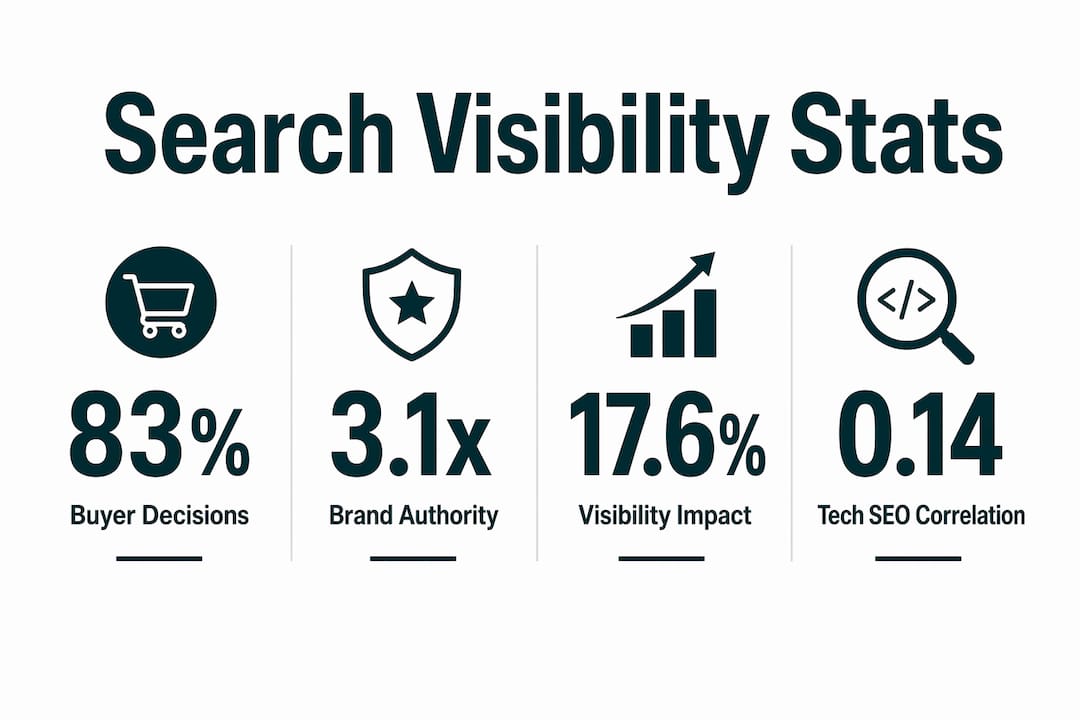
The data on this question is unambiguous. Brand authority predicts AI visibility 3.1 times better than technical GEO scores. Wikipedia presence alone correlates with 3.6 times higher AI visibility. That is a structural shift in what drives competitive search outcomes.
| Visibility driver | Variance explained in AI visibility |
|---|---|
| Brand authority signals | 17.6% |
| Technical GEO scores | 1.9% |
| Wikipedia presence | 3.6x correlation boost |
| Traditional organic rank | Weak, r=0.14 correlation |
The table above shows a clear priority order. Technical SEO still matters for traditional search, but it explains almost nothing about whether an AI engine will cite your brand. Brand authority signals, including Wikipedia entries, YouTube presence, Reddit mentions, and news coverage, carry the real weight.
This has direct implications for how you allocate your marketing budget. Investing exclusively in on-page technical optimization while ignoring off-site brand building is like tuning the engine of a car with no wheels. The mechanics are sound, but the vehicle does not move in the direction that matters.
Pro Tip: Audit your brand’s Wikipedia entry, YouTube channel, and Reddit presence before spending another dollar on technical SEO improvements. These off-site signals now drive more AI citation potential than any on-page fix.
A strong search visibility score in 2026 reflects brand authority across the web, not just keyword rankings on a single platform. Brands that understand this shift reallocate resources toward earned media, authoritative content partnerships, and consistent brand mentions across trusted platforms.
Practical strategies to enhance search visibility and outperform competitors
Improving visibility in the current environment requires a different playbook than traditional SEO. The following priorities reflect how competitive visibility actually works in 2026.
- Build off-site brand authority first. Pursue Wikipedia citations, industry news coverage, YouTube content, and community presence on platforms like Reddit. These signals directly influence AI engine citation decisions.
- Optimize for each AI platform separately. Because cross-platform citation correlation is low, a single content strategy will not cover ChatGPT, Gemini, and Perplexity simultaneously. Tailor content format and source structure to each platform’s citation preferences.
- Prioritize content freshness. Fresh content with statistics and named sources receives 30–40% more visibility in AI search. Pages updated within two months receive 28% more citations. Publish and refresh content on a consistent schedule, not just when a campaign demands it.
- Track AI Share of Voice and Citation Retention Rate. Raw traffic metrics no longer capture competitive position accurately. Success KPIs are shifting toward direct AI conversions and AI market share. Measure how often your brand appears in AI-generated answers and whether those citations persist over time.
- Close the AI Visibility Gap. 60% of URLs cited by AI engines do not appear in the top 20 organic Google or Bing results. If you only track traditional rankings, you are missing the majority of the competitive visibility picture. Audit which of your pages AI engines actually cite, then build from there.
Ranksector addresses the content freshness challenge directly. Its platform publishes daily SEO-optimized articles tailored to your audience, which keeps your content calendar active without requiring a full content team. For B2B SaaS companies competing in AI-driven search environments, that consistent publishing cadence is a structural advantage. You can also review how search intent drives content strategy to align your publishing priorities with the queries your buyers actually ask.
For foundational SEO principles that support visibility building, understanding SEO basics remains a useful starting point before layering in AI-specific tactics.
Key Takeaways
Search visibility is a competitive metric that now spans traditional SERPs and AI answer engines, where brand authority signals predict outcomes far more reliably than technical SEO alone.
| Point | Details |
|---|---|
| Visibility drives competitive positioning | Brands with higher visibility shape buyer decisions before competitors enter the conversation. |
| AI has decoupled visibility from traffic | Impressions rose 50% while organic traffic dropped 25%, requiring new success metrics. |
| Brand authority outperforms technical SEO | Brand signals explain 17.6% of AI visibility variance; technical scores explain only 1.9%. |
| AI citation is winner-take-most | Just 20 domains capture most AI citations, making retention and freshness critical. |
| Platform-specific strategies are required | ChatGPT and Gemini citation correlation is r=0.19, so each platform needs its own approach. |
The visibility race has changed faster than most brands realize
The brands I see struggling most in 2026 are not the ones with bad content. They are the ones still measuring success the same way they did in 2022. Organic traffic as a north-star metric made sense when clicks followed impressions reliably. That relationship has broken down, and the brands that have not updated their measurement frameworks are flying blind.
What I find genuinely surprising is how few marketing teams have audited their AI citation presence. Most can tell you their domain rating and their top-ranking keywords. Almost none can tell you how often they appear in ChatGPT answers for their core category queries. That gap is where competitive ground is being lost right now.
The other insight worth sitting with: negative or hallucinated AI citations can actively harm conversion potential. Being cited is not automatically good. Brand sentiment in AI-generated answers matters as much as citation frequency. That means content quality and brand reputation management are now directly tied to search visibility outcomes in a way they never were before.
Agility is the real competitive advantage here. The brands winning visibility in AI search are the ones refreshing content monthly, building off-site authority consistently, and tracking new metrics without waiting for annual strategy reviews. The window to establish citation authority in a given category is narrow. Once a winner-take-most dynamic consolidates around a competitor, displacing them requires significantly more effort than getting there first.
— Savannah
Ranksector’s tools for competitive search visibility
Staying visible across both traditional and AI-driven search requires consistent, high-quality content published at a pace most small teams cannot sustain manually.
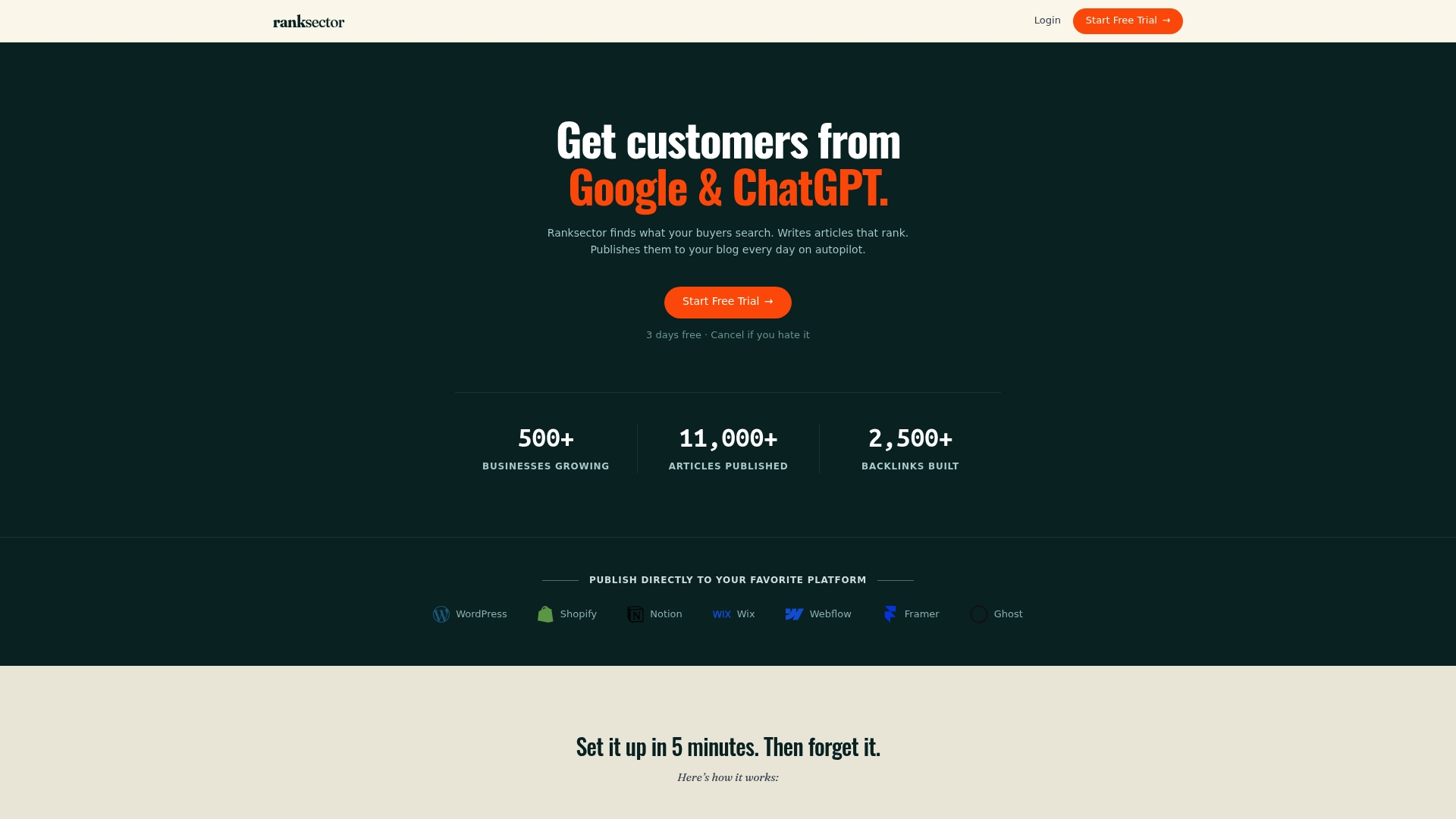
Ranksector automates that process for B2B SaaS companies. Its platform combines AI-driven keyword research with daily article publishing, so your content stays fresh enough to compete for AI citation slots without requiring a dedicated content team. With over 11,000 articles already published for clients, Ranksector has a demonstrated track record of building domain authority quickly. Explore the free SEO tools to audit your current visibility position, or review the agency services if you need a fully managed approach to competitive search visibility in 2026.
FAQ
What is search visibility in SEO?
Search visibility measures how prominently and frequently a brand or website appears across search results and AI-generated answers. It is a competitive metric that reflects both traditional SERP rankings and AI citation presence.
How does visibility affect competition between brands?
Visibility shapes buyer decisions at the awareness stage, which covers up to 83% of the decision-making process. A brand with stronger visibility captures buyer trust before competitors have a chance to engage.
Why did organic traffic drop while impressions increased?
AI Overviews and AI answer engines answer queries directly on the results page, intercepting clicks before users visit a website. Between june 2025 and may 2026, impressions rose 50% while organic traffic fell 25% as a direct result.
Is technical SEO still relevant for AI search visibility?
Technical SEO has a weak correlation (r=0.14) with AI visibility. Brand authority signals, including Wikipedia presence, YouTube content, and news coverage, explain AI visibility outcomes far more reliably.
How often should I update content to maintain AI citation visibility?
Pages updated within two months receive 28% more AI citations than older content. A consistent monthly refresh schedule, combined with named sources and current statistics, is the most effective approach to retaining citation slots.
Recommended
- Search Volume’s Role in Keyword Selection: 2026 Guide · Ranksector Blog — Ranksector
- How Competitor SEO Research Works: 2026 Guide · Ranksector Blog — Ranksector
- What Is the SEO Competitive Landscape in 2026? · Ranksector Blog — Ranksector
- Search Visibility Score Explained for Digital Marketers · Ranksector Blog — Ranksector