
10x Generative Referrals: AI SEO Trends 2026 Roadmap for CMOs
AI-driven synthesis, not page position, will decide whether your content gets seen in 2026. The priority shift is simple: make every page extractable and citable by AI systems, not just optimized for a blue link. Adobe has already tracked generative-AI referral traffic rising more than 10x between July 2024 and February 2025, and Pew Research found 34% of U.S. adults had already used ChatGPT. The rest of this guide breaks that shift into a measurement plan and a roadmap you can run this quarter.
TL;DR:
- Prioritize creating extractable and citeable content by writing clear, standalone facts with source attribution, focusing on pages that contain specific, memorable data points.
- Focus on structured data schemas and schema-only answers like FAQPage to improve AI system understanding and indexing for direct citation in generated answers.
- Track AI visibility through citation frequency, share of model, and AI-driven referral traffic rather than traditional rank or click metrics to gauge effectiveness.
- Deploy llms.txt cautiously as a low-cost safeguard, but be aware that many AI crawlers still do not check for it, limiting its impact.
- Small teams can automate most AI SEO tasks using platforms like Ranksector, which handle daily publishing, keyword research, and structure optimization, reducing the need for dedicated SEO staff.
Table of Contents
- The AI SEO Trends 2026 Marketers Need to Track First
- How Do AI Overviews and RAG Change Search Behavior?
- What Does Content Engineering for AI Extractability Look Like?
- Which Metrics Actually Prove AI Visibility Is Working?
- Should You Deploy llms.txt and How Do You Manage AI Crawlers?
- Where Should You Invest in Brand Mentions and Off-Site Visibility?
- Your 6-Month Roadmap for AI-Ready SEO
- Which AI SEO Tactics Should You Avoid in 2026?
- How Is AI Changing Local SEO and Voice Search?
- How Is AI Reshaping Personalization and User Experience?
- What Are the Limits of AI SEO Technologies Right Now?
- How Do AI SEO Tools Fit Into Your Existing Marketing Stack?
- What Ranksector Has Learned Publishing at Scale
- How Ranksector Helps You Execute This Roadmap
- Sources
- FAQ
The AI SEO Trends 2026 Marketers Need to Track First
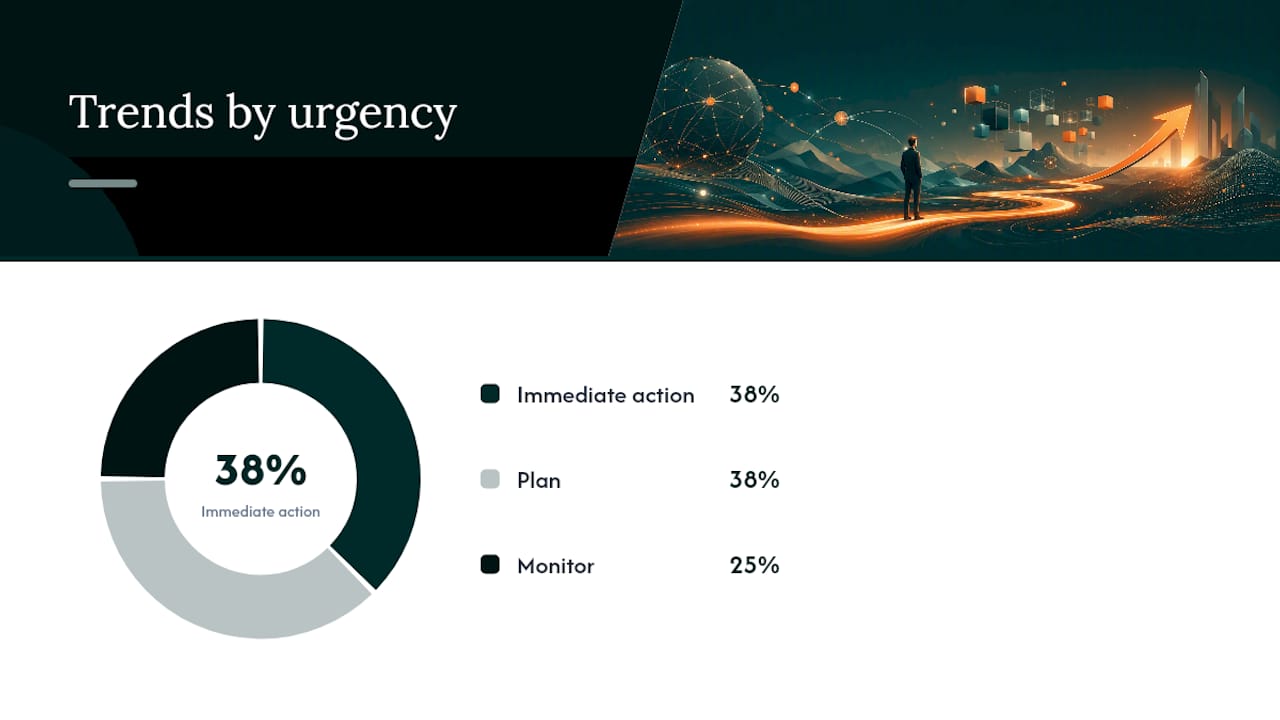
Not every trend below needs action this week. Some need monitoring, some need a plan by next quarter, and a few need to happen now if you want your content showing up inside AI answers instead of getting summarized around.
Here’s the landscape, ranked by urgency:
- AI Overviews and AI Mode reshaping discovery (immediate action) — these features now sit above organic results for a large share of queries and pull from multiple sources at once.
- Generative Engine Optimization (GEO) and Answer Engine Optimization (AEO) (immediate action) — the practice of structuring content so language models can lift and cite it directly.
- Content extractability as a ranking proxy (immediate action) — clear, modular facts get cited more than long, narrative prose.
- E-E-A-T signals tied to author identity (plan) — bylines, credentials, and verifiable expertise increasingly influence whether a model trusts a source enough to quote it.
- New measurement standards replacing rank tracking (plan) — citation frequency and generative referrals are becoming the KPIs that matter.
- Technical crawler governance (plan) — decisions about robots.txt, llms.txt, and bot access now carry real visibility consequences.
- Search-everywhere visibility (monitor, then plan) — Reddit threads, YouTube captions, and forum mentions increasingly feed AI answers.
- AI-driven personalization of results (monitor) — answers increasingly vary by user context and history, which complicates simple rank tracking.
- Voice and local search convergence with AI Overviews (monitor) — spoken queries increasingly route through the same synthesis layer as typed ones.
The traction is already measurable. Adobe’s data shows generative-AI referrals up more than 10x in under a year, and Pew Research found users click fewer organic links once an AI summary appears in the results. That combination, more AI-driven traffic funneling through fewer clicks on your actual domain, is why extractability now outranks keyword density as a priority.
If you only have bandwidth for one shift this quarter, make it this: audit your highest-traffic pages for whether a language model could lift a clean, standalone fact from them without needing the rest of the page for context. Most B2B content fails that test today.
How Do AI Overviews and RAG Change Search Behavior?
AI Overviews work through retrieval-augmented generation, or RAG: the system pulls passages from multiple web pages, then a model synthesizes them into a single answer rather than sending the searcher to pick one link. That mechanic explains why a page ranking outside the top 10 organically can still get quoted inside an AI Overview. SurferSEO’s analysis confirms that retrieval for these features often draws from a different pool than classic ranking signals, which means your rank tracker is no longer telling you the whole story.
The behavioral evidence backs this up. Pew Research found that Google users click fewer links once an AI summary loads at the top of the page. Fewer clicks on informational queries, more synthesized answers for comparison and how-to questions, and a growing share of “zero-click” sessions where the searcher never lands on your domain at all.
That does not mean every content type suffers equally.
- Losing ground: generic definitional content, thin comparison posts, and pages that bury a direct answer under several paragraphs of setup.
- Gaining ground: pages with specific data points, named methodologies, and answers stated plainly in the first two sentences of a section.
- Holding steady: transactional and branded-navigational queries, where searchers already know what they want and click through regardless.
The practical takeaway: an extractable fact looks like a single sentence carrying a number, a named source, and no dependent clauses pointing back three paragraphs. If a model has to read your whole page to understand one claim, it will usually find a competitor’s page that states the same claim more cleanly and cite that one instead.
What Does Content Engineering for AI Extractability Look Like?
Extractability means a fact can stand alone, get lifted by a model, and still make sense with zero surrounding context. Verifiability means that fact carries a checkable source. Contextual clarity means the surrounding structure, headers, tables, captions, tells both readers and machines exactly what they’re looking at without extra interpretation.
Here’s how to build that into an editorial workflow rather than treating it as a one-time audit:
- Open every section with the answer, not the setup. State the claim in sentence one, then support it.
- Write short, self-contained Q&A blocks under H3 headings that mirror how people actually phrase questions.
- Attach a source to every number. An unattributed statistic is a liability, not a data point, in a system built on trust signals.
- Caption every table and figure with a plain-language sentence stating what it shows, not just a label.
- Add author bylines with real credentials and update pages on a visible cadence, since freshness and identifiable expertise both feed E-E-A-T.
- Prioritize FAQPage, Article, and HowTo schema on pages built for direct answers. Search Engine Land’s 2026 guidance notes FAQPage schema use is climbing specifically because it maps cleanly to how AI systems chunk content.
Pro Tip: Run this test on your top five pages: copy one paragraph, paste it into a prompt with no other context, and ask “what is this claiming, and is it sourced?” If the answer isn’t obvious, restructure the paragraph before you touch anything else on the page.
Editorial workflow needs to change alongside the writing itself. That means adding an evidence-linking step before publish, rotating a freshness review into your content calendar instead of leaving old posts untouched for years, and treating author bio pages as ranking assets rather than an afterthought. A semantic SEO approach that organizes content around entities and topics, rather than isolated keywords, makes this restructuring far less painful when you get to page fifty.
Which Metrics Actually Prove AI Visibility Is Working?
Rank tracking and raw click volume no longer capture what’s happening when a language model reads your site and decides whether to quote it. Four metrics matter more in 2026:
- AI citation frequency — how often your domain gets named or quoted across a sample set of prompts relevant to your business.
- Share of model — your citation rate relative to competitors answering the same query set, similar in spirit to share of voice.
- Generative-referral traffic — sessions arriving from AI chat interfaces and AI Overview click-throughs, tracked separately from organic search.
- Assisted conversions from AI-sourced sessions — whether that referral traffic actually converts, not just arrives.
Instrumentation for these metrics is still maturing, but three approaches work today: reviewing server logs for AI crawler activity, running structured prompt tests against your target queries on a monthly cadence, and using a dedicated AI-citation tracker to log where and how often your brand shows up.
| KPI | What it measures | How to instrument it |
|---|---|---|
| AI citation frequency | Mentions across a fixed prompt set | Manual or automated prompt testing |
| Share of model | Your citations vs. competitors’ | Comparative prompt testing |
| Generative-referral traffic | Sessions from AI chat/AI Overview clicks | Analytics referral segmentation |
| Assisted conversions | Revenue tied to AI-sourced sessions | Multi-touch attribution modeling |
Adobe’s framing is direct: treat AI citation as brand hygiene with a revenue line attached, not a vanity metric reported alongside impressions. Report these numbers monthly, alongside your standard organic dashboard, and you’ll spot the shift long before it shows up in a quarterly revenue review. Ranksector’s own AI search visibility tracking guidance walks through sample dashboard structures for B2B teams building this out for the first time.
Should You Deploy llms.txt and How Do You Manage AI Crawlers?
Server-log evidence on llms.txt is inconsistent right now. SurferSEO’s analysis found that many major AI crawlers simply don’t check for the file yet, even where publishers have deployed it. That doesn’t mean skip it entirely, it means treat it as low-cost insurance, not a silver bullet.
Here’s a governance checklist worth running by next quarter:
- Audit robots.txt for AI-specific user agents (GPTBot, ClaudeBot, PerplexityBot) and decide deliberately, not by default, which ones to allow.
- Deploy llms.txt on a staging basis for a subset of pages, then monitor server logs for actual crawler pickup before rolling it out site-wide.
- Prioritize structured data on your highest-value pages first: Article, FAQPage, and Product schema before anything cosmetic.
- Add descriptive image metadata (alt text, captions, structured file names) since visual discovery through AI systems is growing alongside text-based citation.
- Assign an owner for crawler policy so decisions don’t drift between engineering and marketing with nobody actually accountable.
Pro Tip: Blocking every AI crawler to “protect” your content usually backfires: you lose citation opportunities without meaningfully slowing down the models that scrape aggregated third-party sources anyway.
Where Should You Invest in Brand Mentions and Off-Site Visibility?
Ahrefs found that branded mentions correlate strongly with AI visibility, and mentions on YouTube show an especially high correlation with getting cited inside AI answers. That’s a meaningful departure from classic link-building, where the backlink itself carried most of the weight.
Where the return is strongest right now:
- Earned media and PR that gets your brand name discussed in context, not just linked.
- YouTube presence with accurate captions, since transcripts feed directly into retrieval systems.
- Community engagement on forums like Reddit, where threads increasingly surface inside AI-generated answers.
- Documentation and product pages that get cited as reference material by other sites and by models themselves.
- Review management across third-party platforms, since aggregate sentiment feeds trust signals models weigh.
- Partnership content that earns mentions from adjacent, credible brands rather than link swaps for their own sake.
Prioritize the surfaces where your buyers already spend time, then measure impact through the same citation-tracking tools you’re using for owned content, not through raw backlink counts alone.
Your 6-Month Roadmap for AI-Ready SEO
Turning all of this into a plan matters more than understanding any single trend in isolation.
- Days 0 to 30: restructure your highest-traffic pages for extractability, add FAQPage and Article schema, and stand up basic citation monitoring so you have a baseline before you change anything else.
- Months 1 to 3: run structured prompt testing against your core query set, refresh your content pipeline to bake extractability into every new draft, and launch a focused off-site mention campaign around one or two priority topics.
- Months 3 to 6: formalize governance for AI visibility (who owns crawler policy, who reviews citation reports), automate measurement where possible, and scale author credentialing across your full content library.
| Phase | Owner | Primary KPI |
|---|---|---|
| 0 to 30 days | Content lead | Baseline citation frequency established |
| 1 to 3 months | Marketing + SEO team | Citation frequency trend, mention volume |
| 3 to 6 months | Marketing leadership | Share of model, assisted conversions |
Small teams without a dedicated SEO department often stall at phase one simply because nobody owns the rewrite work. That’s the exact bottleneck a generative engine optimization framework is built to solve, since it turns the extractability audit into a repeatable process instead of a one-time scramble.
Which AI SEO Tactics Should You Avoid in 2026?
Some shortcuts making the rounds do more damage than good. Watch for these:
- Mass-producing thin “GEO pages” stuffed with keyword variants but no real answer, since models penalize the same shallow patterns search engines always have.
- Manipulative “best of” listicles written to game citation frequency rather than genuinely compare options.
- Over-relying on llms.txt as a complete visibility strategy when adoption by major crawlers remains inconsistent.
- Trusting vendor claims about “guaranteed AI citations” without asking what data backs the promise.
Vet any new tool by asking for its measurement methodology before you ask about its feature list.
How Is AI Changing Local SEO and Voice Search?
Local search is absorbing the same synthesis shift as everything else. When someone asks a voice assistant or a chat interface “best plumber near me,” the answer increasingly comes as a synthesized recommendation pulling from Google Business Profile data, review content, and local citations, not a ranked list of ten links.
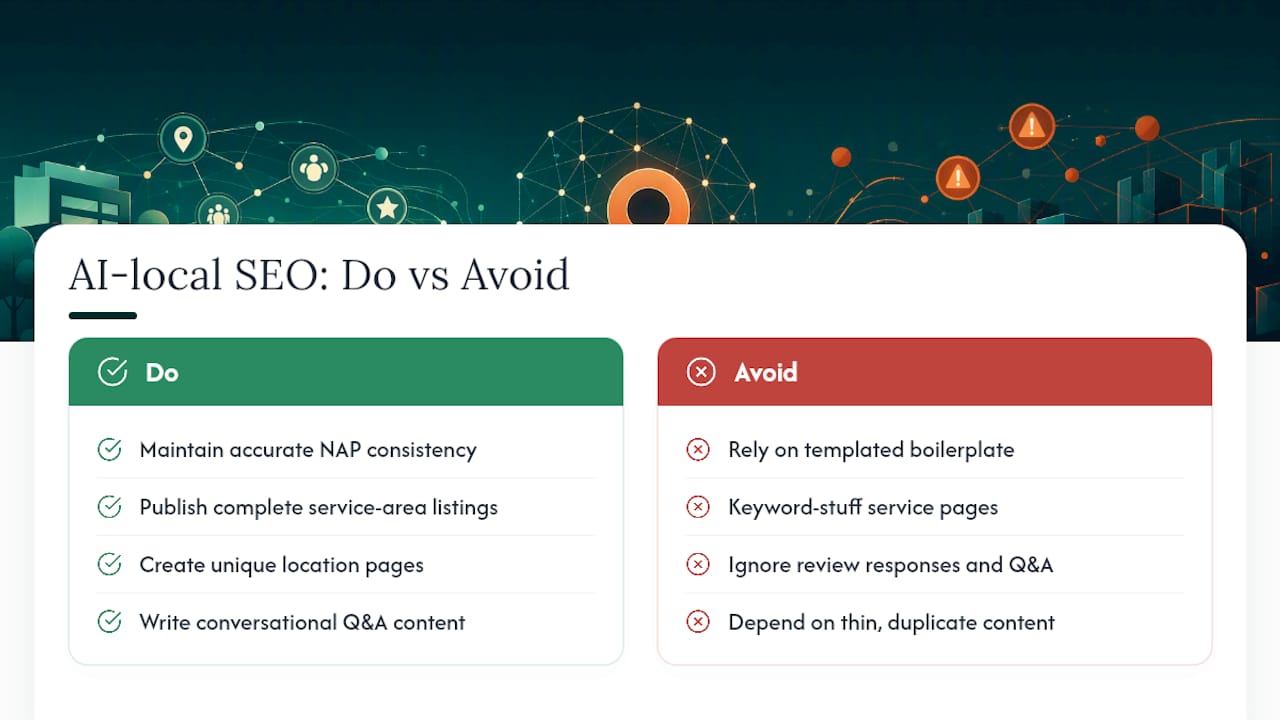
That raises the value of structured local data: accurate NAP (name, address, phone) consistency, complete service-area listings, and review volume that gives the model something concrete to summarize. Voice queries tend to be longer and more conversational than typed ones (“who’s open right now near me that does emergency repairs”), which rewards content written in a natural question-and-answer format over keyword-stuffed service pages.
Multi-location businesses face a compounding challenge here: each location page needs distinct, verifiable details, not templated boilerplate with the city name swapped out, because a synthesis engine drawing from thin, duplicate content has nothing unique to cite. The businesses winning local AI visibility right now are the ones treating review responses and Q&A sections as content assets, not customer service afterthoughts.
Expect voice and AI-driven local search to keep converging through 2026, since both rely on the same underlying retrieval mechanics that power AI Overviews for broader queries.
How Is AI Reshaping Personalization and User Experience?
AI-driven personalization means two searchers typing the identical query can now get meaningfully different synthesized answers based on location, search history, and inferred intent. That complicates the old assumption that a single “ranking” exists for any given keyword.
For marketers, this shift changes what “optimized” even means. A page built to rank for one generic query now needs to serve multiple intent variations well enough that it gets pulled into personalized answers across different user contexts. Practically, that means covering adjacent subquestions inside the same page rather than splitting them into separate thin posts, since fan-out coverage of related subqueries increases the odds of getting cited across a wider range of personalized results.
User experience matters more here too. Pages that load slowly, bury the answer, or force a reader through unnecessary steps give both human visitors and retrieval systems a reason to bounce toward a cleaner competitor. Personalization rewards depth and clarity together: a page needs enough breadth to serve varied intents, but each section still needs to answer its specific question directly and immediately.
What Are the Limits of AI SEO Technologies Right Now?
AI SEO tools are improving fast, but they carry real limitations worth naming honestly. Citation tracking is still inconsistent across platforms, what one tool reports as a mention, another might miss entirely, since no standardized measurement framework exists yet across ChatGPT, Perplexity, Google AI Overviews, and other surfaces.
Bias is a genuine concern too. Models trained on existing web content can reinforce whichever sources already dominate a topic, making it harder for newer or smaller sites to break into citation frequency even with strong content. There’s also a transparency gap: most AI systems don’t publish clear criteria for why they cite one source over another, which leaves marketers optimizing against inference rather than documented rules.
Expect volatility in what works. A tactic that earns citations this quarter may stop working after the next model update, since these systems retrain and adjust retrieval logic on their own schedule, not yours. Budget for ongoing monitoring rather than a one-time optimization project, and treat every recommendation in this guide as a current best practice rather than a permanent rule.
How Do AI SEO Tools Fit Into Your Existing Marketing Stack?
Most marketing teams already run a stack of analytics platforms, a CMS, an email tool, and some form of CRM. AI SEO tools need to slot into that stack rather than replace it wholesale.
Start with data flow: citation tracking and generative-referral analytics should feed into the same dashboard your team already checks daily, not live in a separate tool nobody opens. Connecting AI-visibility data to your CRM lets you trace whether a citation actually influenced a deal, closing the loop between marketing effort and revenue that most teams are currently missing.
Publishing workflows matter just as much. If your CMS requires manual reformatting every time you add schema or restructure a page for extractability, that friction will quietly kill your content velocity. Tools that publish directly into your existing CMS, rather than exporting content you then have to reformat by hand, remove that bottleneck entirely.
The teams handling this well treat AI SEO as an extension of their existing content operation, not a separate initiative running in parallel. That means one calendar, one measurement dashboard, and one owner accountable for both traditional organic performance and AI citation frequency, rather than two disconnected teams optimizing for different scorecards.
What Ranksector Has Learned Publishing at Scale
Ranksector has published more than 11,000 articles across B2B SaaS clients, which means the extractability and cadence principles above aren’t theoretical for us, they’re built into how every article gets structured and shipped. Daily publishing at that volume only works if content engineering (schema, sourcing, clear answers) is baked into the workflow from the start, not bolted on after the fact.
— Savannah
How Ranksector Helps You Execute This Roadmap
Ranksector is the alternative to hiring an agency or a full content team to run the roadmap above: it automates the daily publishing cadence, keyword research, and structural extractability work that AI-driven SEO now demands, without adding headcount.

For small teams without a dedicated content department, the hardest part of this guide isn’t understanding the trends, it’s finding the hours to restructure pages, add schema, and publish consistently enough for citation frequency to actually climb. Ranksector’s platform handles the daily article production, competitor-informed keyword research, and backlink exchange network that builds domain authority in the background, so the extractability work covered in the content engineering section above happens automatically rather than sitting on someone’s backlog. The free tools are a reasonable place to start if you want to see how your current content scores before committing to anything. If you’re ready to hand off daily publishing entirely, the agency-facing product page walks through what a fully automated content pipeline looks like for a growing B2B SaaS team.
Sources
- SEO in 2026: How AI is reshaping the fundamentals of search — Adobe
- 34% of U.S. adults have used ChatGPT, about double the share in 2023 — Pew Research
- 14 SEO Trends 2026: What’s Real, What’s Hype and What We Don’t Know Yet — SurferSEO
- 10 SEO trends I’ve seen firsthand in 2026 (With Data) — Ahrefs
FAQ
What Is the Biggest AI SEO Trend for 2026?
AI-driven synthesis through AI Overviews and AI Mode is the dominant trend, shifting visibility from ranking position to whether AI systems cite your content directly.
What Is the Difference Between GEO and Traditional SEO?
Traditional SEO optimizes for ranking position in a list of links, while Generative Engine Optimization (GEO) optimizes for getting quoted or cited inside an AI-generated answer.
How Do I Measure AI Search Visibility?
Track AI citation frequency, share of model, and generative-referral traffic instead of relying only on rank tracking, and tie those metrics to assisted conversions where possible.
Should I Block AI Crawlers From My Site?
Blocking every AI crawler generally costs you citation opportunities without meaningfully protecting your content, since aggregated third-party sources are often scraped regardless.
Can Small Teams Keep Up With AI SEO Changes Without an Agency?
Yes, with the right automation: platforms like Ranksector handle daily content publishing, keyword research, and structural optimization so small teams can maintain AI-ready content without hiring a dedicated department.