
What Is a Search Engine Algorithm? 2026 Guide
A search engine algorithm is a complex collection of systems that evaluates web pages using hundreds of signals to determine relevance, quality, and ranking order for any given query. Understanding how these systems work is the single most useful thing you can do to improve your site’s visibility. Search engine algorithms in 2026 are not a single formula. Google uses systems like RankBrain, BERT, and MUM together, and Google holds over 90% of the global search market. The stakes for getting this right are high.
What is a search engine algorithm and how does it work?
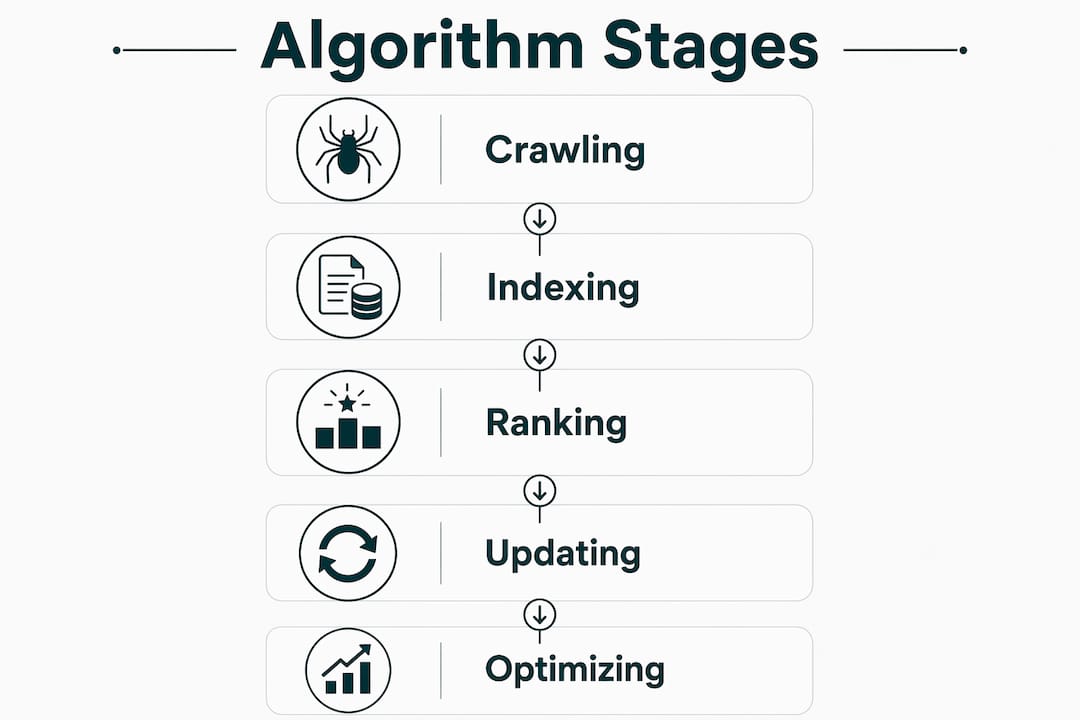
A search engine algorithm is best understood as a layered decision system, not a single rule. Every time someone types a query, the algorithm pulls from a pre-built index, scores pages against hundreds of signals, and returns an ordered list in milliseconds. The process that makes this possible runs in three distinct stages: crawling, indexing, and ranking.
Stage 1: Crawling
Crawling is how search engines discover web pages. Automated programs called bots or spiders follow links across the web, visiting URLs and collecting page data. Without successful crawling, a page is invisible to search engines regardless of its content quality. If your site blocks bots through a misconfigured robots.txt file, no amount of great writing will earn you a ranking.

Stage 2: Indexing
Indexing is the process of organizing and storing crawled content in a searchable database. Think of it as a library catalog. The search engine reads your page, extracts meaning, and files it under relevant topics. Search engines do not scan the live web on each query. They search their own index, which means index health is a prerequisite for visibility, not an afterthought.
Stage 3: Ranking
Ranking is where the algorithm applies its full weight. Once a page is indexed, the system scores it against competing pages using signals like content quality, backlinks, page speed, and user intent match. The result is the ordered list you see on a search results page. All three stages must succeed for a page to appear in results at all.
Pro Tip: Run a site crawl with a technical SEO tool before worrying about content. If your pages are not being crawled and indexed, ranking improvements are impossible.
What are the key ranking factors search engines consider?
Key ranking factors in 2026 include content quality, search intent match, backlinks, technical health, and E-E-A-T signals. Outdated tactics like keyword density and domain age carry far less weight than they once did. Here is what actually moves the needle:
- Content quality and depth. Pages that fully answer a query with accurate, well-structured information rank higher. Thin or duplicated content is penalized.
- Search intent match. The algorithm identifies whether a query is informational, navigational, or transactional, then rewards pages that match that intent precisely.
- Backlinks from authoritative sources. Links from trusted, relevant sites signal credibility. A single link from a high-authority domain outweighs dozens from low-quality sites.
- Technical health. Mobile-friendliness, page speed, Core Web Vitals, and crawlability are baseline requirements. Pages that fail these checks lose ranking ground regardless of content quality.
- E-E-A-T signals. Experience, Expertise, Authoritativeness, and Trustworthiness form Google’s quality evaluation framework. E-E-A-T is not a direct ranking algorithm but a framework used by human quality raters whose assessments shape how ranking signals are weighted. Strong E-E-A-T correlates with better rankings. You can read a detailed breakdown of what E-E-A-T means for SEO to understand how to build it.
One myth worth dispelling: keyword density is not a meaningful ranking signal. Modern algorithms penalize keyword stuffing and reward semantic accuracy instead. Repeating a keyword 20 times does not help. Writing one clear, thorough answer does.
Pro Tip: Before writing any page, identify the dominant search intent for your target query. Informational queries need explanatory content. Transactional queries need product pages with clear calls to action. Matching intent is faster than any technical fix.
Why do search engine algorithms update, and what is the impact?
Algorithms are not static formulas. They are continuously evolving systems that adjust signal weights based on new data, user behavior patterns, and the ongoing fight against spam. Algorithm updates adjust signal weights dynamically based on query intent, which means a page that ranked well last year may not rank well today if the algorithm has recalibrated what “helpful” looks like for that query.
Updates serve three main purposes: refining relevance, fighting manipulative tactics, and adapting to new search behaviors like voice and AI-generated queries. Each major update shifts which factors matter most for specific query types.
| Update type | Primary focus | Typical impact |
|---|---|---|
| Core quality updates | Content helpfulness and E-E-A-T | Broad ranking shifts across many niches |
| Spam updates | Link schemes and manipulative content | Penalties for low-quality or spammy sites |
| Helpful content updates | User-first content vs. SEO-first content | Demotion of thin, search-engine-written pages |
| Page experience updates | Core Web Vitals, mobile usability | Technical ranking adjustments |
The practical takeaway is that chasing individual updates is a losing strategy. Ranking factors are query-dependent and weighted dynamically, so the best defense against any update is a site built on genuine content quality and technical health. Monitor Google’s official Search Central blog for confirmed update announcements, and audit your traffic after each one to identify which pages were affected.
How can you use algorithm insights to improve SEO performance?
Understanding how the algorithm works gives you a clear framework for where to invest your time. The five practices below reflect how the algorithm actually scores pages in 2026.
- Align every page with search intent. Identify whether your target query is informational, transactional, or navigational before writing a single word. Pages that mismatch intent rarely rank, regardless of other signals.
- Fix technical SEO first. A page must be crawlable and indexable before any other ranking factor applies. Check your robots.txt, sitemap, and page speed before working on content. Learn more about how Google crawls new websites to avoid common technical mistakes.
- Build backlinks through genuine authority. Earn links by publishing content that other sites want to reference. Guest posts, original research, and data-driven articles attract links naturally. Review factors that affect SEO ranking to understand how link quality is evaluated.
- Write for humans, not bots. Use clear headings, short paragraphs, and direct answers. AI-driven search models prioritize semantic relevance and penalize manipulative tactics. Structure your content so a reader can find the answer in 10 seconds.
- Publish consistently. Fresh, regularly updated content signals an active, authoritative site. For B2B and SaaS businesses especially, a consistent publishing cadence builds topical authority over time.
Pro Tip: Run a content audit every quarter. Identify pages that have lost traffic, update them with current information, and check whether their intent match still holds. A refreshed page often recovers rankings faster than a brand-new one.
Key Takeaways
A search engine algorithm evaluates pages through crawling, indexing, and ranking, rewarding content that matches user intent, demonstrates authority, and meets technical standards.
| Point | Details |
|---|---|
| Three-stage process | Pages must pass crawling, indexing, and ranking to appear in search results. |
| Intent match is critical | Content that matches the search intent of a query ranks higher than keyword-heavy pages. |
| E-E-A-T shapes rankings | Experience, Expertise, Authoritativeness, and Trustworthiness influence ranking indirectly through quality evaluation. |
| Updates are continuous | Algorithm updates shift signal weights dynamically, so consistent quality beats chasing individual updates. |
| Technical SEO is non-negotiable | Crawlability and indexability are prerequisites. No technical foundation means no ranking opportunity. |
Why most SEO advice misses the point on algorithms
Most SEO content treats the algorithm like a lock that needs picking. Find the right keyword density, get a certain number of backlinks, hit a specific word count. That framing is wrong, and it has been wrong for years.
The algorithm is not trying to reward SEO tactics. It is trying to find the best answer to a human question. Every major update since 2022 has moved further in that direction, penalizing pages built for search engines and rewarding pages built for people. I have seen sites with technically perfect SEO lose 40% of their traffic overnight because their content was thin and intent-mismatched.
The counterintuitive truth is that the less you think about the algorithm and the more you think about your reader, the better you tend to rank. Write the clearest, most complete answer to a real question your audience has. Fix the technical issues that prevent Google from reading your page. Build credibility through consistent publishing and genuine backlinks. That is the entire strategy.
One more thing worth saying directly: the crawling and indexing stages get ignored far too often. Marketers obsess over content and links while their pages sit in a crawl queue or get blocked by a misconfigured tag. Check your index coverage in Google Search Console before anything else. A page that is not indexed cannot rank, no matter how good it is.
— Savannah
How Ranksector supports your SEO content strategy
Understanding the algorithm is step one. Executing on that understanding consistently is where most small teams fall short.
Ranksector automates the creation and publication of SEO-optimized articles for B2B SaaS companies, combining keyword research with a backlink exchange system to build domain authority without manual effort. With over 11,000 articles already published, the platform handles daily content production tailored to your audience so your team can focus elsewhere. You can start with Ranksector’s free SEO tools to audit your current content, or run a full AI-powered site audit to identify exactly where your pages are losing ranking ground.
FAQ
What is a search engine algorithm in simple terms?
A search engine algorithm is a set of systems that scores and ranks web pages based on hundreds of signals to return the most relevant results for a query. Google uses multiple systems including RankBrain, BERT, and MUM rather than a single formula.
How do search algorithms decide which pages rank first?
Algorithms evaluate pages based on content quality, search intent match, backlinks, technical health, and E-E-A-T signals. The weight of each factor varies depending on the type of query being searched.
What are algorithm updates and why do they happen?
Algorithm updates are changes to how search engines weight ranking signals. They happen continuously to improve relevance, fight spam, and adapt to new user behaviors. Major updates can shift rankings broadly across entire industries.
Does keyword density still matter for ranking?
Keyword density is no longer a meaningful ranking signal. Modern algorithms penalize keyword stuffing and reward semantic accuracy, clear structure, and content that fully addresses user intent.
How often should I update my content to stay aligned with algorithm changes?
A quarterly content audit is a practical baseline. Refresh pages that have lost traffic, verify their intent match still holds, and update any outdated information. Consistent updates signal an active, authoritative site to search engines.