
Scrappy SEO Strategies: Low-Cost Examples That Work
Scrappy SEO strategies are practical, low-cost methods that small business owners use to grow organic traffic without agencies or expensive tools. The industry term is “lean SEO,” but scrappy SEO strategies examples are what founders actually search for when they need results on a tight budget. A one-time investment of $99–$199 in directory submissions plus founder-written content can build a working SEO engine in 3–6 months. That means you do not need a $2,000/month retainer to compete. You need the right moves, applied consistently.
1. What are the best scrappy SEO strategies to start with?
The two highest-ROI starting points are directory submissions and founder-written content. Both cost almost nothing and compound over time.
Directory submissions build your backlink foundation fast. Outsourcing directory submissions saves 40–60 hours of manual labor and creates permanent, high-DR backlinks that early-stage sites need. Pay once, benefit for years.

Founder-written content is the other anchor. Founder-authored content ranks better than outsourced content because Google’s experience-centered ranking model rewards authenticity and real expertise. You know your product and your customers better than any freelancer does. That knowledge shows up in the writing, and Google notices.
The free tool stack covers everything else you need at this stage:
- Google Search Console monitors impressions, clicks, and indexing issues at no cost
- Ahrefs free tier gives you keyword data and backlink snapshots without a subscription
- Screaming Frog (up to 500 URLs free) audits your site for broken links, missing tags, and crawl errors
- Google Business Profile is the single highest-ROI move for local businesses, driving 126% more traffic than unclaimed profiles
That last point deserves emphasis. A fully optimized Google Business Profile puts you in the local “3-pack,” which generates dramatically more visibility than ranking in positions 4–10 on a standard results page.
Pro Tip: Before you spend a dollar on any SEO tool, spend two weeks writing three founder-authored pages and submitting to 10 directories. Track the results in Google Search Console. You will have real data before you commit any budget.
2. How to identify near-ranking pages for faster SEO gains
Near-ranking pages are your fastest path to more traffic. These are pages already sitting in positions 5–15 in Google Search Console. They are close to the top, and a focused refresh often moves them there within weeks.
Here is the process:
- Open Google Search Console and go to the Performance report
- Filter by “Position” and sort queries showing average position between 5 and 15
- Identify which pages own those queries
- Open each page and revise the main header to match the exact question format users are searching
- Add 2–3 internal links from higher-authority pages pointing to the refreshed page
- Update the content with any missing details, fresher data, or clearer answers
Refreshing pages in positions 5–15 delivers faster and more reliable ranking gains than publishing many new low-quality posts. One well-refreshed page beats five thin new articles every time.
The question-format header change is often underestimated. When your H1 or H2 matches the exact phrasing of a user’s search query, Google reads your page as a direct answer. That alignment alone can push a position-9 page to position-3.
Pro Tip: Run this audit once a month. Set a recurring calendar reminder. The pages you refresh today will keep climbing for 60–90 days after the update.
3. What internal linking strategies make the biggest impact?
Internal linking is the most underused budget SEO tactic available to small business owners. It costs nothing and directly improves how Google crawls and ranks your pages.
The core principle is hub-and-leaf architecture. Your hub pages cover broad topics. Your leaf pages go deep on specific subtopics. Every leaf page links back to its hub, and the hub links out to all its leaves. This web structure tells Google which pages are most important and passes ranking authority across your site.
Dense internal linking between hub and leaf pages significantly improves indexation and PageRank distribution. One programmatic SEO experiment achieved 100% indexation with zero backlinks by relying entirely on strong internal linking and quality niche content. That result shows how much authority you can build from within your own site.
Avoid publishing isolated blog posts that link to nothing and receive no links. A post that sits alone in your site architecture is nearly invisible to Google. Every new page you publish should receive at least two internal links from existing pages and should link out to at least two related pages. For more on when automation helps this process, the internal linking automation guide on the Ranksector blog breaks down the tradeoffs clearly.
- Link from your highest-traffic pages to your newest or most important commercial pages
- Use descriptive anchor text that matches the target page’s topic, not generic phrases like “click here”
- Audit your orphan pages monthly using Screaming Frog’s free tier to find pages with zero internal links
- Update old posts to include links to newer content, keeping your internal link graph current
4. Which content types work best for scrappy SEO?
Commercial-intent landing pages outperform informational blog posts for small business revenue. Commercial-intent pages yield 5–10x more revenue than informational content for small businesses. The reason is simple: buyers searching with commercial intent are ready to act.
Compare these two page types:
- Weak: “What is plumbing?” (informational, attracts curious readers, converts almost nobody)
- Strong: “Emergency Plumbing in Phoenix — 24/7 Service” (commercial intent, attracts buyers, converts at a high rate)
The strong page answers a specific buyer question, names a location, and signals availability. Google ranks it for people who need a plumber right now. The weak page attracts students and researchers who will never call you.
Write pages that answer the exact question a buyer asks at the moment of decision. For a local bakery, that means “custom wedding cakes in Austin” beats “how wedding cakes are made.” For a SaaS product, “project management software for construction teams” beats “what is project management.” The free keyword research guide on Ranksector covers how to find these buyer-intent phrases without paid tools.
Once you have commercial pages built, link to them from every relevant blog post and informational page on your site. That internal link flow pushes ranking authority toward the pages that actually generate revenue.
5. How to monitor SEO progress without expensive tools
Consistent monitoring beats sporadic audits. Weekly two-hour SEO habits over six months outperform one-time blitzes. Treat SEO like a fitness routine, not a one-time project.
The free monitoring stack covers everything a small business needs:
- Google Search Console Performance report: Check weekly for impression and click trends, new ranking queries, and pages losing ground
- Google Search Console Coverage report: Spot indexing errors, pages blocked by robots.txt, and crawl issues before they compound
- PageSpeed Insights: Run your top five pages monthly to catch Core Web Vitals problems that hurt rankings
- Screaming Frog free tier: Run a full crawl monthly to find broken links, duplicate title tags, and missing meta descriptions
Two practical rules keep your monitoring focused. First, do not chase high-competition keywords early. A new site targeting “project management software” will not rank for years. Target specific, local, or long-tail queries where competition is low and your content can actually win. Second, fix technical issues before adding new content. A site with broken links and slow pages will not rank well no matter how much content you publish. The technical SEO basics guide on Ranksector walks through the most common issues and how to fix them for free.
Key Takeaways
The most effective scrappy SEO approach combines directory backlinks, founder-written content, near-ranking page refreshes, and dense internal linking to build compounding organic traffic without significant spending.
| Point | Details |
|---|---|
| Start with directories and founder content | A $99–$199 directory investment plus founder-written pages builds a working SEO base in 3–6 months. |
| Refresh near-ranking pages first | Pages in positions 5–15 respond fastest to content updates and internal link additions. |
| Build hub-and-leaf internal links | Connecting hub and leaf pages improves indexation and distributes ranking authority across your site. |
| Prioritize commercial-intent pages | Buyer-intent landing pages generate 5–10x more revenue than informational blog posts. |
| Monitor weekly with free tools | Google Search Console and PageSpeed Insights cover all essential SEO tracking at zero cost. |
What I’ve learned from watching scrappy SEO actually work
The founders who get the best results from lean SEO are not the ones who spend the most. They are the ones who show up consistently. I have seen small business owners outrank well-funded competitors simply by refreshing three pages a month and building internal links every time they publish something new.
The biggest mistake I see is tool stacking before the basics are done. Founders buy keyword research subscriptions, rank trackers, and content tools before they have even claimed their Google Business Profile or written ten pages of founder-authored content. The tools feel productive. They are not. The basics are productive.
My honest recommendation: spend your first 90 days writing content yourself, submitting to directories, and running Google Search Console weekly. Do not outsource your content until you have proven what topics and formats actually work for your audience. The Link Squeeze blog has solid practical coverage on link building approaches that fit this same lean philosophy.
Patience is the real competitive advantage in scrappy SEO. Most competitors give up after two months. If you stay consistent for six, you will be ranking for queries they abandoned.
— Savannah
How Ranksector fits a scrappy SEO approach
Small business owners running lean SEO programs still need content published regularly. That is where consistency breaks down for most solo founders.
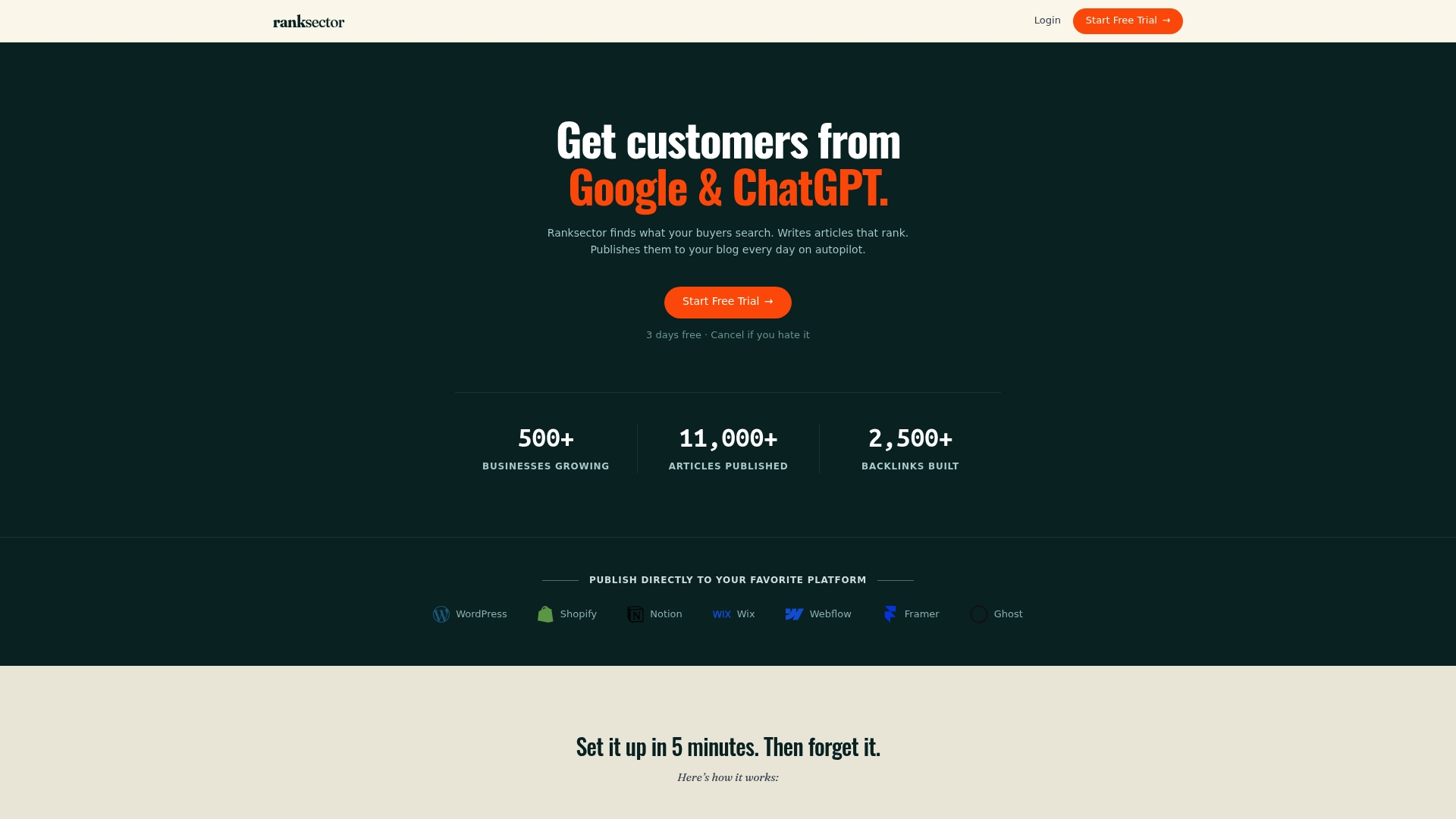
Ranksector automates SEO article creation and publication for small teams that cannot afford to hire a content team. The platform’s free SEO tools cover keyword research and content planning without a subscription. For founders ready to scale, Ranksector publishes daily SEO-optimized articles tailored to your audience, building domain authority through a built-in backlink exchange system. With over 11,000 articles already published, the results are documented. If you want the content side of scrappy SEO handled without adding hours to your week, Ranksector is built for exactly that.
FAQ
What are scrappy SEO strategies?
Scrappy SEO strategies are low-cost, practical SEO methods that small business owners use to grow organic traffic without agencies or expensive tools. They include directory submissions, founder-written content, page refreshes, and internal linking.
How much does scrappy SEO cost to start?
A one-time investment of $99–$199 in directory submissions, combined with free tools like Google Search Console and Screaming Frog, covers the full foundation of an early-stage SEO program.
Which free tools are best for DIY SEO?
Google Search Console, Ahrefs free tier, Screaming Frog (up to 500 URLs), and PageSpeed Insights together cover keyword research, site auditing, and performance monitoring at no cost.
How long does scrappy SEO take to show results?
Founder-written content and directory backlinks typically produce measurable ranking improvements within 3–6 months when applied consistently. Near-ranking page refreshes can show movement in 4–8 weeks.
Should I write my own SEO content or outsource it?
Write it yourself first. Founder-authored content ranks better because Google’s experience-centered model rewards genuine expertise and authenticity over generic outsourced writing.