
How SEO Generates Passive Traffic: A Tool-First Guide
SEO generates passive traffic by creating indexed, evergreen assets that keep ranking and attracting intent-driven visitors without ongoing promotion. Submit a new page via Google Search Console to get it indexed, and most well-optimized pages begin drawing meaningful traffic within 2–4 months. Build five interactive tools and you can realistically expect 1,000–2,500 monthly visitors without running a single ad.
Four mechanisms make that traffic passive:
- Evergreen content answers a recurring query so the page stays relevant for months or years
- SERP ranking puts your asset in front of searchers the moment they look, every time
- Backlinks and embeds earned by useful tools compound your domain authority continuously
- Topical authority built across a content cluster helps new pages rank faster over time
Key Takeaways
SEO generates passive traffic by building indexed, evergreen assets that rank for intent-driven queries and compound in authority over time, with meaningful results typically appearing within 2–6 months.
| Point | Details |
|---|---|
| Passive traffic mechanism | Indexed evergreen assets rank for recurring queries and attract visitors without ongoing promotion. |
| Timeline to expect | Most pages see meaningful traffic in 2–6 months; compounding growth typically accelerates around month six. |
| Traffic magnet estimates | Five tools produce roughly 1,000–2,500 monthly visitors; ten tools reach 2,000–5,000 monthly visitors. |
| Best monetization fit | Tool pages convert best via lead generation; high-volume informational pages suit display advertising. |
| Ranksector for scaling | Ranksector automates publishing and backlink exchange, making a library of 10–20 passive assets practical for small teams. |
Table of Contents
- How SEO keeps bringing visitors after promotion stops
- Why traffic magnets outperform ordinary posts for passive traffic
- What to publish around a tool so Google understands and ranks it
- Technical fundamentals that let passive pages get discovered and ranked
- How useful assets earn links and embeds at scale
- Realistic timeline: when does meaningful passive traffic begin?
- How to convert passive SEO traffic into revenue
- How to scale passive traffic with a library of complementary assets
- A practical 10-step checklist to launch your first passive-traffic tool page
- How to maintain passive pages so they keep growing
- Why asset-based SEO is the only approach worth building around
- Ranksector scales your passive traffic library without the manual overhead
- Sources
How SEO keeps bringing visitors after promotion stops
Once a page ranks for an intent-driven query, it works like a staffed front desk that never clocks out. SEO pulls engaged, ready-to-act buyers while paid and social channels push messages at audiences who weren’t looking. That difference in intent is why organic visitors tend to convert at higher rates than traffic from display ads or social feeds.
The underlying mechanics are straightforward:
- Indexing and SERP presence: Google stores your page and serves it for matching queries indefinitely
- Intent match: a page built around a specific query attracts visitors who already want what you offer
- Backlinks and embeds: each inbound link raises domain authority, which lifts rankings for every page on the site
- Content longevity: a well-maintained page can drive visitors for years without a rewrite
- Internal linking: connecting related pages passes authority across your site and accelerates ranking velocity
Statistic: The SEO flywheel typically shifts into a higher gear around month six. By year two, sites with consistent publishing see compounding, non-linear growth as content and backlinks accumulate.
Pro Tip: Seed your content cluster with one high-intent, bottom-of-funnel page first. Ranking it early signals topical authority to Google and gives every subsequent page a faster path to the top.
Why traffic magnets outperform ordinary posts for passive traffic
A standard blog post answers a question once. A traffic magnet, such as a calculator, estimator, planner, or generator, solves a recurring problem every time a visitor arrives. That reusability is what makes it a durable passive asset.
Consider the user intent behind each format:
- ROI calculator: a buyer evaluating a purchase wants a number, not an article
- Pricing estimator: a prospect comparing vendors needs a quick figure to move forward
- Template or checklist: a practitioner wants something they can use immediately
- Generator tool: a marketer needs output they can copy and deploy
Each of these satisfies a specific, high-frequency query. Because the tool itself is the answer, other sites and educators link to it so their own readers can use it. That earned distribution is the multiplier that turns a single asset into a long-lived traffic source. According to data on traffic magnet performance, building five tools produces roughly 1,000–2,500 monthly visitors; ten tools reach 2,000–5,000 monthly visitors.
Pro Tip: Narrow the topic. “SaaS churn rate calculator” outperforms “business calculator” because it matches a precise query from a buyer who already knows what they need. For B2B SaaS specifically, a “monthly recurring revenue growth estimator” targets a query with near-zero competition and high purchase intent.
What to publish around a tool so Google understands and ranks it
A tool page without surrounding context is invisible to Google. The most important on-page signals are a keyword-rich title tag, a clear H1, and a descriptive first paragraph that explains what the tool does and who it helps.
A minimal template for a tool page:
- Title tag: “[Tool Name] — Free [Outcome] Calculator for [Audience]”
- Meta description: One sentence stating what the tool calculates and why it matters
- First 100 words: Name the tool, state the problem it solves, and include the primary keyword naturally
Surrounding content that helps Google understand the page:
- A short “how to use this tool” section with numbered steps
- A glossary of the key inputs and what each means
- Two or three example scenarios showing the tool in action
- An FAQ block addressing common questions about the topic
- Related internal links to supporting articles in the same cluster
- Structured data: FAQ schema for the Q&A block, or HowTo schema for the step-by-step section
Schema implementation is simpler than it sounds. Add JSON-LD markup in the <head> of the page, referencing the on-page SEO checklist for the exact property names. Google’s Rich Results Test confirms whether the markup is valid before you publish.
Technical fundamentals that let passive pages get discovered and ranked
Technical issues are the fastest way to waste good content. Before you publish, confirm these are in place:
- Fast page speed (aim for under 2.5 seconds on mobile, measured with PageSpeed Insights)
- Mobile-friendly layout that renders cleanly on small screens
- Crawlable URLs with no accidental
noindextags - Canonical tags on any page with duplicate or near-duplicate variants
- An XML sitemap submitted to Google Search Console
- A clean
robots.txtthat doesn’t block your tool pages
Once the page is live, request indexing directly in Google Search Console under the URL Inspection tool. Most pages appear in the index within a few days to two weeks. If a page hasn’t been indexed after three weeks, check for crawl errors, thin content flags, or blocked resources in the Coverage report.
Pro Tip: Monitor server response codes weekly in Search Console’s Coverage report. A 5xx error on a tool page can drop it from the index silently, and you won’t notice until traffic disappears.
How useful assets earn links and embeds at scale
Usefulness and embeddability drive earned links. A tool that produces a shareable output, such as a score, a chart, or a downloadable result, gives other site owners a reason to reference it. That’s the mechanism; the tactics below accelerate it.
Outreach sequence for a new tool:
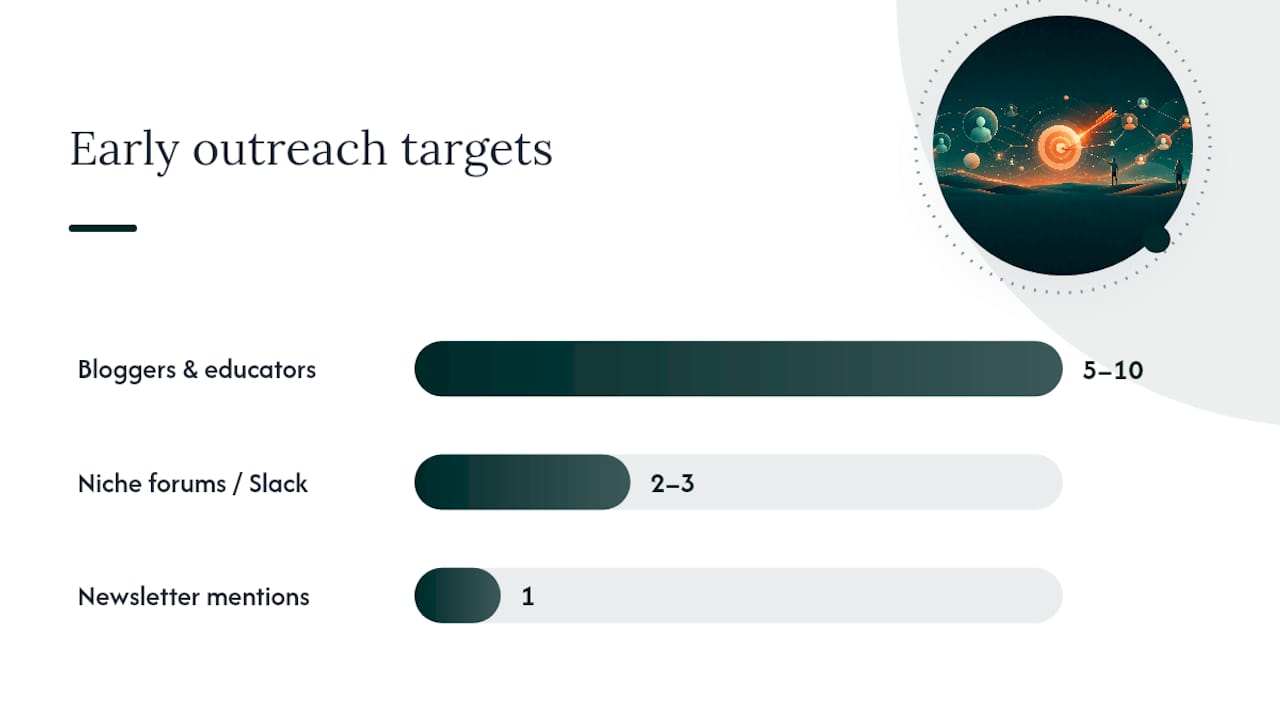
- Identify five to ten bloggers or educators who cover the tool’s topic
- Send a short, specific email explaining what the tool does and why their audience would use it
- Search for “resource page” + your topic keyword and pitch inclusion on those pages
- Post the tool in two or three niche forums or Slack communities where the target audience is active
- Submit the tool to relevant directories using a directory submission service to accelerate early discovery
Beyond direct outreach, syndication and PR hooks extend reach without appearing spammy. One well-placed mention in an industry newsletter can generate dozens of organic backlinks.
Track link impact monthly in Google Search Console (Links report) or a third-party tool. Watch for referring domain growth alongside ranking movement to confirm that links are translating into position gains.
Realistic timeline: when does meaningful passive traffic begin?
Most tool pages and evergreen articles begin attracting meaningful traffic within 2–6 months of publication. The first two months are primarily indexing and crawling. Impressions appear in Search Console before clicks do, so rising impression counts in weeks three through eight are a healthy early signal.
Statistic: The SEO flywheel typically shifts around month six. Sites that publish consistently into topic clusters often see non-linear growth by year two as domain authority compounds.
If impressions are flat after eight weeks, check indexing status, review whether the page targets a query with realistic competition, and confirm that at least one or two inbound links exist. Applying SEO quick wins early, such as tightening the title tag or adding internal links from higher-authority pages, can accelerate the timeline noticeably.
How to convert passive SEO traffic into revenue
Choose your monetization model based on what your visitors intend to do, not just how many of them arrive. Affiliate marketing, display ads, lead generation, digital products, and site flipping each suit different asset types and audience behaviors.
- Display advertising: works best on high-volume informational pages where visitors browse rather than buy; revenue scales with traffic volume
- Affiliate marketing: fits product-comparison pages and review hubs where visitors are evaluating a purchase; commission rates vary by niche
- Lead generation: the strongest fit for tool pages, where a visitor who used your calculator is already qualified; capture their email or route them to a contact form
- Digital products: templates, playbooks, and courses monetize well when the tool page attracts practitioners who want to go deeper
- Site flipping: a library of passive-traffic assets with documented revenue is a saleable business; buyers pay multiples of monthly revenue
For a B2B SaaS tool page, lead generation typically produces the highest revenue per visit. Track revenue-per-visit and conversion rate by page to identify which assets deserve more distribution effort. The Authority Flywheel framework ties buyer-intent keyword targeting directly to this kind of conversion architecture, making it a useful model for structuring your tool library around qualified lead capture.
How to scale passive traffic with a library of complementary assets
Scale by building multiple independent assets that each target a different query. Every new tool adds its own traffic stream and strengthens the topical authority of the whole site.
| Library size | Estimated monthly visitors |
|---|---|
| 5 tools | 1,000–2,500 |
| 10 tools | 2,000–5,000 |
| 20 tools | 1,000–2,500 |
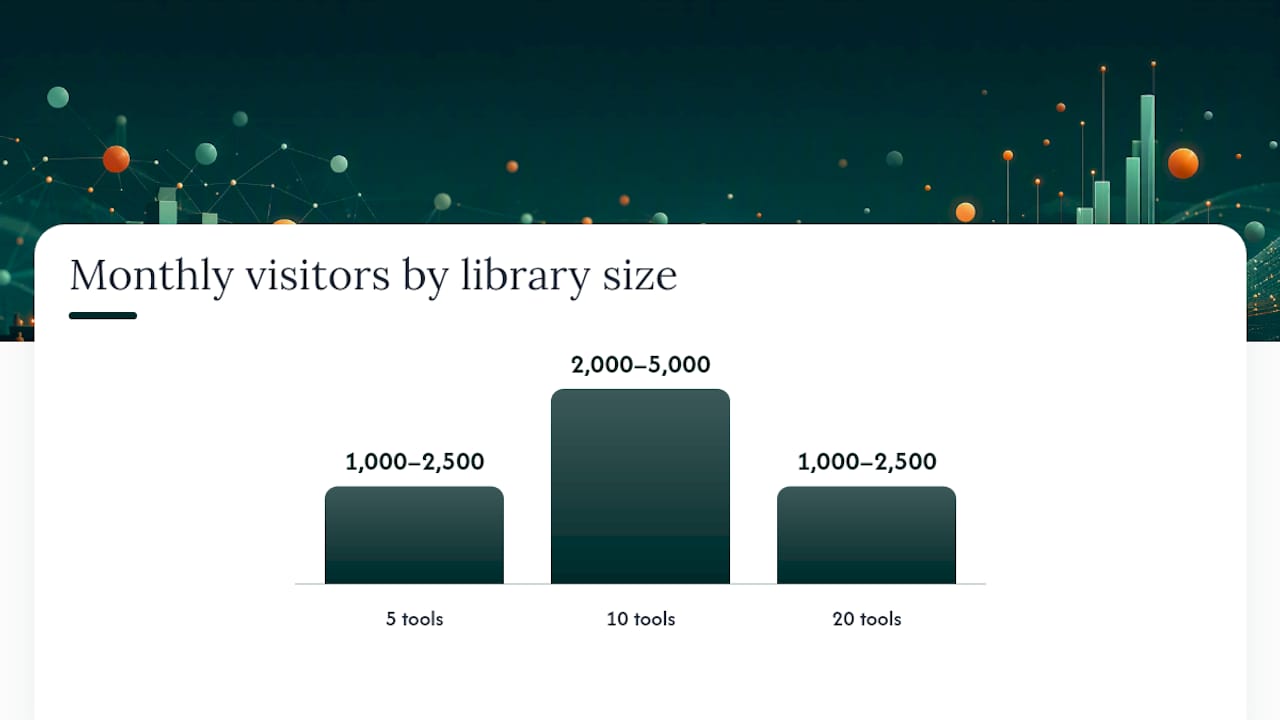
Source: Traffic magnet performance estimates
Signal clusters accelerate this. When you interlink related tools and supporting articles, Google sees a coherent topical authority signal across the cluster. A new tool in an established cluster can rank in weeks rather than months because the domain already holds authority on that topic. Read more on how internal linking improves SEO to structure your cluster effectively.
Pro Tip: Template your tool pages. Once you’ve built one that ranks, extract the title structure, schema markup, surrounding content format, and outreach email into a repeatable template. Ranksector’s automated publishing pipeline can then produce and publish new assets in that template at scale, cutting per-asset production time significantly.
A practical 10-step checklist to launch your first passive-traffic tool page
Follow these steps from topic validation through your first 90 days of measurement.
- Validate the query: confirm the target keyword has consistent monthly search volume and a realistic difficulty score
- Research intent: read the top five ranking pages to understand exactly what format and output the searcher expects
- Build the MVP tool: prioritize accuracy and simplicity over visual complexity; one clear output beats a cluttered dashboard
- Write surrounding content: add a how-to section, glossary, example scenarios, and an FAQ block
- Optimize on-page elements: keyword in title tag, H1, first 100 words, and image alt text; keep the URL short and descriptive
- Add schema markup: implement FAQ or HowTo JSON-LD and validate with Google’s Rich Results Test
- Submit for indexing: use the URL Inspection tool in Google Search Console and request indexing immediately after publishing
- Run initial outreach: contact five targeted bloggers or resource-page owners in the first week
- Post in niche communities: share in two or three relevant forums or Slack groups where your audience is active
- Measure for 90 days: track impressions, clicks, referring domains, and any conversions weekly; adjust title tag or content if impressions plateau after week eight
Pro Tip: Run a small experiment before building a full tool: publish a static “calculator” page with manually computed example outputs. If it earns impressions within 30 days, build the interactive version. This tests demand before you invest in development.
How to maintain passive pages so they keep growing
The single maintenance priority is accuracy. A tool that produces wrong outputs loses user trust, earns negative signals, and stops attracting links. Everything else is secondary.
Monthly maintenance checklist:
- Verify all tool inputs and outputs against current data or formulas
- Check Google Search Console for ranking drops, crawl errors, or manual actions
- Review click-through rate; a drop without a ranking change usually means the title tag needs refreshing
- Audit inbound links for any lost or broken referring domains
- Confirm the page loads in under 2.5 seconds on mobile
Optimization tactics to run quarterly:
- Expand content to cover new query variants surfaced in the Search Console Queries report
- Refresh any statistics or benchmarks cited on the page
- Add internal links from newer, higher-authority pages in the cluster
- Test a revised CTA or lead-capture element if conversion rate has stagnated
Avoid over-automating internal links without a clear strategy. Read when internal linking automation helps and when it hurts before deploying any bulk linking tool across your asset library.
Why asset-based SEO is the only approach worth building around
The conventional SEO advice is to publish more content, more often. That’s not wrong, but it misses the point. Volume without asset design produces a blog that gets indexed and forgotten. The pages that compound into real passive traffic are the ones built around a specific, recurring user need, not a content calendar.
At Ranksector, we’ve seen this pattern across more than 11,000 published articles. The assets that keep driving traffic years later share one trait: they solve a problem the visitor has every time they arrive, not just once. A calculator doesn’t go stale the way a trend piece does. A template doesn’t need a news hook. That durability is what separates a traffic asset from a traffic event.
The other thing most teams underestimate is the cost curve. The first tool is expensive because you’re building the template, the schema, the outreach process, and the content format from scratch. The tenth tool costs a fraction of that. Automation, whether through Ranksector’s publishing pipeline or your own templated workflow, is what makes a library of twenty tools practical for a team of two.
Ranksector scales your passive traffic library without the manual overhead
Daily publishing, keyword research tied to competitor gaps, and a built-in backlink exchange: Ranksector gives small B2B SaaS teams the infrastructure to build a tool library at a pace that would otherwise require a full content team.
Ranksector’s automated pipeline handles article creation, formatting, and direct CMS publishing, so your team focuses on strategy rather than production. The backlink exchange network grows domain authority in parallel, which means new tools in your cluster rank faster as the library expands. With over 11,000 articles published and a Google Search Console integration that surfaces keyword and ranking data in one dashboard, the platform is built specifically for the compounding, asset-first approach this guide describes.
Start with Ranksector’s free tools to see the format in action, then explore the full platform to automate your publishing cadence.
Sources
- How to Use Traffic Magnets to Pull 10,000+ Monthly Visitors Without Ads | Mealer Mike · Medium
- How to make money with SEO · Copyblogger