
Types of Featured Snippet Keywords: 2026 SEO Guide
Featured snippet keywords are search queries that trigger a highlighted answer box at the top of Google’s results page, above all ranked links. Content creators and digital marketers who understand the types of featured snippet keywords gain a direct path to position zero, the most visible real estate in organic search. The four main snippet formats are paragraph, list, table, and video. Each format responds to a different query structure and requires a different content approach. Question-form queries trigger featured snippets at a high rate, with definitional queries earning snippets at an 81% rate. Getting the format right is not optional. It is the deciding factor between earning the snippet and losing it to a competitor who structured their content better.
1. Types of featured snippet keywords: the four core formats
Featured snippets fall into four recognized categories: paragraph, list, table, and video. Google’s algorithm selects the format based on what best satisfies the query’s intent. A “what is” question gets a paragraph. A “how to” query gets a list. A pricing comparison gets a table. A tutorial gets a video. Knowing which format a query demands is the first step in any snippet keyword strategy. Each format has specific structural requirements, and meeting those requirements precisely is what separates pages that earn snippets from pages that do not.
2. Paragraph snippet keywords: the most common format
Paragraph snippets are the dominant snippet format. Paragraph snippets account for 58% to 70% of all featured snippets. That dominance means most snippet opportunities you encounter will require a well-crafted paragraph answer.
These snippets are triggered by definition, explanatory, and “what is” style queries. Common examples include:
- “What is domain authority?”
- “What does bounce rate mean?”
- “Why does page speed matter for SEO?”
- “Who is responsible for technical SEO?”
The optimal paragraph answer runs 40–60 words. Longer answers get truncated. Shorter answers may not satisfy Google’s completeness threshold. Google’s snippet extraction strongly favors brevity and clarity, so verbose answers reduce your capture likelihood.
Structure your content with the exact question phrased as an H2 heading, then place the answer paragraph immediately below it. No preamble. No “great question.” Just the direct answer. Exact phrase matching in H2 headings is a significant ranking signal for snippet extraction. Paraphrasing the query in your heading reduces your chances sharply.

Pro Tip: Write your paragraph answer as if you are defining a term in a dictionary. One clear sentence that states the definition, followed by one or two sentences that add context. That structure matches what Google pulls for paragraph snippets.
3. List snippet keywords: ordered and unordered formats
List snippets cover 11% to 19% of all featured snippets. They split into two types: ordered lists for processes and unordered lists for collections or criteria. Understanding which type to use matters because Google reads the HTML to determine snippet format.
Ordered list queries follow procedural or step-by-step intent:
- “How to set up Google Search Console”
- “How to write a meta description”
- “Steps to conduct a content audit”
- “How to build backlinks for a new site”
Unordered list queries follow “best of,” “types of,” or criteria-based intent:
- “Best tools for keyword research”
- “Types of SEO audits”
- “Factors that affect page ranking”
- “What to include in a content brief”
List snippets respond best to procedural or “how-to” queries and require clean HTML lists with 5–8 concise items. Fewer than five items can signal thin content. More than eight items often causes Google to truncate the list with a “more items” link, which reduces the snippet’s usefulness.
Write each list item as a short, action-oriented phrase. Avoid full sentences where a phrase works. “Install the plugin” beats “You should install the plugin to proceed.” Concise items extract cleanly. Verbose items get cut.
Pro Tip: Use <ol> tags for step-by-step processes and <ul> tags for collections. Google reads the HTML element type to decide whether to display numbers or bullets in the snippet. Using the wrong tag type sends a conflicting signal.
4. Table snippet keywords: comparison and specification queries
Table snippets represent 6% to 8% of featured snippets. They appear for comparison, pricing, and specification queries where the reader needs to evaluate options side by side. Common triggers include:
- “SEO tool pricing comparison”
- “Content types by word count”
- “Snippet format by query type”
Table snippets require structured HTML tables with 3–5 rows and 2–4 columns, with clear column headers for clean snippet extraction. Tables with too many columns get compressed and become unreadable in the snippet box. Tables with too few rows may not justify the table format.
| Element | Best practice |
|---|---|
| Column headers | Use short, descriptive labels (2–4 words) |
| Row labels | Name each row clearly in the first column |
| Cell content | Keep each cell to one value or short phrase |
| Table size | 3–5 rows, 2–4 columns |
| HTML markup | Use semantic <table>, <th>, <tr>, <td> tags |
Row labels belong in the first column. Data belongs in subsequent columns. Avoid merged cells. Google’s parser handles standard table markup cleanly, but merged cells and nested tables break extraction.
Pro Tip: Add a caption or introductory sentence above your table that includes the query phrase. Google uses surrounding text to confirm the table answers the query before extracting it as a snippet.
5. Video snippet keywords: tutorial and demonstration queries
Video snippets represent approximately 3% to 5% of snippet occurrences. That share is growing as Google integrates more YouTube content into search results. Video snippets appear almost exclusively for how-to and demonstration queries where a visual walkthrough outperforms any written explanation.
Optimization for video snippets works differently from text-based formats. The key factors are:
- Video title: Match the exact query phrase in the YouTube video title.
- Description: Write a detailed description that includes the query and a summary of what the video covers.
- Timestamps: Add chapter markers so Google can link directly to the relevant section.
- Thumbnail: Use a clear, descriptive thumbnail that signals the video’s topic at a glance.
- Transcript: Upload a transcript or enable auto-captions. Google reads transcripts to confirm content relevance.
Video snippets fulfill visual or tutorial intent that text cannot match. If a query like “how to fix a crawl error in Google Search Console” already shows a video snippet in the SERP, writing a blog post targeting that exact query will not displace the video. Recognize when video is the expected format and produce video content accordingly.
6. Matching query intent to snippet format
Format-query mismatch is one of the most common reasons a well-written page fails to earn a snippet. Providing a paragraph answer for a “how to” list snippet query reduces snippet win chances drastically. The content quality is irrelevant if the format is wrong.
Before writing content for any snippet target, audit the SERP for that query. Search the keyword and check whether a snippet already exists. If it does, note the format. Then match your content structure to that format exactly.
| Query type | Expected snippet format | Key optimization requirement |
|---|---|---|
| “What is…” / “Define…” | Paragraph | 40–60 word direct answer under exact-match H2 |
| “How to…” / “Steps to…” | Ordered list | <ol> with 5–8 concise action items |
| “Best…” / “Types of…” | Unordered list | <ul> with 5–8 short, parallel items |
| Pricing / comparison | Table | 3–5 rows, 2–4 columns, clear headers |
| Tutorial / demonstration | Video | Exact-match title, timestamps, transcript |
Targeting keywords without existing snippets is often wasted effort. Prioritize queries that already show a snippet in the SERP. Those queries have confirmed snippet eligibility. Queries without snippets are far less likely to reward snippet-optimized content, regardless of how well you structure it.
Exact phrase matching in headings remains the strongest structural signal. Crafting an H2 heading that exactly matches the user’s search query supersedes general topic headings as a snippet extraction signal. If the query is “what is a featured snippet,” your H2 should read “What is a featured snippet?” Not “Understanding featured snippets” or “Featured snippets explained.”
Key takeaways
Winning featured snippets requires matching your content format precisely to the snippet type Google already uses for each query.
| Point | Details |
|---|---|
| Paragraph snippets dominate | They make up 58%–70% of all snippets; target with 40–60 word answers under exact-match H2 headings. |
| List format splits by intent | Use ordered lists for processes and unordered lists for collections; keep items to 5–8 per list. |
| Table snippets need clean markup | Use 3–5 rows and 2–4 columns with semantic HTML for comparison and specification queries. |
| Audit before you write | Only target queries that already show a snippet in the SERP to avoid wasted effort. |
| Format mismatch kills results | High-quality content in the wrong format will not earn a snippet, regardless of how well it is written. |
What I’ve learned from auditing snippet strategies in 2026
The biggest mistake I see content teams make is treating featured snippet optimization as a writing problem. It is not. It is a format problem. Teams spend hours crafting the perfect paragraph answer for a query that Google has already decided to answer with a list. The paragraph never wins. The effort is wasted.
The second mistake is ignoring AI Overviews. Google frequently tests featured snippets against AI Overviews to determine which format best satisfies user intent. A snippet you earned in january can disappear by march if Google decides an AI Overview serves that query better. Structured content and authoritative sourcing are your best defense. Vague, unstructured content gets replaced first.
What actually works is a systematic audit cycle. Check your target queries monthly. Note which ones still show traditional snippets versus AI Overviews. Adjust your format and content depth accordingly. The teams winning snippets in 2026 are not the ones who wrote the best content once. They are the ones who audit keyword opportunities on a schedule and update their content when the SERP changes.
One more thing: stop targeting non-snippetized queries for snippet wins. It sounds obvious, but I still see it constantly. If a query does not show a snippet today, your perfectly structured content will not create one. Focus your effort on queries where the opportunity already exists.
— Savannah
How Ranksector helps you target snippet opportunities at scale
Identifying the right snippet format for hundreds of keywords manually takes time that most content teams do not have.
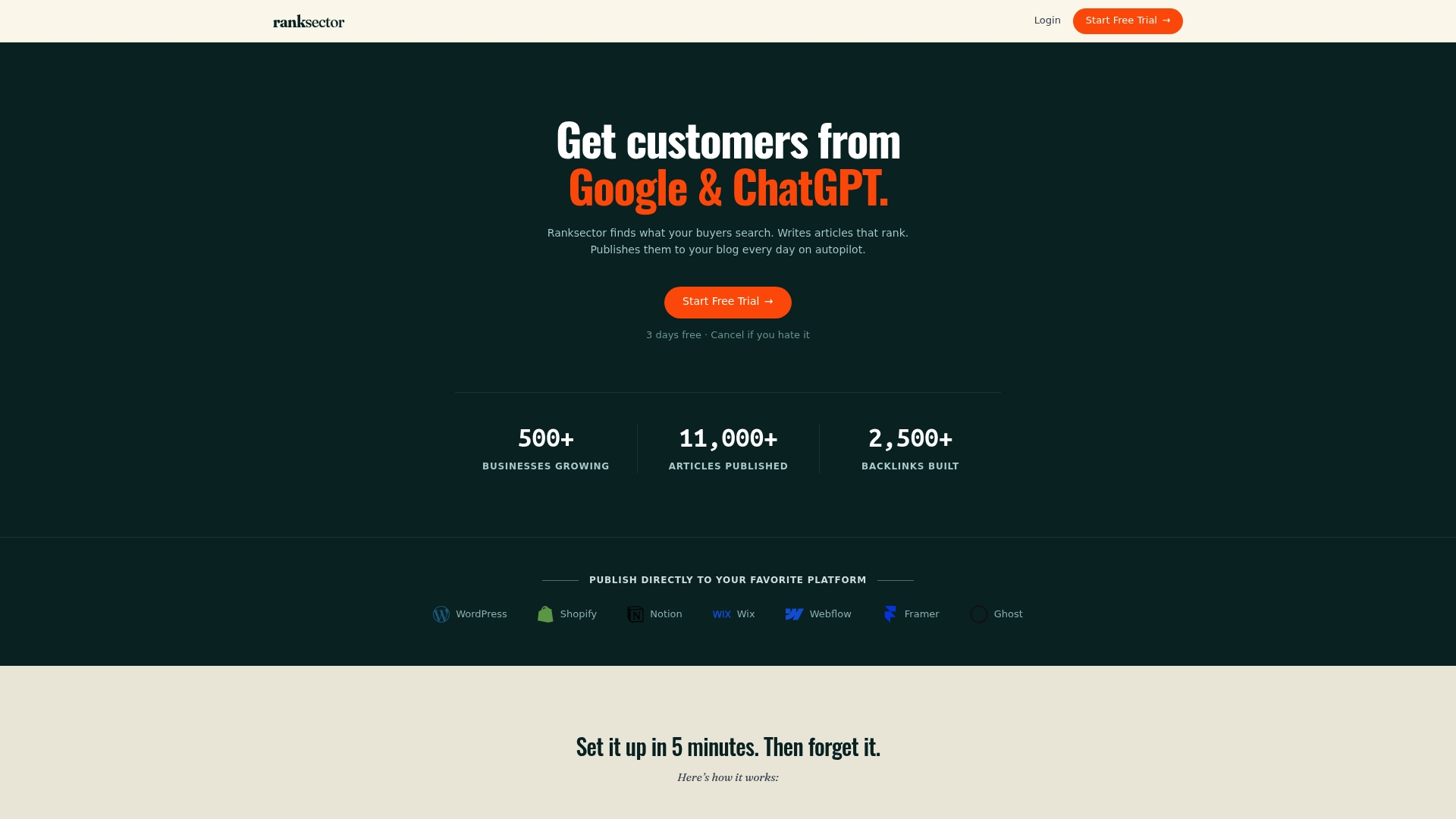
Ranksector automates the keyword research and content creation process for B2B SaaS teams, publishing daily SEO-optimized articles that are structured to match the snippet format each query demands. The platform’s AI audit tool identifies which of your target queries already trigger snippets and flags the format each one uses. From there, Ranksector generates content structured to match. With over 11,000 articles already published and a backlink exchange system built in, Ranksector gives small teams a hands-free path to consistent snippet visibility. You can explore the free SEO tools to see how it works before committing to a full plan.
FAQ
What are the main types of featured snippet keywords?
The four main types are paragraph, list, table, and video. Each format is triggered by a different query intent, such as “what is” for paragraphs and “how to” for lists.
How do I know which snippet format to target?
Search your target query and check whether a snippet already appears. The format Google displays tells you exactly how to structure your content.
Why is exact phrase matching in headings so important?
Exact match H2 headings are the strongest structural signal for snippet extraction. Paraphrasing the query in your heading reduces your chances of winning the snippet.
How long should a paragraph snippet answer be?
The optimal length is 40–60 words. Answers shorter than 40 words may seem incomplete, and answers longer than 60 words are typically truncated by Google.
Do featured snippets still matter with AI Overviews?
Yes, but the competition has changed. Google tests snippets against AI Overviews for each query, so structured, authoritative content is more critical than ever to maintain snippet presence.
Recommended
- How to Write Featured Snippets That Survive AI Overviews · Ranksector Blog — Ranksector
- Why meta descriptions matter more after AI Overviews for SaaS SEO · Ranksector Blog — Ranksector
- Why Keyword Research Drives Content Decisions in 2026 · Ranksector Blog — Ranksector
- Ranksector — AI-powered SEO content creation and publishing