
How to Write Featured Snippets That Survive AI Overviews
✅ How to write featured snippets that survive AI overviews quick guide
How to Write Featured Snippets That Survive AI Overviews
You spent two hours writing the perfect answer block. Google pulled it into a featured snippet. Then AI Overviews launched, and your snippet started sharing the page with a generated summary that answered the same question without sending a single click back to you. That stings.
The complication is real. Winning position zero used to mean winning traffic. Now it can mean your content gets extracted, paraphrased, and presented as a complete answer, all while your organic CTR drops and your page sits invisible below the fold.
Learning how to write featured snippets that survive AI overviews is not about gaming a new algorithm. It is about writing content that earns both the citation and the click, by being specific enough to quote and deep enough to visit.
What actually changed when AI Overviews arrived
The old goal versus the new goal
The old goal was simple: win position zero. Get your paragraph pulled into the snippet box, collect the impression, maybe collect the click.
The new goal is different. AI Overviews can satisfy a query more completely than a featured snippet ever could, pulling from multiple sources and generating a synthesized answer. Your page might be cited. It might not get clicked.
Visibility without clicks is a warning sign. Not a win.
Where the two systems overlap
Both featured snippets and AI Overviews prefer the same structural signals: concise answers, clear headings, verifiable claims, and short paragraphs. The extraction logic is similar even if the output looks different.
The core editorial shift is this: write for reuse first, then add unique depth that no AI system can fully compress. If your page can be paraphrased in one sentence, it is too thin for 2026.
Thin content gets cited. Deep content gets clicked. Aim for both.
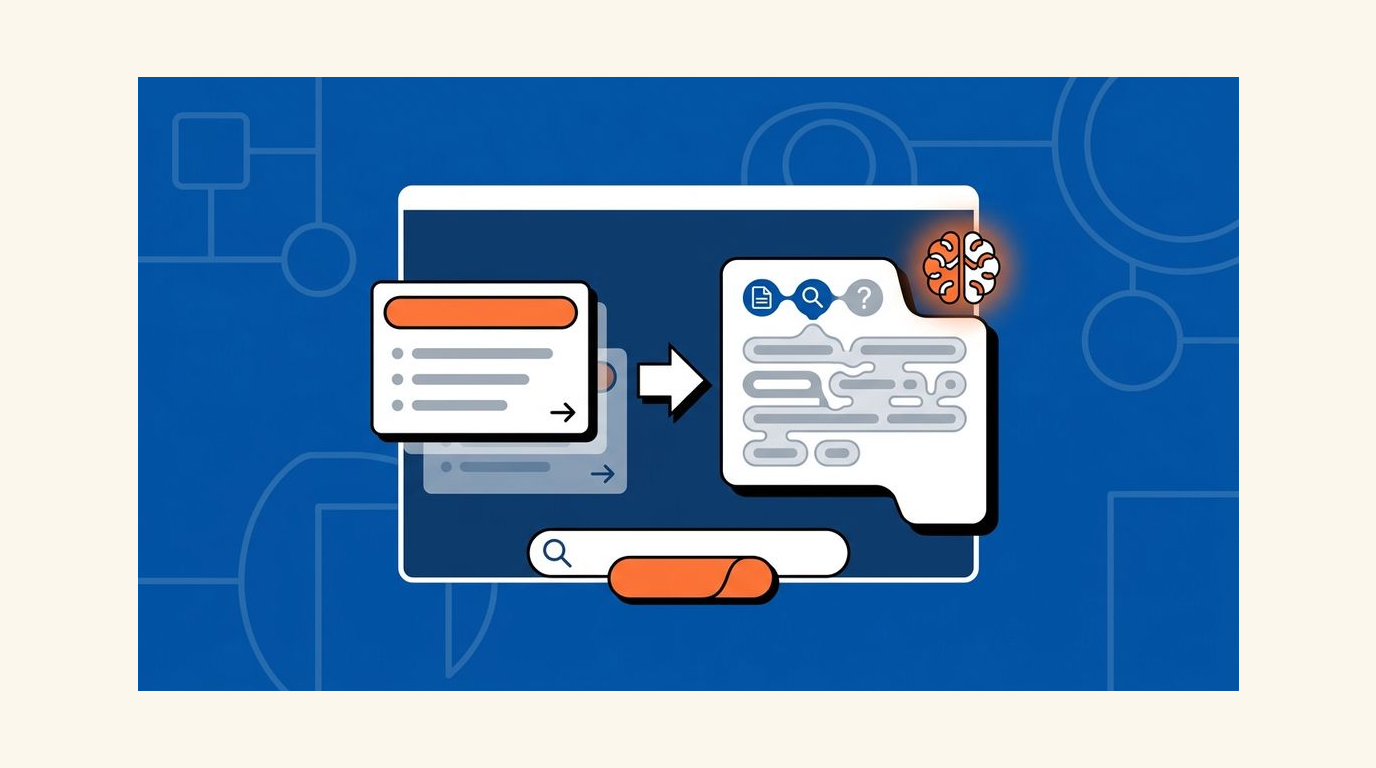
Which page structures still get lifted into snippets
Question-style headings that mirror real queries
Your H2s and H3s should read like questions a real person types. Not "Overview of pricing models" but "How does usage-based pricing work?" That phrasing directly maps to the query patterns that trigger snippet extraction.
Put the direct answer in the first 40 to 60 words after the heading. Every time. No preamble, no "great question.". Just the answer.
Self-contained answer blocks
Write each answer block so it still makes sense when extracted alone. Imagine Google lifting just that paragraph and showing it with no surrounding context. Does it hold up? Does it answer the question completely?
If the answer block depends on the paragraph above it to make sense, rewrite it. Self-contained answers are the structural unit that snippet systems prefer.
Short paragraphs, bullets, and tables when they earn their place
Bullets work when you have 3 to 7 parallel items. Tables work when you are comparing at least 2 attributes across 3 or more options. Paragraphs work for everything else.
Do not use bullets to make content look scannable. Use them when the content is genuinely list-shaped. Format should follow structure, not decorate it.
How to write the answer block itself
Lead with the answer, not the context
The biggest mistake is burying the answer. Writers stack qualifiers, add caveats, and explain background before giving the reader what they came for. That kills snippet eligibility.
Lead with the definition, recommendation, or step sequence. Add one supporting detail after. Add one constraint. Add one example. In that order.
If the first sentence of your answer block sounds like a pitch, rewrite it until it sounds like a dictionary entry.
Plain language and concrete specificity
Vague marketing language is the enemy of extraction. "Our platform helps teams work smarter" tells an AI system nothing worth quoting. "This process takes under 15 minutes and requires no coding" gives it something to work with.
Use numbers wherever they are honest. A response time of 200 milliseconds is more quotable than "fast." A checklist of 5 steps is more extractable than "a multi-step process." Concrete specificity is what separates cited content from ignored content.
One promise, one proof, one next step
Think of the answer block as a product with three components. The promise is the direct answer. The proof is one specific supporting detail or example. The next step points the reader somewhere useful.
That structure fits in 60 to 90 words. It answers the question, earns the citation, and gives the reader a reason to click through for the rest.

How to make your page harder for AI to replace
Add what AI cannot synthesize
AI Overviews are good at compressing widely available facts. They are not good at replacing original observations, proprietary examples, or specific internal data. That gap is your opportunity.
A before-and-after rewrite example, a decision rule based on your own testing, a specific failure mode you have seen in practice — these are things no language model can pull from generic web content. Pages that earn clicks after extraction are the ones with something worth visiting.
Cover the obvious follow-up questions in the same piece
When a reader gets a short answer from an AI Overview, their next move is often to search a follow-up question. If your page already answers that follow-up, you capture the next click too.
Map out the 3 to 5 questions a reader would ask after your main answer. Answer them in the same article. This is how a single page becomes the full solution instead of one stop on a longer journey.
Answer the question, then earn the click with the context the AI left out.
Use comparisons, decision rules, and caveats
Nuance does not compress well. A comparison table showing when option A beats option B, a decision rule that applies only under specific conditions, a caveat that changes the answer for a particular audience type — these add value that a 3-sentence AI summary cannot replicate.
Show the reader what to do next instead of stopping at the definition. That is the click-through moment. Pages that go beyond the short answer are the ones that survive extraction as traffic drivers.
The manual workflow SEO teams should run first
Audit target queries before rewriting anything
Open a fresh browser window. Search your target query. Look at what is in the snippet or AI Overview box right now. Note the format: is it a paragraph, a list, a table? Count the words in the extracted block. That is your benchmark.
Do this for your top 10 to 20 target queries before writing a single word. The SERP tells you what format Google currently favors for that query type. Match the format, then beat the depth.
Map each query to a three-part structure
For every target query, you need one answer block (40 to 60 words, direct answer), one supporting section (context, nuance, caveats), and one follow-up section (the next question your reader will have).
That is the minimum viable structure for a page that can win an extraction and still earn a click. Pages that stop at the answer block get cited. Pages with supporting depth get visited.
Refresh on a cadence, not just when rankings fall
A useful heuristic I use: review your top 20 snippet-targeted pages every 8 weeks. Check whether a snippet is still present, whether an AI Overview has appeared above it, and whether your CTR has changed in Search Console.
Do not wait for a traffic drop to trigger a refresh. By then you have already lost 4 to 6 weeks of traffic. Proactive updates keep your answer blocks current and your format aligned with what the SERP currently rewards.
The fastest win is rewriting the first 60 words of an existing page, not publishing a new one.
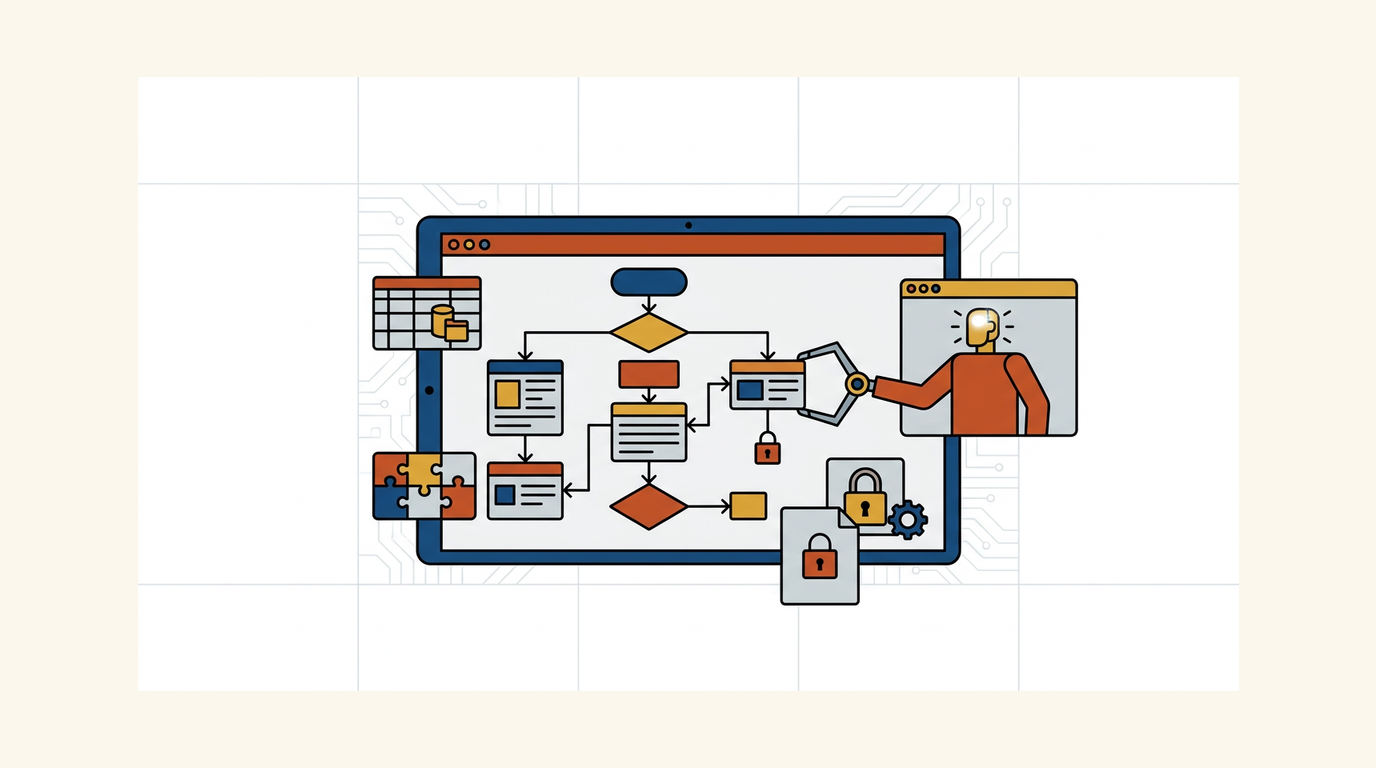
A before-and-after rewrite: what snippet-safe content looks like
The before version
Here is a generic SaaS paragraph that would not get extracted:
"Our platform is designed to help marketing teams streamline their content operations and achieve better results across all their digital channels by providing a suite of powerful tools that integrate seamlessly with existing workflows."
No direct answer. No specifics. No extractable unit. This is 37 words of nothing.
The after version
Here is the same idea rewritten for extraction:
"Content operations platforms reduce publishing time by centralizing brief creation, draft review, and CMS scheduling into one workflow. Teams typically see the biggest time saving in the handoff between writer and editor, which takes 2 to 3 days manually and under 4 hours with a structured tool."
Direct answer first. One concrete detail (2 to 3 days versus under 4 hours). Specific enough to quote. Worth clicking through for the rest. That is the structure.
Connecting the rewrite to a real outcome
For SaaS teams, snippet-optimized content is not just an SEO exercise. It is a cleaner sales page for search. A tighter answer block means a clearer value proposition. A more specific example means a more qualified reader clicking through. We cover this topic in more depth in When to Consolidate Articles in SaaS SEO (Decis....
Pages optimized for both snippet extraction and AI Overview citation tend to attract higher-intent traffic, because the query specificity required to win those positions filters out casual browsers.
How automation scales this for SaaS content teams
What automation handles well
A manual workflow works for 10 to 20 pages. It breaks down at 100. Automation is useful for identifying which pages currently have snippet candidates, flagging answer blocks that are too long (over 80 words) or too vague, and generating question-based outline drafts from target queries.
Ranksector Blog's content tooling can run these checks across a full content library, surfacing pages where the first paragraph fails the self-contained test or where no question-style heading exists within the first 300 words.
What automation cannot replace
Automation enforces the rules. It does not invent the strategy. The proprietary examples, the original decision rules, the specific caveats that make a page worth clicking after extraction — those require a human with domain knowledge.
Use Ranksector Blog to standardize the structural checks across your content team. Use your writers to add the depth that makes those structures worth reading. The editorial judgment of what makes an answer genuinely useful cannot be automated away.
Scale comes from applying the same rules consistently, not from letting automation drift away from the original editorial standard.
Building a refresh workflow that does not require manual monitoring
Set up automated alerts for pages where organic CTR drops more than 15% month-over-month without a corresponding drop in impressions. That pattern signals an AI Overview has appeared and is absorbing clicks without removing your snippet.
Ranksector Blog can flag those pages automatically, queue them for a content review, and surface the current SERP format so your writer knows exactly what structure to match. That loop — detect, review, rewrite, monitor — is how content operations teams stay ahead of extraction changes without checking 200 pages manually every month.
Which metrics prove your pages are surviving AI Overviews
The four numbers that matter
- Snippet presence: check Google Search Console weekly for which pages hold a featured snippet position. A drop in snippet presence for a high-value query is the first signal to act.
- AI Overview inclusion: run manual SERP checks for your top 20 queries every 4 weeks. Note whether your page is cited in the AI Overview box and whether it is the first or third citation. You might also find our guide on What AI Search Engines Look for When Choosing C... helpful.
- Organic CTR: compare CTR before and after an AI Overview appears on a given query. A CTR drop from 8% to 3% on the same impression volume is a clear signal the Overview is absorbing clicks.
- Click-through change after extraction: pages that get cited but not clicked need deeper content, not better snippets. Pages that get neither cited nor clicked need structural rewrites.
Visibility without clicks is a diagnostic, not a failure
If your page is being cited in AI Overviews but CTR is below 2%, the answer block is doing its job. The page depth is not. That is a specific, fixable problem: add more follow-up sections, more proprietary examples, more decision rules that give a reader a reason to visit.
Page-level testing to decide what to do next
For any page where CTR has dropped more than 15% after an AI Overview appeared, run a structured test. Rewrite the answer block to be more specific (under 60 words, concrete numbers, one clear next step). Wait 3 to 4 weeks. Check whether CTR recovers.
If CTR does not recover, the issue is depth, not format. Expand the supporting sections, add a comparison table, or consolidate the page with a related piece to increase topical coverage. A single strong page covering 4 to 5 related queries will outperform 4 thin pages targeting 1 query each.
Frequently asked questions
Do featured snippets still drive clicks in 2026?
Yes, but the click rate depends on query type. Navigational queries and comparison queries still drive meaningful clicks even when a snippet is present. Simple definition queries are more likely to be satisfied by the snippet alone. In my experience, pages targeting multi-step how-to queries or decision-based queries retain stronger CTR even after extraction, because the answer block creates curiosity rather than resolving it.
How long should a featured snippet answer block be?
Keep it between 40 and 60 words for paragraph snippets. List snippets typically show 4 to 8 items. Table snippets work best with 3 to 5 rows. Going over 80 words in a paragraph block reduces extraction likelihood because the system has to decide where to cut. Write tight, then add supporting detail in the next paragraph.
Does being cited in an AI Overview hurt organic traffic?
It depends on the query. For simple factual queries, AI Overview citations often replace the click entirely. For complex queries with multiple follow-up questions, citation can actually increase qualified traffic because the reader has already been primed with your framing. Track CTR change per query type rather than looking at aggregate traffic to get a clear picture.
What is the difference between optimizing for a featured snippet and optimizing for an AI Overview?
Featured snippets pull a single block from one page. AI Overviews synthesize across multiple sources. For snippets, optimize one tight answer block per page. For AI Overviews, optimize the whole page for topical completeness, source credibility, and verifiable specifics. The structural signals overlap significantly, so a page optimized for one tends to perform better in the other.
How often should I refresh snippet-targeted pages?
A useful heuristic: every 8 weeks for your top 20 target queries. More often if you see CTR drop in Search Console without a corresponding impression drop. Less often for evergreen pages on stable queries where snippet format has not changed in 6 or more months. The trigger for a refresh is a SERP change, not a calendar date.
Ranksector Blog
Try Ranksector Blog to identify which of your pages are snippet candidates, flag answer blocks that are too long or too vague, and queue pages for refresh when AI Overviews start absorbing your clicks. Start with your top 20 queries and let Ranksector Blog surface exactly where the structure is breaking down.