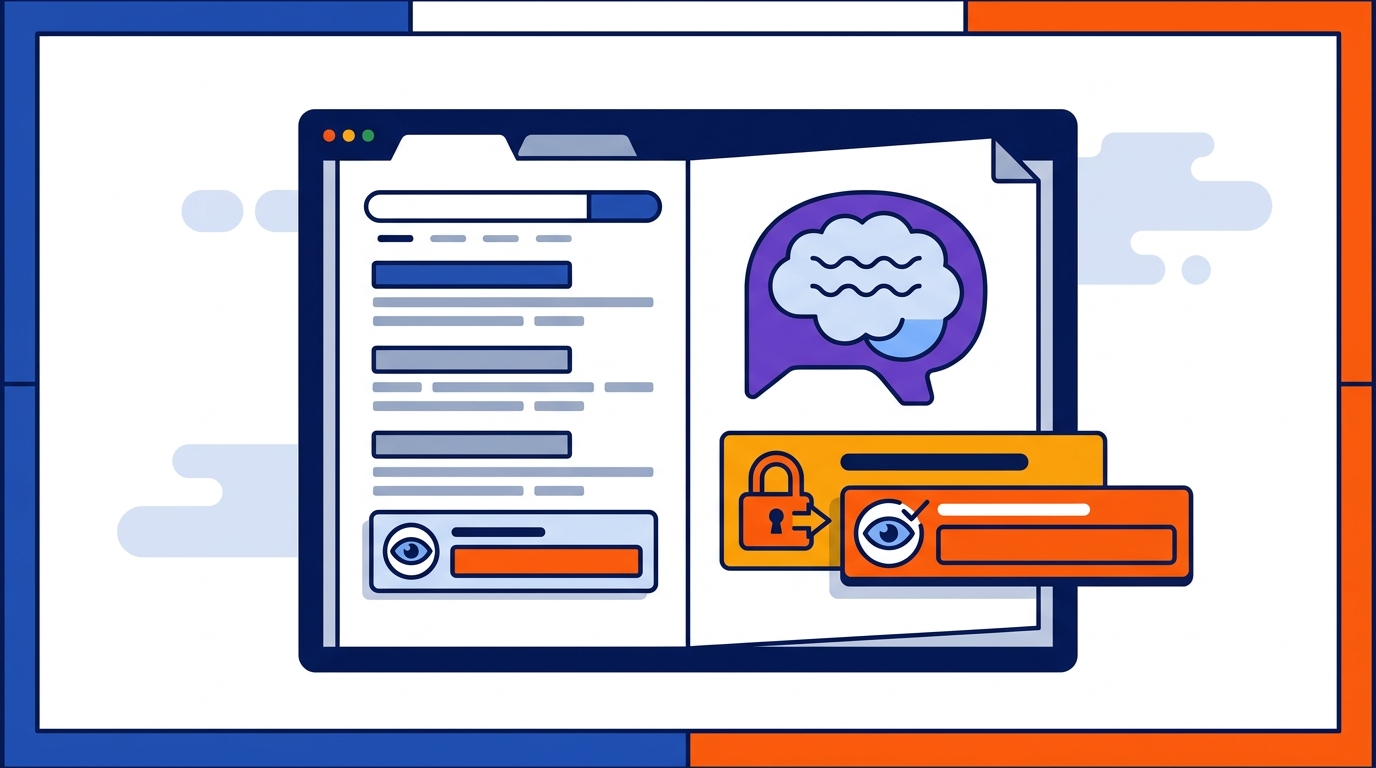
Why Meta Descriptions Still Matter After AI Overviews
You published 80 blog posts last year. Each one has a meta description. Some are 155 characters of carefully chosen copy. Some are truncated page titles your CMS auto-filled. And now, with AI Overviews taking up the top third of the SERP, you're wondering if any of it matters anymore.
That doubt is understandable. Why the meta description matters more after AI overviews launched is a real question, not a rhetorical one. The SERP looks different. Organic results sit lower. The snippet you wrote might not even be the snippet Google shows.
Here's the reframe: AI Overviews didn't make meta descriptions irrelevant. They made weak ones far more expensive. When you lose control of your snippet in a crowded SERP, you lose the one message you had before the click.
What changed in search when AI Overviews arrived
Before AI Overviews, a standard SERP gave you roughly 10 blue links, each with a title and a snippet. Your listing sat near the top if you ranked well. The snippet was your pitch, and it appeared close to where the eye landed first.
Now, an AI Overview can occupy 400 to 600 pixels of vertical space above the organic results. On mobile, that pushes your listing below the fold entirely. You still rank. The click just costs more effort from the searcher.
That shift changes the economics of every element you control. The title has to work harder. The snippet has to be sharper. And the meta description, even when Google rewrites it, sets the baseline for what the engine has to work with.
AI Overviews didn't kill meta descriptions. They made bad ones more expensive to ignore.
The snippet is now a fallback message, not a guaranteed slot
According to Google's Search Central documentation on snippets, Google generates snippets automatically from page content. Your meta description is one input. It is not guaranteed output. Google may use it, rewrite it, or pull a sentence from your body copy instead.
That means the meta description is less a published statement and more a starting draft. If your draft is vague, the engine fills in something generic. If your draft is specific and query-matched, the engine is more likely to surface it intact.
AI systems pull from wherever the text is clearest
AI-generated snippets don't follow a fixed hierarchy. They borrow from the meta description, the H1, the first paragraph, or a well-structured section deeper in the page, whichever is most relevant to the query. A page with a weak meta description but a strong opening paragraph might survive. A page with weak everything loses the snippet lottery entirely.
How Google decides which snippet to show
The same page can show 3 different snippets for 3 different queries. Search "project management software for remote teams" and you might see a sentence from the features section. Search "project management software pricing" and you might see the pricing paragraph. Your meta description competes with your own body copy every time.
Google's documentation is explicit: snippets are chosen based on relevance to the query, not on the presence of a meta description tag. Writing one doesn't guarantee it appears. Not writing one guarantees something worse fills the gap.
Your meta description is the first line of defense. If the engine rewrites your snippet, it will borrow from whatever you wrote best.
Query context changes everything
A searcher typing a broad awareness query gets a different snippet than one typing a specific comparison query. In my experience, pages that write one generic meta description for a broad topic get rewritten on most of the specific queries that page ranks for. That's a lot of lost control.
Structured pages give the engine better options
When your page has clear H2s, concise opening sentences per section, and a meta description that matches the primary intent, the engine has good material to choose from. Research into AI-generated snippet behavior shows that structured, scannable pages are more likely to have their own copy surfaced rather than replaced.
Why SaaS pages lose more when snippets go wrong
Generic content can survive a rewritten snippet. A blog post about "how to write better emails" is still recognizable even if the snippet is mediocre. A SaaS feature page for a niche use case is not. The offer is abstract. The value is specific. A vague snippet attracts the wrong clicks, or no clicks at all.
Poor snippet quality on high-intent pages doesn't just reduce CTR. It attracts visitors who misread what the page offers, which drives up bounce rates and wastes the traffic you did earn.
Pricing and comparison pages carry the highest risk
A pricing page with a rewritten snippet that omits the price range or the plan structure sends the wrong signal. A comparison page that loses its "X vs Y" framing in the snippet loses the searcher who wanted exactly that comparison. These are pages where the snippet often does the selling before the click. A weak one costs real pipeline.
Problem-aware blog posts need sharp framing
SaaS blog posts targeting problem-aware queries, like "why my churn rate is climbing" or "how to reduce time-to-value for new users," work because they match a specific frustration. If the snippet gets rewritten to something generic like "Learn about customer success strategies," the match breaks. The searcher scrolls past.
Bad snippets don't just lose clicks. They attract the wrong ones, and wrong clicks cost you more than no clicks.
The case for meta descriptions resurging in importance is strongest for SaaS teams, where the offer is specific and the searcher's intent is narrow. Generic copy is a liability, not a neutral choice.
A manual workflow that still holds up in 2026
The manual approach isn't dead. It's just slow at scale. For your 10 most important pages, writing descriptions by hand is still the right call. Here's a process that works.
- Start with the query, not the page. Write the description as if you're answering the searcher's question in one sentence.
- Include the primary use case in plain language. Avoid stuffing in 3 keywords when 1 natural phrase does the job.
- Keep it between 140 and 155 characters. Shorter is fine. Longer gets truncated, which breaks the message mid-sentence.
- Mirror the language your target reader uses, not your internal product vocabulary. "Reduce churn" lands better than "improve retention metrics" for most audiences.
- End with a soft signal of what the reader gets: an answer, a comparison, a checklist, a price range.
Write the promise, then check it against the page
A common mistake: writing a description that promises more than the page delivers. If the snippet says "complete guide to SaaS onboarding" and the page is a 600-word overview, the bounce rate tells the story. The description should match the page's depth and scope.
Refresh pages where the engine rewrites you consistently
In my experience, pages where Google rewrites the snippet often have one of 3 problems: the meta description is off-topic for the queries driving traffic, the description is duplicated from another page, or the body copy has a stronger opening sentence than the description itself. All 3 are fixable in under 15 minutes per page.
Auditing and automating meta descriptions at scale
Manual writing works for 10 pages. It breaks down at 200. A SaaS content library with quarterly publishing output, product updates, and comparison pages can accumulate 50 to 100 missing or duplicate descriptions in a single quarter without anyone noticing. Automation is the only way to stay on top of it.
Seer Interactive's analysis of snippet rewriting behavior is a useful reality check here: Google rewrites descriptions frequently, but that doesn't mean the tag is irrelevant. It means the tag needs to be good enough to compete with whatever the engine might generate instead.
Prioritize by page value, not alphabetical order
When you run a snippet audit, don't fix pages randomly. Stack-rank by organic traffic, conversion rate, or pipeline influence. Pricing pages, feature pages, and top-10 organic landing pages come first. Blog posts outside the top 20 by traffic come last. A useful heuristic is to focus the first audit sprint on any page generating more than 200 sessions per month with a missing, duplicate, or over-length description.
- Missing descriptions: the engine writes whatever it wants, often pulling the navigation or a generic sentence from the footer.
- Duplicate descriptions: 2 pages with the same snippet confuse the engine and dilute both pages' relevance signals.
- Over-length descriptions: anything beyond 155 characters gets cut mid-sentence, breaking the message at the worst possible moment.
- Low-relevance descriptions: descriptions that don't match the queries driving traffic to the page get rewritten almost every time.
Pair automated drafting with human review
Automated generation can draft a description for every page in minutes. Human review catches the ones that sound off-brand, miss the product's specific value, or make a promise the page doesn't keep. The right split: automate the draft and the QA flag, then route only the flagged pages to a human editor. That keeps the workflow under 2 to 3 hours per quarter for a 150-page content library.
Stronger vs. weaker meta descriptions: side-by-side
The difference between a snippet that earns a click and one that gets rewritten is usually specificity. Here are examples across 3 page types.
| Page type | Weak description | Stronger description |
|---|---|---|
| SaaS blog post | "Learn about reducing churn and improving customer retention for your SaaS business." | "Churn above 5% monthly is a product signal, not a sales problem. Here's how to diagnose which one you're dealing with." |
| Feature page | "Our analytics dashboard gives you insights into your data." | "See revenue, churn, and MRR in one dashboard. No SQL, no exports, updated every 24 hours." |
| Comparison page | "Compare our tool with competitors and find the best option for you." | "Tool A vs Tool B: pricing starts at $49 vs $79, and the feature gap matters more than the price gap. Here's why." |
The weaker descriptions are generic enough that the engine has no reason to prefer them over a sentence pulled from the page body. The stronger ones are specific, query-matched, and harder to improve on. That's why they're more likely to survive intact.
Generic copy is exactly why engines rewrite your description for you. There's nothing to protect if the description doesn't say anything worth keeping.
The best meta descriptions sound like the answer the searcher hoped to find, not a summary of what the page is about.
What to tackle next: title tags, CTR testing, and snippet governance
Meta descriptions are one lever. The system around them is the strategy. If you've fixed your descriptions and still see low CTR on pages that rank in positions 4 through 8, the title tag is usually the next variable to test.
If your content library is growing past 100 pages, snippet governance becomes a quarterly operation, not a one-time fix. That means scheduled audits, automated flagging for missing or duplicate descriptions, and a review step baked into your publishing workflow.
Frequently Asked Questions
Does Google always rewrite meta descriptions?
No. Google's own documentation states that meta descriptions are used when they are relevant to the query. In my experience, well-written, query-matched descriptions survive rewriting more often than generic ones. Pages with vague or duplicated descriptions get rewritten at a much higher rate.
Do meta descriptions affect rankings directly?
No. Meta descriptions are not a direct ranking factor. Their value is indirect: a strong description improves CTR, and CTR is a behavioral signal that search systems monitor. A description that earns more clicks on the same ranking position compounds over time. A weak one bleeds traffic to the results above and below you.
How long should a meta description be in 2026?
Keep it between 140 and 155 characters. Google truncates longer descriptions mid-sentence in most display contexts, which breaks the message. Shorter is fine if the sentence is complete and specific. A 120-character description that says something sharp beats a 155-character one that trails off into filler.
How do AI Overviews change click behavior on organic results?
AI Overviews answer some queries directly, which reduces clicks on the organic results below. For queries where the searcher still wants to read the source, a clear and specific snippet increases the odds they click your result over a competitor's. The argument that meta descriptions are resurging in importance rests partly on this: when clicks are scarcer, the snippet that earns them is worth more.
Should I write different meta descriptions for different query intents?
Ideally, yes, but that's not always practical. A useful heuristic is to write the description for the highest-intent query the page targets. If the page ranks for 12 variations, the description that matches the primary intent will survive rewriting on most of the others. Pages that rank for wildly different intents may need to be split rather than patched with a single description.
Ranksector
Start with a full audit of your current meta descriptions: flag the missing ones, the duplicates, and the ones Google rewrites every time. Ranksector covers the workflows, examples, and scaling tactics to turn that audit into a system that runs itself.