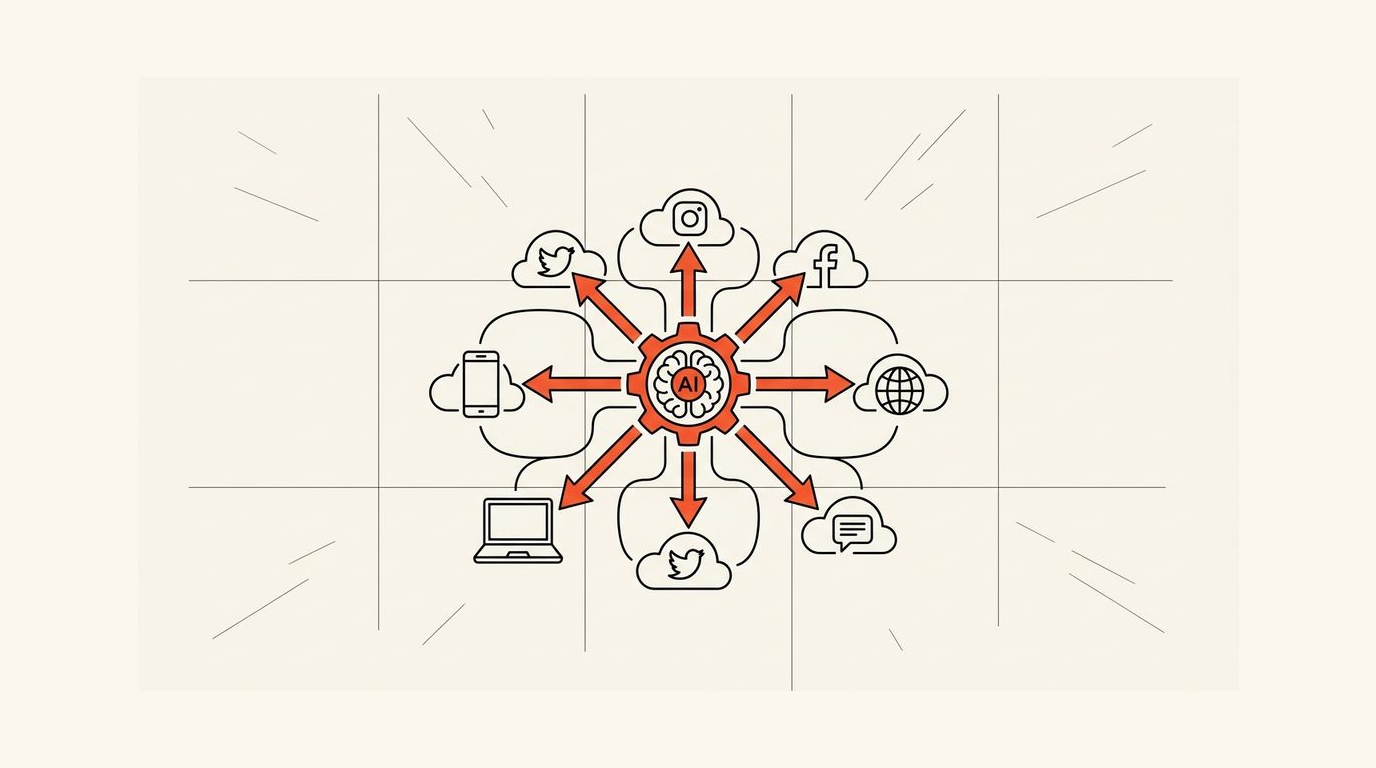
AI Content Distribution for SaaS: Manual Workflow to Automated Scale
AI-Driven Content Distribution: Amplify Your SaaS Reach
You published a strong pillar post last Tuesday. It took your team 3 days to research, write, and edit. By Friday, it had 47 organic sessions and a single LinkedIn share from your own account. Then it flatlined.
That's not a content quality problem. That's a distribution problem. The post exists. Nobody found it.
AI-driven content distribution gives SaaS teams a way to turn one asset into 5 to 10 channel-specific touchpoints without rebuilding the editorial process from scratch. This article walks through the manual workflow first, then shows where AI compresses the time cost without removing the judgment calls that protect your brand.
Why publishing is only the first 10% of the job
You write the article. You hit publish. You move on to the next one. That cycle feels productive, but it leaves the distribution value on the table.
A single blog post can generate 4 to 6 LinkedIn posts, 2 email segments, 1 community thread, and a handful of sales enablement snippets. In my experience, teams that skip this step publish content that compounds slowly.
Content distribution is the growth lever, not the content itself. The asset is a starting point. The system around it drives reach.
Your blog post is not finished when it goes live. It's finished when it has been seen by the audiences it was built for.
The compounding problem with one-and-done publishing
Organic content takes time to compound. A well-distributed post starts generating consistent referral and search traffic somewhere between 6 and 12 weeks after publication, not 6 days. If you publish without distributing, you're betting entirely on Google's crawl timeline.
That's a long wait for a single signal. Distribution shortens the feedback loop by sending real traffic from channels you control, which also sends engagement signals back to search.
Distribution is where content starts paying for itself
One pillar article repurposed across 3 channels generates more total impressions than 3 separate articles each distributed once. The math isn't complicated. Volume without reach doesn't compound. Reach without volume doesn't either. You need both loops running.
This is why SaaS content programs that prioritize repeatable distribution workflows outperform teams that chase publishing velocity alone.
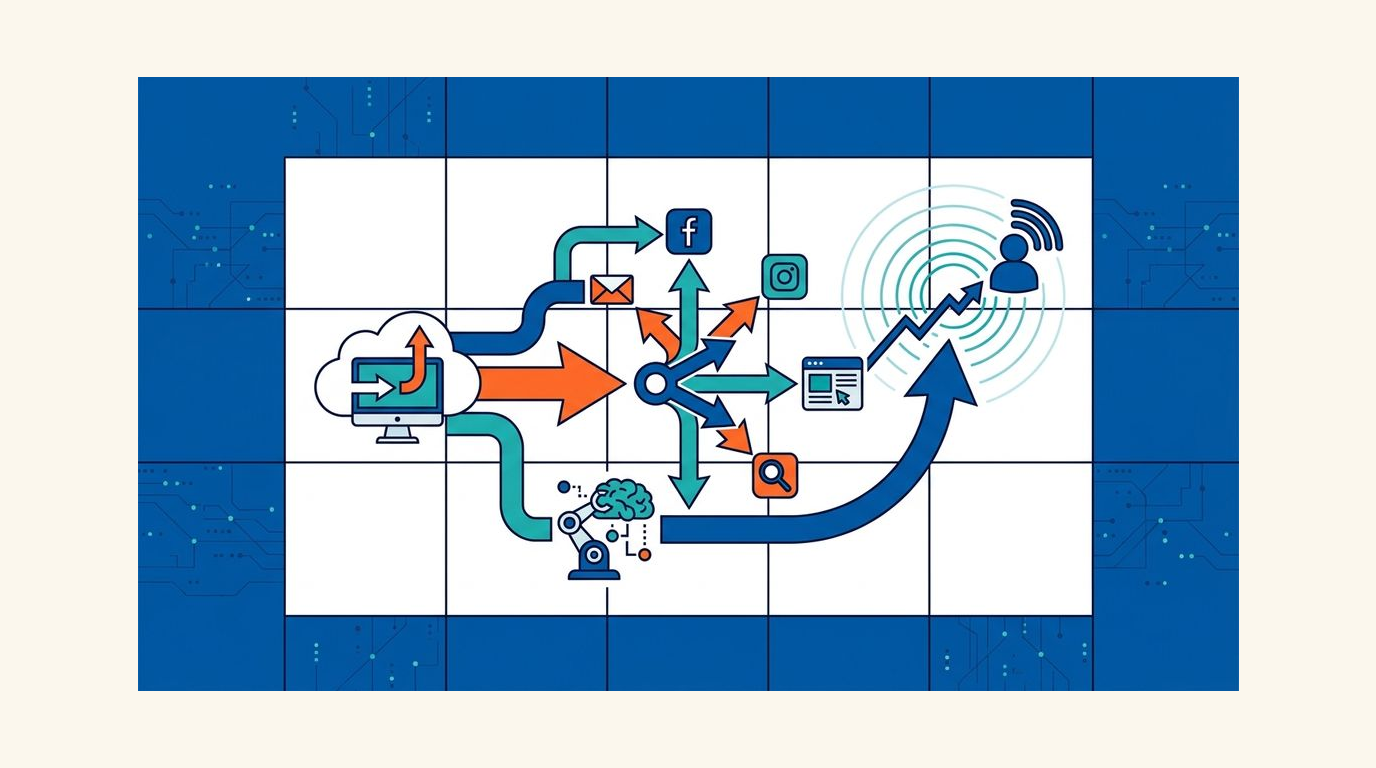
What the manual distribution workflow actually looks like
Before you automate anything, run the workflow by hand once. If you can't do it manually, automation will only scale the confusion.
A manual distribution pass for a single pillar post takes roughly 90 minutes end to end. That's not fast. But it reveals exactly which steps are worth automating later.
Step 1: Map the asset to channels
Start with a simple channel map. For each piece of content, list the 3 to 5 channels where your buyers actually spend time. Common ones for B2B SaaS: LinkedIn, email newsletter, Slack communities, sales enablement decks, and internal wiki or onboarding docs.
- LinkedIn works best for insight-led excerpts pulled from the article's core argument, not a link dump.
- Email works best when you frame the article around a problem the subscriber already has, not the article's title.
- Slack communities require a genuine contribution framing, not a promotional post or you'll get removed.
- Sales enablement snippets work best as 2 to 3 sentence answers to common objections, pulled directly from the article's body.
- SEO updates mean checking whether the article should link to or from 2 to 3 existing posts, which contextual backlinks research can surface quickly.
Step 2: Adapt the message, don't copy it
Copying the same paragraph into every channel is the fastest way to get ignored on all of them. Each channel has a different audience posture. LinkedIn readers scroll fast. Email subscribers expect context. Community members want a conversation starter, not a press release.
Write a 1-sentence channel brief before you draft each variant. Something like: "LinkedIn: challenge the assumption that publishing frequency drives growth." That brief keeps the variant on-message without being a copy-paste.
Step 3: Assign ownership and a 48-hour window
The manual workflow breaks down when nobody owns the distribution step. Assign one person per channel. Give them a 48-hour window from publish date. After that, the moment has passed and the distribution value drops sharply.
If you cannot do the distribution workflow by hand once, automating it will only move the chaos faster.
How AI automates repurposing without losing brand control
Once you've run the manual workflow 2 or 3 times, the repetitive parts become obvious. Drafting LinkedIn variants. Reformatting email intros. Pulling quote snippets. These are the tasks AI handles well.
The strategic parts—deciding which angle to lead with, which channel to prioritize, and whether the message is accurate—stay with a human. Always.
Where AI compresses time without removing judgment
AI-powered distribution workflows can reduce the time to produce 5 channel variants from 90 minutes to roughly 20 minutes. That's not a small difference when you're publishing 4 to 6 posts per month.
The compression comes from automating the formatting and drafting layer, not the strategy layer. You still decide what the article's core argument is. AI drafts the 3 LinkedIn posts, the email subject line options, and the community thread opener. You review, edit, and approve.
Keep human review in the loop for accuracy and tone
AI-generated variants drift. A LinkedIn post that started as a nuanced argument about churn attribution can become a generic "AI is changing everything" post after one round of model output. That's a brand trust problem, not just a tone problem.
Build a 10-minute review checkpoint into every automated distribution run. Check for accuracy first, tone second, and channel fit third. That sequence matters. A factually wrong post with great tone is still a liability.
For SaaS teams already running an AI content strategy, this review step fits naturally into an existing editorial workflow.
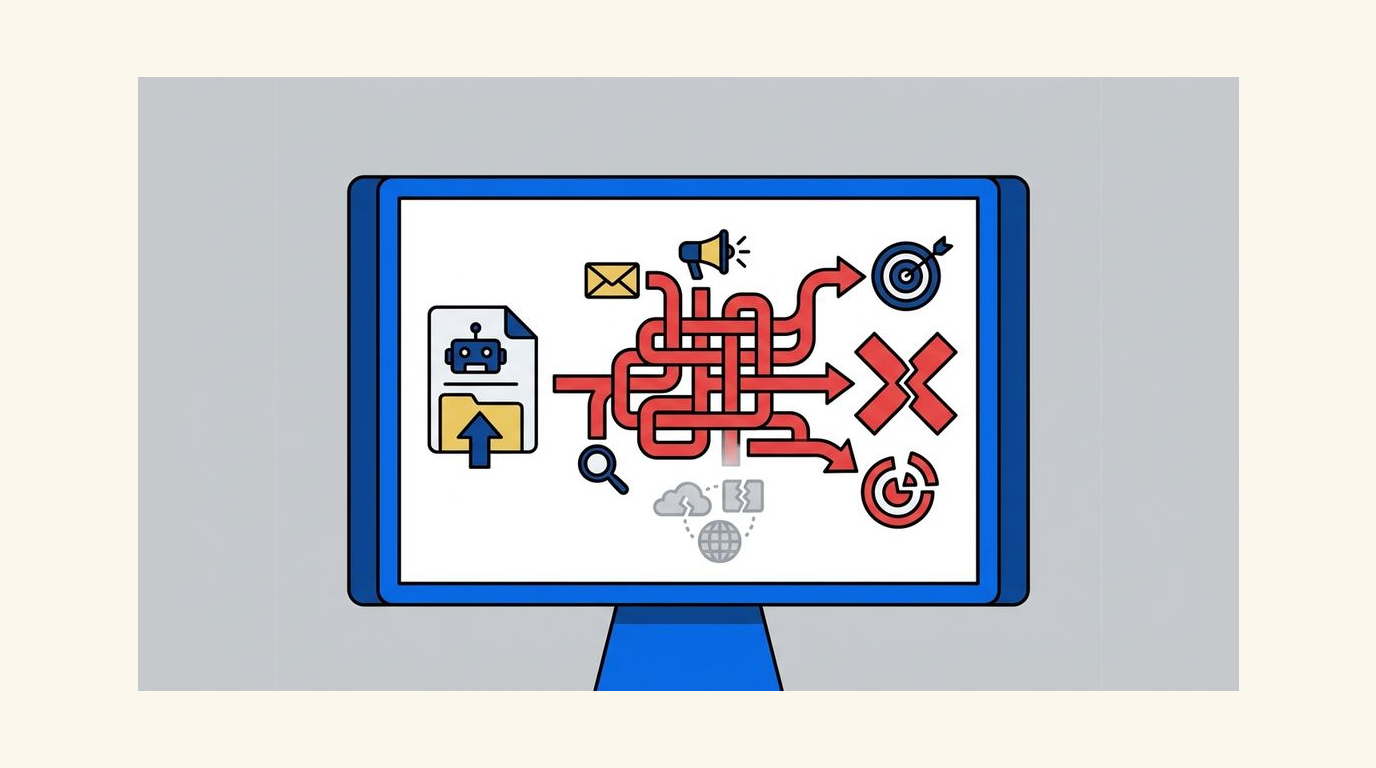
The highest-leverage channels for SaaS content distribution
Not all channels are equal. For B2B SaaS, 3 channels drive the distribution ROI: LinkedIn, email, and community. Everything else is secondary until those 3 are running reliably.
| Channel | Best format | Typical time to produce variant | Primary signal |
|---|---|---|---|
| Insight-led post, 150-250 words | 15 minutes manual / 3 minutes AI-assisted | Reach and engagement | |
| Email newsletter | Problem-framed intro, 80-120 words | 20 minutes manual / 5 minutes AI-assisted | Click-through and reply rate |
| Slack / community | Conversation starter, 50-80 words | 10 minutes manual / 2 minutes AI-assisted | Thread replies and link clicks |
| Sales enablement | Objection snippet, 2-3 sentences | 10 minutes manual / 2 minutes AI-assisted | Deal assist and usage rate |
| Internal SEO update | Internal link addition, anchor text | 5 minutes manual / 1 minute AI-assisted | Crawl depth and page authority flow |
Match format to intent, not just channel
LinkedIn readers evaluating a SaaS tool need a different angle than email subscribers who already use your product. One article can serve both, but not with the same framing.
Matching format to intent means asking: is this audience in discovery mode, comparison mode, or decision mode? Educational content works in discovery. Comparison content works in evaluation. Conversion-focused snippets work when someone is already close to a decision.
Don't ignore AI search as a distribution channel
AI-assisted search is part of how B2B buyers find SaaS solutions. Structuring content so AI systems can extract and cite it is now a distribution consideration, not just an SEO one.
That means clear entity signals, structured headings, and self-contained answers within each section. If your content can't be extracted as a clean snippet, it won't get cited. No citation, no reach in that channel.
The LLM SEO playbook covers this in detail if you want to go deeper on AI citation optimization.
How to measure whether distribution is actually increasing reach
Vanity metrics are easy to collect and useless for decisions. Page views from a single LinkedIn post spike and disappear. What you want are signals that show compounding reach over 4 to 8 weeks.
Measure reach and revenue signals together. A post that drives 400 sessions but zero trial signups is a distribution win only if you're still in brand-building mode.
The 4 metrics worth tracking
- Assisted organic traffic: sessions where the user came from a distributed channel before arriving via organic search. This shows the distribution-to-SEO handoff working.
- Engagement by channel: click-through rate on email, reply rate in communities, saves and shares on LinkedIn. Each channel has its own benchmark, and you need at least 4 weeks of data before the numbers mean anything.
- Indexation rate: how quickly new posts get indexed after distribution. Faster indexation often correlates with stronger external link and engagement signals, which distribution helps generate.
- Branded search lift: if your company name or product name starts appearing in searches after a distribution push, that's a reach signal that's hard to fake.
Set a consistent review window
A 6-week review window is the minimum for judging whether a distribution loop is working. Content compounding is slow. A post distributed in week 1 might not show organic contribution until week 5 or 6.
If you evaluate at day 7, you'll cut programs that were about to work. Organic traffic signals are decoupled from short-term ranking movement, which makes patience a competitive advantage.
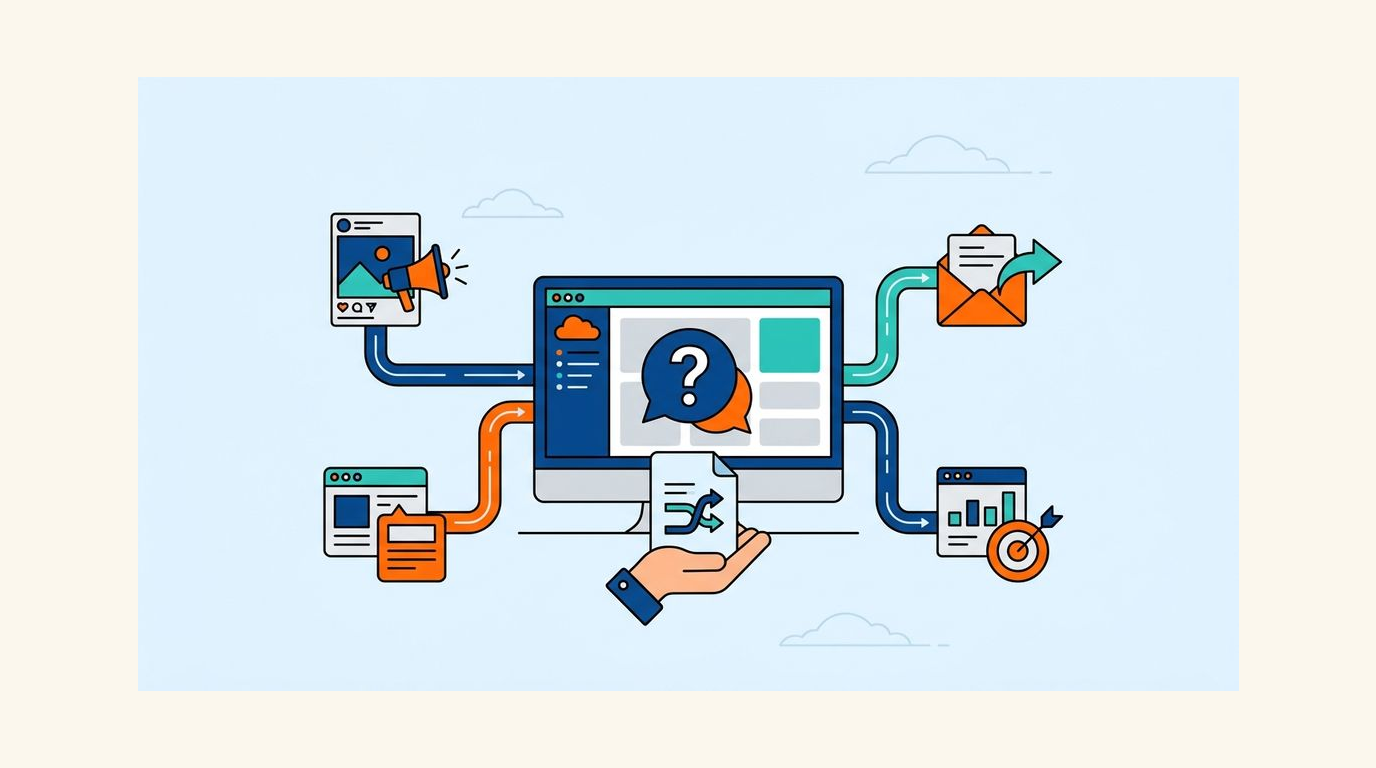
Common mistakes that keep AI distribution from working
Distribution failures aren't tool failures. They're process failures that automation makes worse.
Publishing the same copy everywhere
Same headline, same paragraph, same link. Pasted into LinkedIn, email, and 3 Slack channels simultaneously. This doesn't just underperform. It actively signals low effort to every audience that sees it more than once.
A useful heuristic: if someone in your ICP follows you on LinkedIn and subscribes to your email, they should see 2 different angles from the same article, not the same post twice. That's the minimum bar for channel-adapted distribution.
Automating before defining message hierarchy
AI can draft 10 LinkedIn variants in 4 minutes. That's useful. But if you haven't decided which argument the article makes, those 10 variants will each make a different argument. None of them will be right.
Define the core message in 1 sentence before you run any AI drafting. Something like: "SaaS teams that distribute content to 3 channels before relying on SEO compound their reach 2x to 3x faster." That sentence governs every variant.
Skipping editorial review because it feels slow
Editorial review is the 10-minute step that prevents a 10-hour brand cleanup. AI-generated content drifts toward generic. Your brand voice is specific. The gap between those two things is exactly what review catches.
For teams already using AI content optimization workflows, a structured review checklist cuts this step to under 8 minutes per distribution run without skipping it entirely.
A practical rollout plan for a SaaS team starting now
Don't start with 6 channels and a full automation stack. Start with 1 pillar article and 3 channels. Get that loop working reliably before adding volume. 🎯
Week 1 to 2: manual run on one article
Pick your best-performing existing post or your most recent pillar piece. Run the full manual distribution workflow: LinkedIn variant, email intro, one community post, one sales snippet. Time each step. Document what you did.
This gives you a baseline. You'll know that LinkedIn takes 15 minutes, email takes 20 minutes, and community takes 10 minutes. Total: roughly 45 minutes per article for 3 channels. That's the number you're trying to compress with AI.
Week 3 to 4: introduce AI drafting for the repetitive steps
Use an AI tool to draft the 3 channel variants from the article. Compare the AI output to your manual version. Edit the AI draft rather than writing from scratch. Track whether your review time drops below 10 minutes per variant.
A useful heuristic from running this process: AI drafts tend to be 70% usable on the first pass for LinkedIn and email, and closer to 50% usable for community posts where tone and context matter more.
Week 5 and beyond: build the repeatable template
Once the 3-channel loop works, document it as a reusable template. Channel brief format, AI prompt structure, review checklist, and distribution timing. That template is your distribution engine.
Then add a 4th channel. Then a 5th. Each addition takes less time than the previous one because the template already exists. This is how distribution at scale gets built: one reliable loop, then another.
Teams already running a content automation workflow will recognize this pattern. The distribution layer fits on top of an existing production system without replacing it.
One reliable distribution loop beats ten disconnected tactics. Build the loop first, then replicate it.
Frequently asked questions
Does AI replace content marketers in a distribution workflow?
No. AI compresses the time cost of drafting and formatting channel variants. It doesn't replace the judgment calls about message hierarchy, channel fit, or brand accuracy. In a typical distribution run, AI handles roughly 60% of the drafting work. A human still owns the strategy, the review, and the final approval before anything goes live.
How much human review is still needed when using AI for distribution?
A 10-minute review per distribution run is the minimum worth protecting. Check accuracy first, tone second, channel fit third. AI-generated variants drift toward generic over time, particularly for technical SaaS topics where precision matters. Skipping review to save 10 minutes is rarely worth the brand risk.
Which metrics should a SaaS team track first?
Start with assisted organic traffic and email click-through rate. These two signals show whether distributed content is actually driving people back to your site and into your funnel. Branded search lift is a slower signal but more meaningful over a 6 to 8 week window. Avoid optimizing for raw page views in the first 30 days.
How many channels should a small SaaS team start with?
Three. LinkedIn, email, and one community where your ICP is active. That's enough to build a repeatable loop without spreading ownership too thin. Add a 4th channel only after the first 3 are running for at least 4 weeks. More channels before the loop is solid just adds noise.
How does content distribution connect to AI search visibility?
Distributed content generates more external engagement signals, which helps AI systems identify your content as credible and citable. Clear structure, self-contained answers, and entity signals in your posts also make them easier for AI to extract and reference. The AI search visibility metrics guide covers the specific signals worth tracking alongside your distribution KPIs.
Ranksector Blog
Start with the Ranksector Blog to build your SaaS distribution system on a foundation of proven content workflows. Read the channel-by-channel repurposing guides, the AI content strategy frameworks, and the measurement playbooks that tie distribution effort to organic reach. Put the first loop in place this week.