
Top 5 flyrank.com Alternatives in 2026
Publishing SEO content consistently without manual research or staffing frustrates small business owners, marketing managers, and agencies. Many automation tools require separate subscriptions for keyword research, content creation, publishing, or backlinks, so workflows get fragmented and harder to scale. This comparison breaks down price, automation depth, and publishing controls across five platforms so you can pick one that matches your content workflow and budget.
Table of Contents
Ranksector
At a Glance
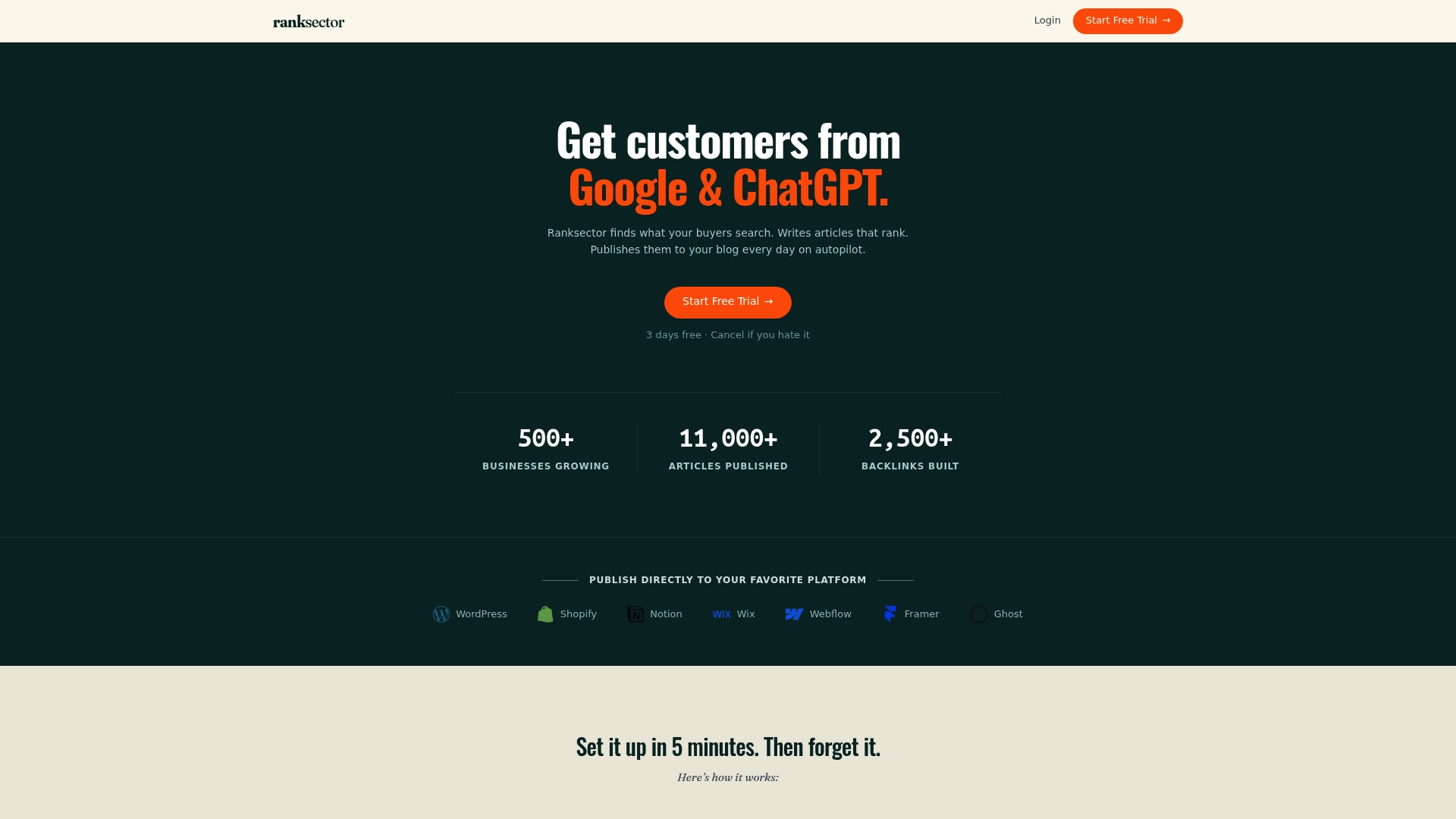
Ranksector reports over 11,000 published articles. The vendor advertises daily publishing, automated keyword research, AI article creation, and a backlink exchange network. A flat starting price of $99/month covers publishing, backlinks, and native integrations.
Core Features
Ranksector combines keyword research with competitor analysis and buyer intent signals to surface topic opportunities. It uses AI-powered article writing that delivers formatted posts with SEO titles, meta descriptions, and images. Daily or custom publishing schedules push content to major CMS platforms while a built-in backlink exchange helps grow domain authority.
Key Differentiator
Automates the entire SEO pipeline from keyword research to publishing and backlinks. That single workflow reduces manual handoffs and keeps a predictable publication cadence. Small teams can run ongoing content campaigns without a full in-house SEO staff.
Pros
The platform automates content creation, publishing, and backlink building, which saves time and reduces recurring vendor coordination. At $99/month it positions itself as a lower-cost alternative to agency retainers that run into thousands. Native publishing support for WordPress, Shopify, Webflow, Wix, Ghost, Notion, and Framer removes integration overhead for multi-site workflows.
Cons
- Not suitable for highly customized or niche-specific SEO strategies outside automated content creation.
Notable Integrations
- WordPress
- Shopify
- Wix
- Webflow
- Ghost
- Notion
- Framer
Who It’s For
Small business owners, marketing managers, and agencies that need steady, low-effort content output. You will get the most value if you want regular blog publishing without staffing a content team. It fits teams that prioritize volume and predictable publishing over bespoke campaign work.
Unique Value Proposition
Flat $99/month all-in-one plan that includes up to 30 articles, backlinks, and platform integrations. That pricing model converts content and link-building tasks into a predictable monthly line item. The vendor advertises demonstrated results in increasing domain ratings quickly, which frames the service as a hands-off way to scale domain authority.
Real World Use Case
A startup automates daily blog updates on priority keywords and publishes directly to its WordPress site. The team stops hiring freelance writers and spends time on product and conversion optimization instead. Over time, the automated cadence helps the site accumulate topical coverage and inbound links.
Pricing
Starts at $99/month for the all-in-one plan. The plan includes up to 30 articles, backlink placement, and CMS integrations. A free 3-day trial is available for evaluation.
Website: https://ranksector.com
SEO.AI
At a Glance
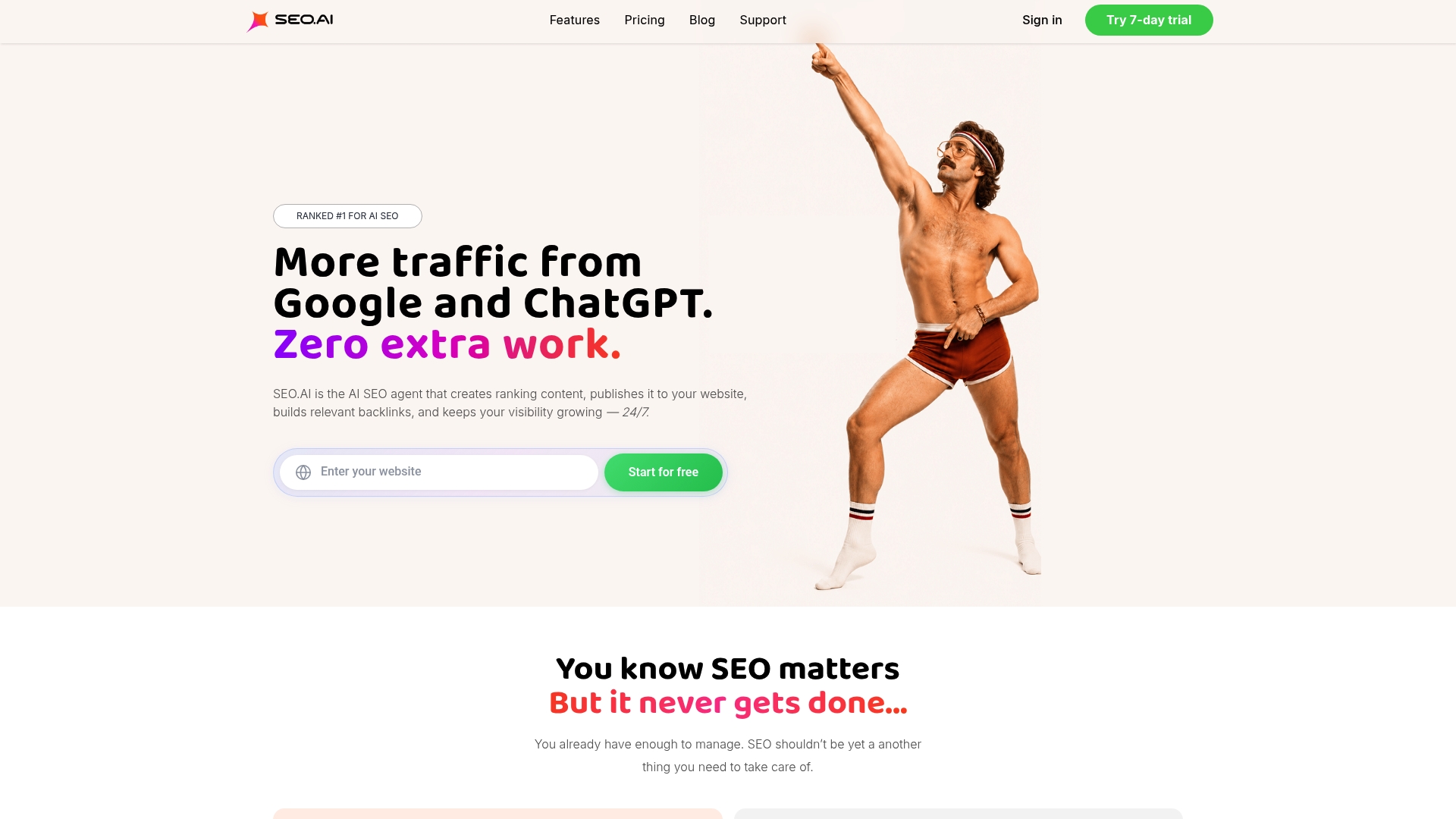
SEO.AI’s marketing materials state it analyzes 5.7 million data points for ranking strategies and competitor insights. That volume feeds automated audits, meta optimization, and content suggestions. The platform positions itself to run content publishing, backlink building, and visibility tracking with minimal manual input.
Core Features
SEO.AI bundles Automated content creation with scheduled publishing and CMS connectors so content goes live without repeated manual steps. It pairs content analysis and semantic SEO suggestions with meta description and title optimization to improve snippet relevance. The platform also includes backlink building and routine SEO audits driven by the vendor data set.
Key Differentiator
SEO.AI combines content generation, backlink management, and ranking monitoring into one autonomous package. That consolidation reduces the need to stitch separate tools for writing, link outreach, and performance tracking. The single-dashboard approach suits teams that want fewer vendor relationships.
Pros
SEO.AI automates many recurring SEO tasks, which reduces manual work for in-house teams. It supports multiple languages and major CMS platforms, so global or localized publishing fits the product scope. Detailed competitor benchmarking and the vendor data set provide specific optimization signals you can act on without deep data engineering.
Cons
- Cost may be prohibitive for very small or simple sites; the entry price targets more serious investments.
- Dependence on AI means occasional need for human oversight to catch factual errors or tone mismatches.
- Limited transparency about AI decision-making processes makes auditing individual recommendations harder.
When It May Not Fit
SEO.AI may not fully replace high-level manual SEO strategy for very competitive niches that require bespoke campaigns. Performance also depends heavily on existing domain authority and niche competition. If your SEO program relies on fine-grained, custom link relationships or manual editorial control, this tool will feel restrictive.
Who It’s For
This product fits small and medium-sized businesses, agencies, and content marketers who want to reduce hands-on SEO tasks. If you run multiple sites or manage client portfolios and prefer automation over assembling point tools, SEO.AI can save time. If you need tight editorial control, consider a hybrid human plus tool approach.
Real World Use Case
A regional retail chain uses SEO.AI to auto-generate product and category pages, publish them to the CMS, and run backlink campaigns into relevant local outlets. The chain monitors ranking changes and adjusts messaging based on the platform recommendations.
Pricing
Pricing starts at $149/month for a single site and scales up for multi-site options and agency plans. The vendor advertises flexible plans for larger businesses and agency needs, with higher costs for broader deployments.
Website: https://seo.ai
Speedy
At a Glance
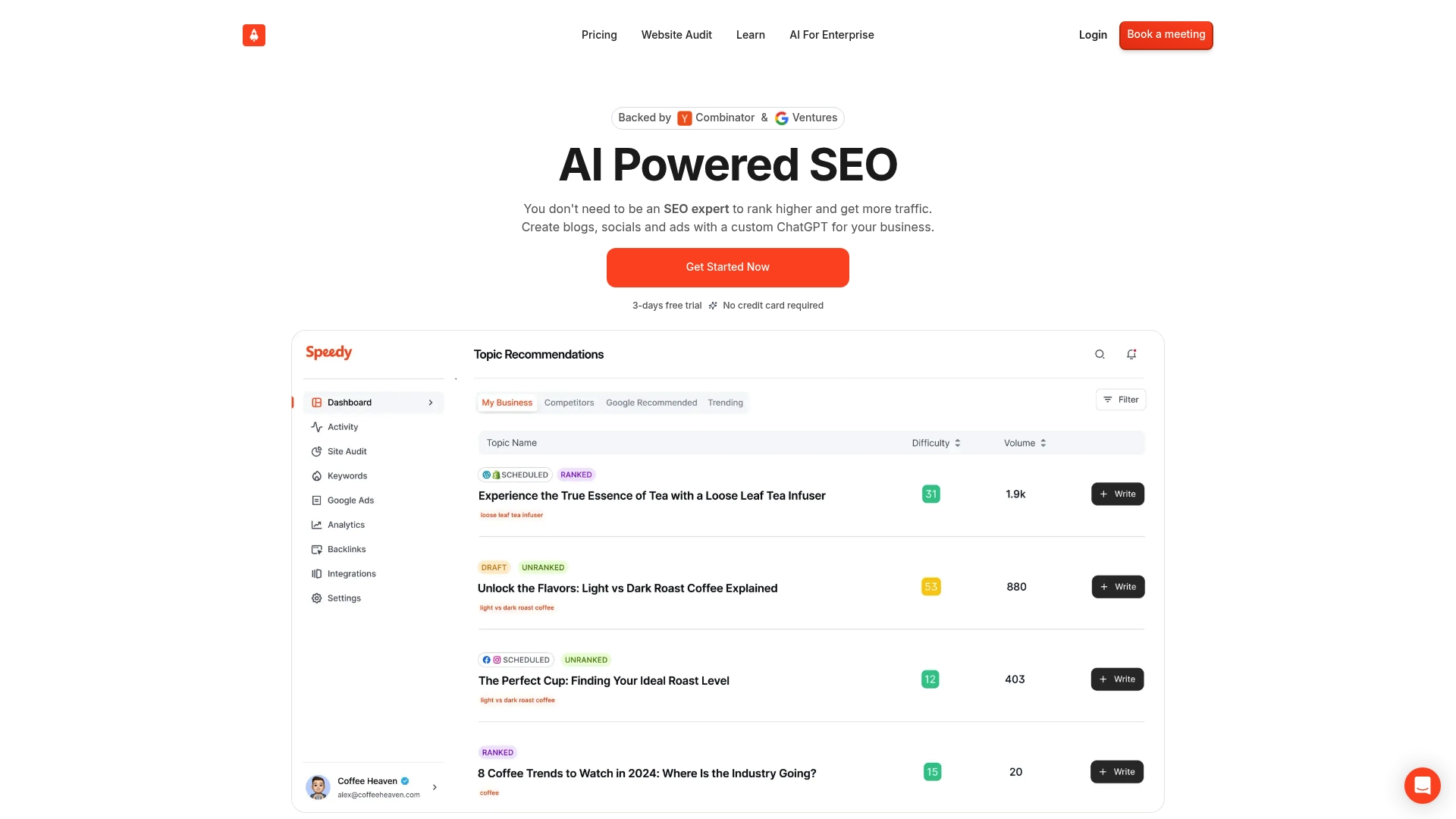
Speedy reports multilingual blog generation in 49 languages. That claim points to teams needing global reach without hiring translators. The tool also advertises a free three-day trial that requires no credit card, which lowers the barrier to testing the platform.
Core Features
Speedy bundles AI content creation with topic recommendations and competitor analysis, and it links trend signals from Google Trends to content ideas. It includes built-in SEO analytics, internal linking suggestions, AI image generation, social post creation, and Google Ads draft generation. The platform supports direct publishing to CMS and social channels through its integrations.
Key Differentiator
Speedy combines content creation, SEO checks, and distribution in one app while supporting multilingual output. That focus fits teams who want to write, optimize, and publish without stitching multiple tools together. It leans toward marketing teams who prefer an in-app publishing workflow instead of outsourcing content production.
Pros
Speedy helps teams create SEO-optimized content quickly and keeps the writing and publishing steps inside the same interface. Integrations with WordPress, Shopify, Webflow, and social channels simplify scheduling and analytics. The vendor advertises a free three-day trial with no credit card required, which lets you test publishing and workflow automation without upfront commitment.
Cons
- Relies on AI, which may produce generic or less nuanced content according to third-party reviews.
- May not fully replace expert SEO strategists for complex site architecture or enterprise keyword strategy.
- Pricing specifics are not publicly detailed, which makes budget planning harder for smaller teams.
When It May Not Fit
Speedy may miss the mark for niche technical industries that require deep subject matter expertise in content. Teams that need transparent, line-item pricing for procurement may find the lack of published rates problematic. Agencies that prefer white glove content strategy and manual editorial oversight will need to pair Speedy with outside consulting.
Notable Integrations
- Zapier for workflow automation.
- WordPress, Webflow, and Shopify for direct publishing.
- Google Search Console for performance signals.
- Facebook, Instagram, and Twitter for social posting.
Who It’s For
Marketing teams, small business owners, and entrepreneurs who want to automate content creation and publish from one place will get the most value. Speedy fits teams that prioritize volume, multilingual reach, and in-app distribution over bespoke editorial strategy. It also suits agencies that want faster first drafts to accelerate client campaigns.
Real World Use Case
A digital marketing agency uses Speedy to generate weekly blog drafts, optimize them for search intent, and queue social posts across clients. That workflow reduces draft time and centralizes publishing, freeing the team to focus on CRO and link building.
Pricing
Speedy offers a free three-day trial with no credit card required. Specific pricing tiers and rates are not disclosed on the website, so procurement teams should request a quote for longer term plans.
Website: https://speedybrand.io
Qwikrank
At a Glance
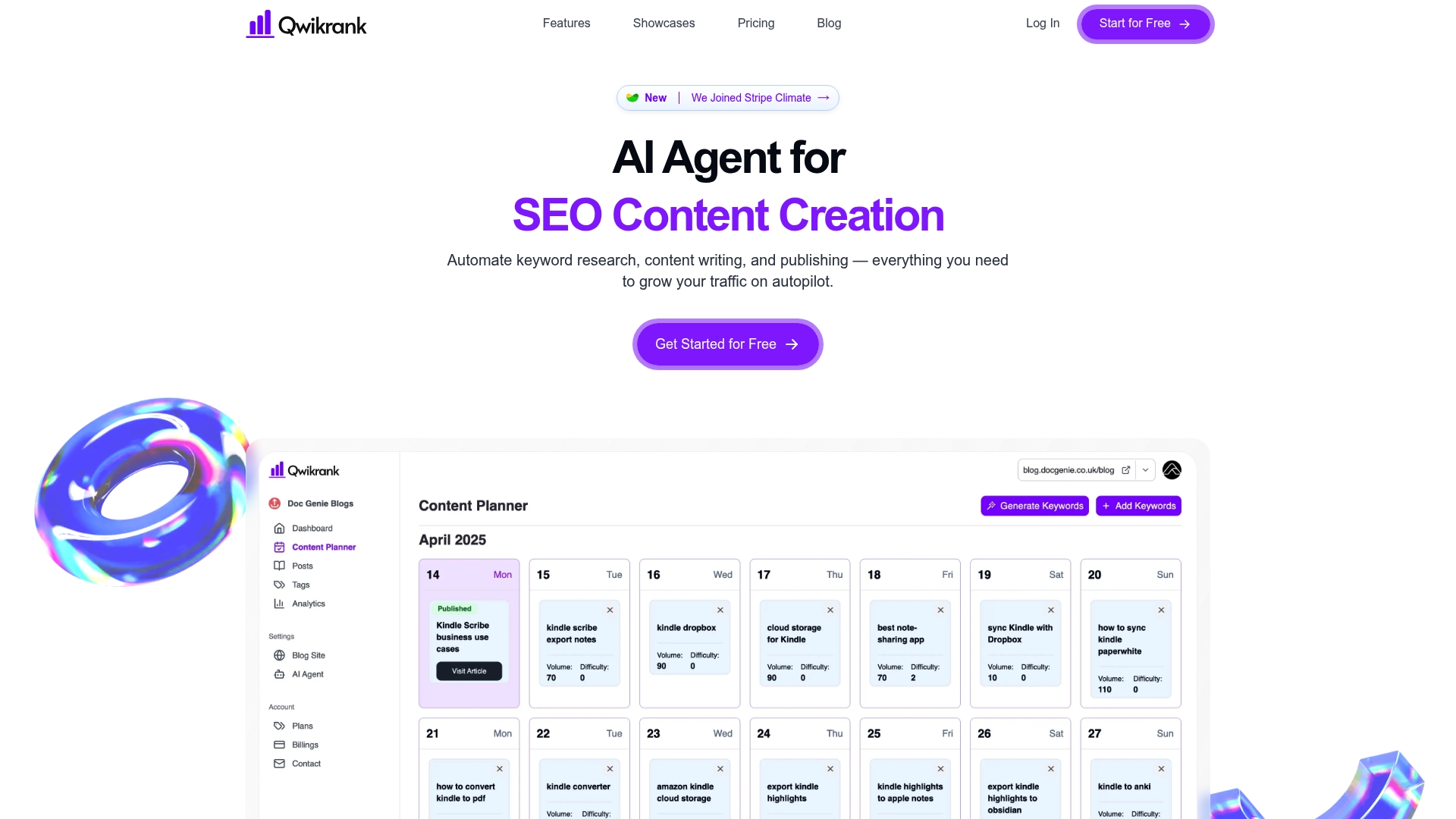
Starting at $39/month, Qwikrank bundles automated keyword research, content writing, hosting, and analytics into a single subscription. The platform includes a hosted blog you can use with a custom domain. That consolidation reduces the number of separate vendors you must manage for content operations.
Core Features
Qwikrank automates keyword discovery with AI and then generates long form, SEO focused articles ready for publishing. The system handles internal and external link insertion, produces images for posts, and offers a hosted blog with a custom domain and performance-focused delivery. A central analytics dashboard tracks article performance and publishing health across multiple workspaces.
Key Differentiator
Qwikrank’s main distinction is end to end automation of the content workflow from research to publish, with hosting and analytics built in. That single pipeline means you do not need to piece together an external CMS, image pipeline, or analytics tool. For teams focused on volume publishing, the built in hosting and publishing loop keeps processes in one place.
Pros
Qwikrank combines the entire content lifecycle, which reduces the number of tools you must buy and connect. The automated process moves from keyword research to long form writing and publishing, saving time on repetitive tasks. Included hosting with a custom domain removes a separate hosting vendor and can speed up time to live. The analytics dashboard surfaces performance signals so you can prioritize follow up edits or amplification.
Cons
-
Third party reviews note possible limitations in content uniqueness and nuance compared with human writers.
-
Heavy reliance on AI can produce context gaps for narrow or technical topics.
-
Pricing may be steep for solo creators or very small shops on tight budgets.
-
Limited public detail about how much you can customize templates and voice for generated content.
Who It’s For
Qwikrank fits small to medium-sized businesses, digital marketers, SEO agencies, and content creators that need scalable content output and prefer a single vendor for publishing. It suits teams that prioritize publishing cadence over handcrafted editorial workflows.
Real World Use Case
A digital marketing agency uses Qwikrank to run continuous content programs across multiple client sites. The agency sets up separate workspaces per client, automates keyword targeting, and publishes to hosted blogs. That process frees staff to focus on strategy, client reports, and link building.
Pricing
Plans start at $39/month for the Starter plan. A Growth plan starts at $159/month and includes expanded workspaces, additional articles, analytics, and hosting features. The pricing model targets agencies and teams that need multi-site content operations.
Website: https://qwikrank.com
Semrush
At a Glance
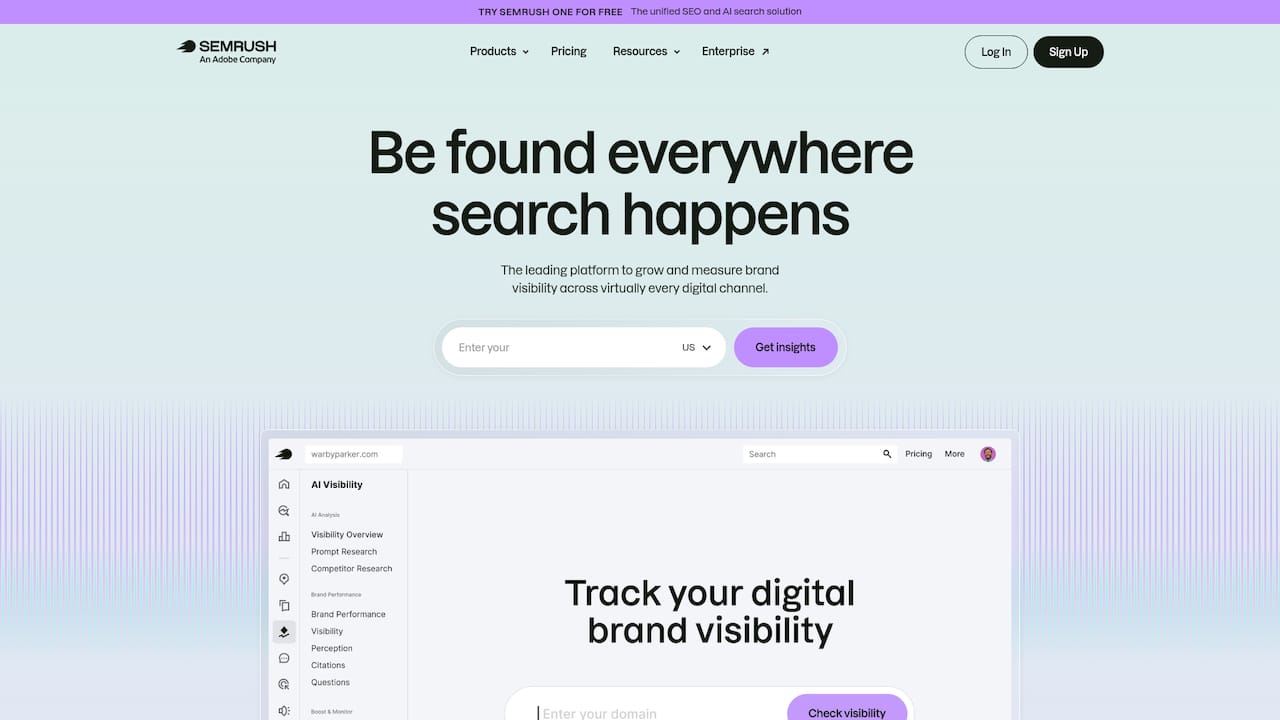
Starts at $117.33 monthly for the SEO plan. The platform mixes SEO tooling with AI-driven visibility tracking and market intelligence across search and AI search environments. That blend aims to give marketing teams keyword, backlink, and competitive insights from one-stop dashboards.
Core Features
Semrush bundles extensive keyword and backlink analysis with technical site audits and competitor research. The platform also offers content creation and optimization tools, paid advertising insights, social media management, and APIs for custom data workflows. Custom dashboards and reports let teams centralize visibility metrics and automate stakeholder reporting.
Key Differentiator
The product combines traditional SEO tools with AI search visibility and market intelligence in a unified platform. That pairing helps you track ranking shifts driven by AI search signals while keeping standard SEO diagnostics and backlink data in the same interface.
Pros
The keyword and backlink database is broad, which makes research and gap analysis faster for content planning and link outreach. Powerful AI visibility tools add a forward-looking layer to standard rank tracking, so you can spot emerging query patterns and content opportunities. The platform scales from solo practitioners to large teams and offers APIs and many third-party connections for automation and reporting.
Cons
-
Pricing may be high for small businesses or individual users.
-
A steep learning curve exists because of the extensive feature set.
-
Some advanced features require technical expertise to unlock their full value.
When It May Not Fit
If you run a solo blog or a micro business on a tight budget, the starting price can feel heavy. Teams without an SEO specialist will face a learning curve before they get consistent returns. If you need a plug-and-play editor for short-term campaigns, this platform may be more than you require.
Notable Integrations
-
APIs for custom data workflows that support exporting metrics into BI tools or internal dashboards.
-
Connectors for WordPress and Google Analytics to pull site data and traffic metrics into campaigns and reports.
Who It’s For
Marketing teams, SEO specialists, and digital agencies that need deep keyword and backlink research plus AI visibility tracking. Enterprise brands that require custom dashboards and API access will also find the platform appropriate. Small teams must weigh the price against expected return.
Real World Use Case
A global B2B company tracks rankings across regions and uses the platform to optimize content for AI-driven search trends. The team analyzes competitor strategies, adjusts content briefs, and automates reports for stakeholders. That workflow reduces manual data wrangling and speeds decision making for content investments.
Pricing
Pricing starts at $117.33 monthly for the SEO plan with higher tiers for larger needs and enterprise solutions. The model is subscription based with tiered features and expanded quotas at higher levels. Custom enterprise pricing is available for large-scale deployments.
Website: https://semrush.com
Comparison of alternatives
While numerous SEO content automation platforms provide specialized features, the choice often depends on balancing simplicity, cost, and advanced functionalities.
Balancing the cost and functionality spectrum
Ranksector offers a flat pricing model at $99 per month inclusive of content creation, CMS integration, and backlinks, positioning itself as one of the most cost-effective solutions for businesses seeking an efficient SEO content workflow. In comparison, SEO.AI begins at $149 but justifies the higher cost with extensive dataset-driven competitor insights and semantic optimization recommendations for content. Qwikrank provides an economical entry point at $39, though its capabilities may require additional verification for superior specificity in SEO contexts.
Unique strengths of diverse solutions
Semrush excels in providing deep integration of keyword insights with competitive analysis and advanced visibility tracking, making it indispensable for professional marketers aiming for a company-led or agency-driven strategy focus. Alternatively, Speedy supports multilingual needs, automating content creation across multiple locales, which is an ideal feature for global campaign operations.
Best fit
- Teams requiring a balance of cost-effectiveness and automation simplicity will find Ranksector ideally suited with its $99 plan, covering both publishing and backlinking.
- Businesses targeting multilingual markets where content needs localization will appreciate Speedy’s language support.
- Firms aiming to make data-driven SEO decisions would value Semrush for its integrated technical tools and competitive insights dashboard.
- Users looking for an economical entry-point solution with light hosting capabilities may explore Qwikrank’s $39 plan for beginner setups.
Our pick
Ranksector distinguishes itself as an efficient and user-friendly platform for SEO content automation, ideal for small businesses and agencies looking to manage regular publishing workflows without overwhelming complexity. While its feature set is ample for teams prioritizing cost-effective automation, businesses requiring advanced technical audits or in-depth global SEO insights may consider solutions like Semrush.
When considering automation tools for SEO-driven content creation, the following table outlines five viable options to guide your choice.
| Product | Core Feature | Key Differentiator | Pricing | Notable Limitation |
|---|---|---|---|---|
| Ranksector | Automated SEO content and backlinks | Complete SEO workflow in one platform | $99/month | Less suited for highly bespoke SEO strategies |
| SEO.AI | Multi-language content generation | Comprehensive analysis and recommendations | $149/month | High cost for smaller or simpler site needs |
| Speedy | AI-driven content creation in multiple languages | Combines SEO insights and multimedia features | Price not published | Limited content customization for niche industries |
| Qwikrank | Hosted blog with internal linking automation | Integrated hosting and analytics | $39/month | Limited customization of content templates |
| Semrush | Comprehensive SEO tools suite with AI visibility tracking | Leading data insights for competitive SEO | $117.33/month | High cost and steep learning curve for small teams |
Why small teams struggle with consistent SEO content and how Ranksector helps
Producing daily, SEO-optimized blog posts can feel daunting for small business owners and marketing managers. Managing keyword research, content creation, publishing, and backlink building all at once creates complexity and demands resources few teams have. Ranksector addresses these pain points with a hands-free platform that automates your entire content pipeline—from competitor-driven keyword discovery to publishing and backlink exchange. This helps you maintain a steady blog presence that grows your domain authority without adding staff or manual steps.
Ranksector offers:
- Automated publishing designed for small teams and agencies
- Keyword research combined with backlink strategies
- Integration with popular CMS platforms for easier workflows
See how Ranksector removes content bottlenecks and delivers proven domain rating improvements. Visit Ranksector to explore how you can simplify SEO content output and schedule daily articles tailored for your audience.
FAQ
How does Ranksector support automated content generation?
Ranksector generates AI-powered articles which include SEO titles, meta descriptions, and images. This functionality allows teams to publish formatted posts with minimal manual input, enhancing efficiency in content creation. Consider using Ranksector to streamline your SEO campaigns effectively.
What is the difference between Ranksector and SEO.AI?
SEO.AI excels in analyzing 5.7 million data points for effective ranking strategies and competitor insights. This feature makes SEO.AI suitable for businesses requiring extensive data analysis for content optimization. Ranksector, on the other hand, simplifies the process from keyword research to publishing, making it ideal for those focusing on automated content output without deep data engagement.
Which platform is better for backlink management, Ranksector or Speedy?
Speedy offers robust tools for Google Ads draft generation and SEO analytics, serving teams that want in-app distribution and optimization. Ranksector integrates a built-in backlink exchange that helps grow domain authority, making it a practical choice for teams focused on consistent publishing and link-building tasks.
Can I use Ranksector if I own a small business?
Yes, Ranksector is designed to support small business owners by providing automation for regular blog publishing without needing a full in-house SEO staff. By leveraging its services, you can focus more on your core business operations while maintaining a strong online presence.
How many articles can I publish per month with Ranksector?
Ranksector’s starting plan allows for up to 30 articles a month at a flat rate of $99/month. This predictable pricing makes it a solid option for smaller teams looking to establish a consistent content output.
Does Ranksector support multiple CMS platforms?
Yes, Ranksector supports native integrations with various CMS platforms like WordPress, Shopify, and Wix, making it easy to publish content across different sites. This flexibility allows businesses to maintain a unified content strategy efficiently.