
Contextual Backlinks: The 2026 Playbook for Topic-First Links
A contextual backlink is an in-text hyperlink placed inside topically relevant editorial copy, not tucked into a footer or sidebar. It carries more ranking weight because Google’s Reasonable Surfer model treats body links as more click-worthy and passes more PageRank through them. This guide covers what makes a link genuinely contextual, the evidence behind that value, and the tactics that earn it.
TL;DR:
- Contextual backlinks are most valuable when placed within relevant, topic-specific body content where they naturally answer a reader’s question.
- The impact of a link correlates more strongly with topical proximity and placement within high-traffic, relevant pages than with domain authority alone.
- Targeting guest posts, niche edits, and journalism citations in relevant content yields the strongest, most durable contextual links.
- Building linkable assets and filtering prospects by topical relevance, page traffic, and editorial fit increase outreach success, avoiding low-quality sites.
- Proper anchor text diversity and strategic placement in the opening third of articles enhance the click-through and ranking power of contextual links.
Table of Contents
- What Are Contextual Backlinks and How Does Google Treat Them?
- Why Do Contextual Backlinks Actually Move Rankings?
- What Types of Contextual Backlinks Should You Target?
- How Do You Actually Earn Contextual Backlinks?
- What Anchor Text and Placement Rules Actually Work?
- How Do You Measure the Impact of Contextual Backlinks?
- What Spam Signals Should You Watch For?
- How Ranksector Supports This Playbook in Practice
- What’s the One Experiment Worth Running This Month?
- Get Contextual Link Building on Autopilot
- Sources
What Are Contextual Backlinks and How Does Google Treat Them?
A link earns the label “contextual” when three things line up: it sits in the body of an article, the surrounding paragraph discusses the same topic as the linked page, and a reader would plausibly click it because it answers a question they just formed. That’s the definition Linkboss uses when explaining why Google’s Reasonable Surfer patent treats these links differently than boilerplate placements.
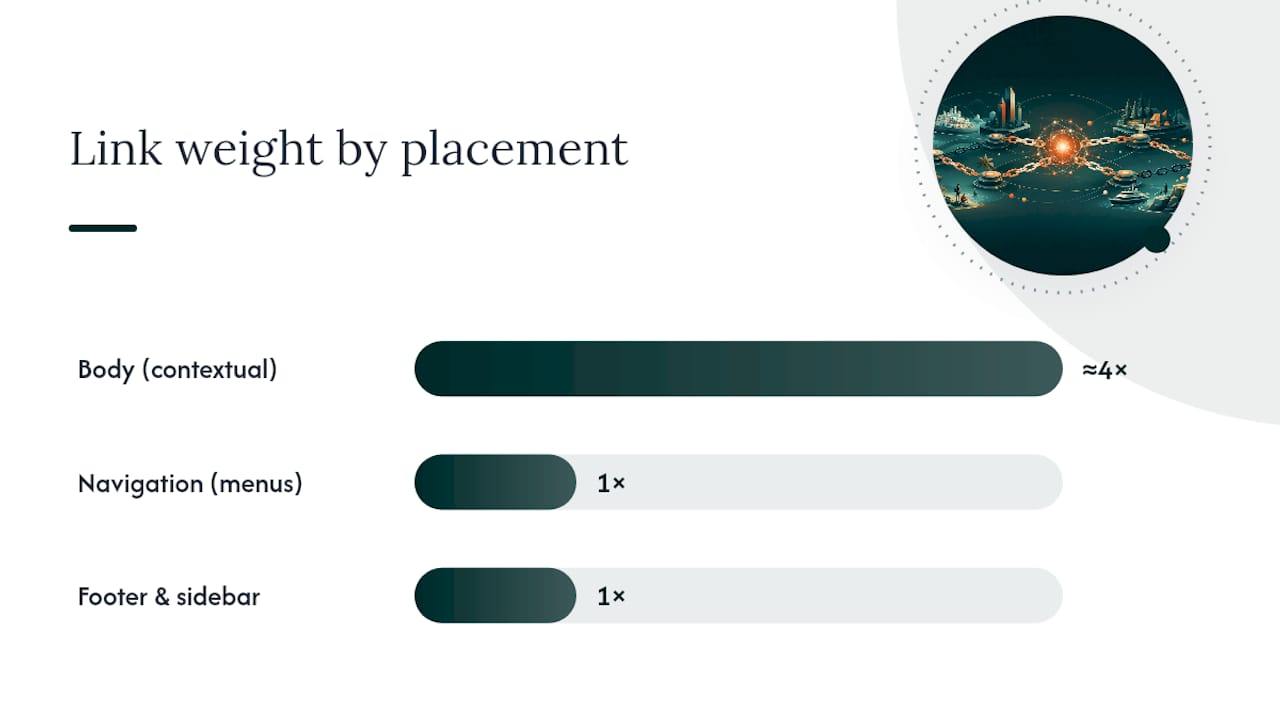
The patent’s core idea is simple: not every link on a page gets equal credit. Google models the probability a real user would click each link based on its position, its surrounding text, and its visual prominence. A link buried in a footer next to “Privacy Policy” and “Terms of Service” gets a low click-probability score. A link inside a sentence that’s actively explaining the concept the target page covers gets a high one.
That distinction shows up in modeling estimates that put body links at roughly 3 to 5 times the weight of navigation or footer links under the same patent framework. Practically, that separates contextual links from three lookalikes:
- Navigational links (menus, breadcrumbs) exist for site structure, not topical endorsement.
- Footer and sidebar links appear on every page regardless of relevance, which signals low intent to Google’s crawlers.
- Related-post widgets are auto-generated and rarely tied to specific sentence-level context.
A contextual link, by contrast, is chosen by an editor because it belongs exactly there.
Why Do Contextual Backlinks Actually Move Rankings?
The evidence base for this has gotten sharper. Research summarized by Report Card found that topical semantic proximity between the linking page and the target page correlates with ranking outcomes at 0.31, compared to just 0.14 for raw domain authority. That’s a meaningful gap. It says the subject match between two pages predicts ranking movement better than how powerful the linking domain looks on paper.
Topical proximity out predicts domain authority. A page that talks about the same subject as your target page, even from a modest site, appears to influence rankings more reliably than a high-authority page that’s off-topic.
Placement compounds that effect. Analysis from Backlynk reports that the same anchor, placed in editorial body copy instead of a sidebar or footer on the same page, can pass up to 5 times the ranking value. Two takeaways follow directly:
- A DR 30 niche blog that covers your exact topic can outperform a DR 70 general-interest site linking from an unrelated page.
- Chasing high-authority placements without checking topical fit wastes outreach hours on links that underperform their domain metrics.
If your team is still sorting prospects by Domain Rating alone, this is the data that says stop. Topical fit and page-level traffic deserve equal weight in that filter.
What Types of Contextual Backlinks Should You Target?
Contextual backlinks aren’t one tactic. They’re a category that includes several distinct acquisition methods, each with its own risk profile and effort level.
- Guest posts placed in-body, inside a paragraph that naturally discusses your subject, carry real weight. A link in your author bio does not count as contextual. It’s boilerplate, and Google’s models treat it accordingly.
- Niche edits (link insertions) add your link to an already-published, already-indexed article. Request these on pages that already rank for topics adjacent to yours, and frame the ask around adding value to an existing sentence, not appending a random citation.
- Digital PR earns contextual links when journalists cite original data, a proprietary tool, or a striking visualization inside a news story. These links tend to land in the body because they’re substantiating a claim the writer is actively making.
- Contextual internal links move authority around your own site rather than bringing in outside equity. They serve a different function: distributing the ranking power you already have to the pages that need it most.
External contextual backlinks bring in new authority. Internal contextual links redistribute it. A strong link-building program uses both instead of treating one as a substitute for the other.
How Do You Actually Earn Contextual Backlinks?
Earning these links starts before outreach ever begins. It starts with having something worth linking to.
Build linkable assets first: original research, a free tool, a data visualization, or a template nobody else has published. Neil Patel’s guidance on contextual link building points to guest posts and original assets as the two most durable methods, provided the link sits in genuinely relevant body copy rather than a bolted-on mention.
Once you have an asset, filter prospects in this order:
- Topical relevance first. Does the page already discuss your subject area, even loosely?
- Page-level traffic second. A prospecting tool can show you whether the specific page (not just the domain) gets organic visits. Links from pages that already have organic traffic compound faster, because real visitors generate real referral clicks on top of the ranking signal.
- Editorial fit third. Would this link survive an editor’s eye, or does it read like it was inserted for SEO purposes alone?
For outreach, personalize the pitch around the specific sentence or paragraph where the link would go. Guest post pitches should propose a topic outline, not just a bio and a link request. Niche edit pitches should quote the exact sentence you’d add your link to. PR pitches should lead with the data point, not the ask.
Track every outreach touch in a spreadsheet or CRM so you can see acceptance rates by site type and niche. That data tells you where to spend more time next quarter.
Pro Tip: Before pitching a niche edit, check whether the target page has been updated in the last 12 months. Stale pages rarely get re-crawled quickly, which delays how fast your new link gets picked up.
Avoid scaling this through link marketplaces that sell placements in bulk. Editorial authenticity is exactly what separates a contextual backlink from a paid liability, and buying links in volume erodes that distinction fast.
What Anchor Text and Placement Rules Actually Work?
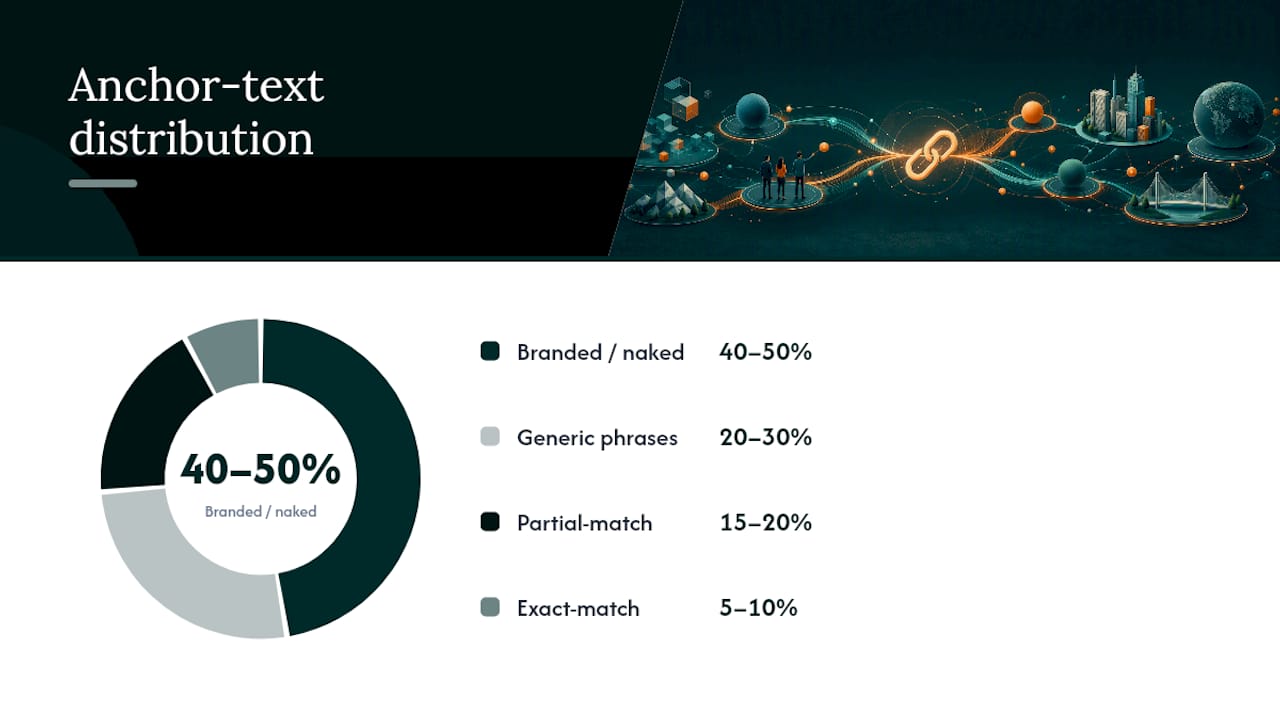
Anchor text distribution needs variety, not repetition. A rough, defensible mix looks like this:
- 40 to 50% branded or naked URL anchors (“Ranksector,” “ranksector.com”)
- 20 to 30% generic phrases (“this guide,” “click here,” “read more”)
- 15 to 20% partial-match anchors that include a related phrase without the exact keyword
- 5 to 10% exact-match anchors reserved for your strongest, most relevant placements
Heavy exact-match saturation is one of the clearest unnatural-link patterns Google’s systems flag, so treat that top tier as a small allocation, not the default.
Placement matters as much as anchor choice. Links that appear in the first third of an article tend to get more clicks and more crawl attention than ones buried near the end. Write the 50 to 150 words around the link so they reinforce the same topic the target page covers. That surrounding context is what the Reasonable Surfer model reads to judge relevance.
For internal contextual links, a practical baseline is 2 to 5 links per 1,000 words, pointed at your priority pages. Audit for orphan pages regularly. Pages with zero internal links rarely accumulate authority no matter how many external backlinks you send elsewhere.
How Do You Measure the Impact of Contextual Backlinks?
Set expectations before you start tracking, because contextual link building rewards patience more than most SEO work.
- Pick your core metrics up front: referring domains, organic sessions to the specific target page, keyword rank changes for your priority terms, and assisted conversions if you have ecommerce or lead-gen tracking.
- Use Google Search Console as your attribution baseline. Compare a 90-day window before and after each batch of links lands, and hold out a few comparable pages as informal controls.
- Expect insertions into already-indexed pages to show movement faster than brand-new guest posts, which need to get indexed and crawled first.
- Prioritize by topical match and existing page traffic, not by how many links you’ve sent this month. Ten well-placed links on relevant, trafficked pages will usually outperform fifty scattered ones.
Ninety days is a realistic first checkpoint for early signal, though full ranking impact often takes longer to settle.
What Spam Signals Should You Watch For?
Google’s SpamBrain system and successive link spam updates specifically target manipulation patterns, and pure link-sale networks sit near the top of that target list.
Watch for these red flags before accepting or paying for a placement:
- Sites that publish thin or duplicate content purely to host paid links.
- Unnatural anchor text patterns, especially exact-match anchors repeated across many domains.
- Sitewide footer or sidebar placements dressed up as “contextual” in a pitch email.
Sometimes a link is worse than no link at all. If a prospect site looks built for link sales rather than readers, walk away, even if the price is low and the Domain Rating looks tempting.
How Ranksector Supports This Playbook in Practice
Executing this at scale takes two things most small teams lack: a steady stream of link-worthy content and a way to trade contextual placements without manual outreach for every single one.
- A platform can publish daily, SEO-optimized articles built from competitor keyword research, giving fresh, topically relevant pages worth linking to and from.
- A backlink exchange network can connect contextual placements between topically aligned sites, rather than relying on generic link marketplaces.
- A large number of articles have been published across client sites, with observed domain-rating gains tied to consistent contextual publishing.
- An internal linking suggestion feature can help maintain the 2 to 5 links per 1,000 words baseline automatically as new content goes live.
What’s the One Experiment Worth Running This Month?
Prioritize topical, traffic-backed contextual links over raw authority chasing. If you do one thing this month, insert a contextual link from one of your highest-traffic existing pages into a related target page, then track referring traffic and rank movement over 90 days. That single test tells you more than another round of cold outreach.
— Savannah
Get Contextual Link Building on Autopilot
Most teams know exactly what this playbook requires and still don’t do it, because building linkable assets, running outreach, and maintaining internal link density takes more hours than a two-person marketing team has. Ranksector was built for that gap. It publishes SEO-optimized articles daily, built from real competitor keyword research, and pairs that content with a contextual backlink exchange so your new pages start earning topically relevant links instead of sitting unlinked.

Every article comes with internal linking suggestions built in, so the 2 to 5 links per 1,000 words baseline happens automatically rather than through a manual audit spreadsheet. If you’re a founder or small marketing team trying to run this exact playbook without hiring an agency, start with Ranksector’s free tools and see what an automated content and link pipeline looks like on your own domain.
Sources
- What Is a Contextual Link? Definition, Examples & Why Google Weighs Them Highest
- Contextual Link Building: The Complete Guide to Links That Move Rankings | Report Card
- Contextual Backlinks: Why They’re Worth 10x More Than Others
- Internal Linking for SEO: Why and How
- Contextual link building: Four proven ways to get rank-boosting links — Neil Patel