
Cheap Content Marketing SEO Results on Any Budget
Budget content marketing, known in the industry as “organic content SEO,” is the practice of producing and distributing search-optimized content without agency-level spending. Small business owners can achieve real SEO results for as little as $0–$200 per month, saving $12,000–$34,000 annually compared to typical agency retainers. The gap between what agencies charge and what you actually need to spend is enormous. This guide covers the tools, content methods, distribution tactics, and timelines that make cheap content marketing SEO results a realistic goal for any small team.
What low-cost tools enable cheap content marketing SEO results?
The right tool stack costs far less than most small business owners expect. DIY tool stacks run $99–$200 per month versus $500–$3,000 monthly for agency retainers. That difference funds months of content production on its own.
Google Search Console is the single most important free tool for any DIY SEO effort. It shows which queries bring visitors to your site, which pages rank, and where technical issues exist. Free rank trackers and keyword planners fill the remaining gaps, covering roughly 80% of your monitoring needs without spending a dollar.

AI content platforms have changed the math on production costs. Quality articles now cost under $1 per piece when generated with the right AI tools and proper editorial oversight. That price point makes daily publishing realistic for a solo founder or a two-person team. For a deeper look at which platforms handle high-volume publishing well, the best AI tools for blog publishing guide from Ranksector breaks down the current options.
| Tool type | Monthly cost | Primary use |
|---|---|---|
| Google Search Console | Free | Rankings, impressions, technical issues |
| Keyword planner (basic) | Free | Topic and keyword research |
| AI content generator | $0–$50 | Article drafting at scale |
| Rank tracker (entry-level) | $0–$29 | Position monitoring |
| On-page SEO checker | Free–$19 | Title tags, meta descriptions, structure |
Pro Tip: Start with the free tier of every tool for the first 90 days. Only upgrade to a paid plan once you have data showing which keywords and content types are actually moving your rankings.
How to create high-impact SEO content on a tight budget
AI-assisted content creation works best when you pair it with a clear keyword strategy. Start by pulling your target keywords from Google Search Console or a free keyword planner. Group related terms into topic clusters, then build one article per cluster that answers the primary search intent directly.
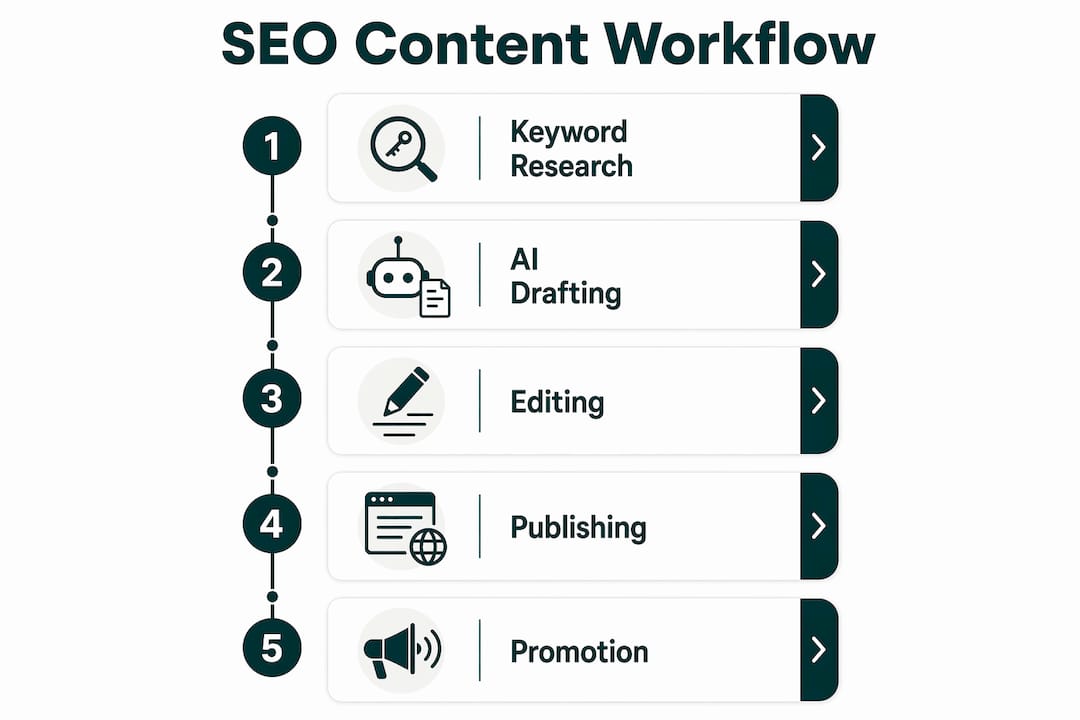
Use AI to draft the article structure first. A solid outline includes a direct answer in the opening paragraph, two to four supporting sections with H2 headings, and a conclusion that reinforces the main claim. This structure matches how search engines parse content for featured snippets and AI-generated answers.
On-page SEO is non-negotiable, even on a zero-dollar budget. Every article needs a title tag under 60 characters that includes the target keyword, a meta description under 160 characters, and at least one internal link to a related page. These elements cost nothing to implement and directly affect how search engines rank your pages. For a clear explanation of how ranking signals work together, Ranksector’s guide on how search engines rank websites is worth reading before you publish your first batch of articles.
The biggest quality risk with AI content is thin, repetitive writing that adds no real information. Avoid it by doing three things:
- Add one specific example, statistic, or case detail per section that AI alone would not generate
- Edit every article for reading level, targeting grade 10–12 prose
- Check that each H2 section answers a distinct question rather than restating the same point
AI-generated content rarely ranks well without supporting backlinks, technical SEO, and a consistent publishing schedule. AI handles the volume. Your editorial judgment handles the quality. Both are required.
What are the best affordable strategies to promote your content?
Content distribution is where most budget content marketing plans collapse. 85% of low-budget marketers spend nearly everything on creation and almost nothing on distribution. Content without distribution is invisible, regardless of how well it is written or optimized.
The recommended split is a 40:60 ratio: 40% of your effort on production, 60% on promotion. For a small business owner working alone, that means writing two articles per week and spending more time getting those two articles in front of readers than writing the next two.
Free and low-cost distribution channels that actually move the needle:
- Google Search Console: Submit new URLs for indexing immediately after publishing
- Reddit and niche forums: Share articles in relevant subreddits where your audience asks the exact questions your content answers
- Email newsletters: A list of 500 engaged subscribers drives more consistent traffic than 5,000 social media followers
- LinkedIn and X (Twitter): Repurpose key points from each article as standalone posts with a link back to the full piece
- Content repurposing: Turn one article into a short video script, a carousel post, and three social captions to multiply reach without multiplying effort
A well-designed website also amplifies every distribution effort. If your site loads slowly or looks broken on mobile, traffic from any channel converts poorly. Investing in strategic website design early means your content has a solid foundation to land on.
Pro Tip: Schedule distribution tasks the same way you schedule writing. Block 30 minutes after each article publishes to submit it for indexing, share it in two communities, and send it to your email list. Consistency here compounds faster than any single tactic.
How long does it take to see SEO results from budget content marketing?
Realistic timelines are the most misunderstood part of affordable SEO strategies. Initial rankings for low-competition keywords appear in 30–45 days. Significant traffic growth follows over the 90–120 day window with consistent publishing. One solopreneur using AI tools reached top-10 rankings after 14 months and 28 published posts.
The timeline depends heavily on three variables: keyword competition, publishing frequency, and backlink acquisition. Targeting low-competition, long-tail keywords shortens the ranking timeline significantly. Publishing at least two to four articles per week maintains the momentum search engines reward. Even a handful of quality backlinks from relevant sites accelerates the process.
| Timeline | Expected milestone |
|---|---|
| Days 1–30 | Site indexed, initial impressions appear in Search Console |
| Days 30–45 | First rankings for low-competition keywords |
| Days 60–90 | Click-through rate data visible, content gaps identified |
| Days 90–120 | Traffic growth measurable, top-10 rankings for target terms |
| Months 6–14 | Compounding traffic, domain authority building |
Track progress using Google Search Console impressions, average position, and click-through rate. These three metrics tell you whether your content is getting seen, whether it ranks, and whether searchers find it worth clicking. If impressions grow but clicks do not, your title tags and meta descriptions need work. If neither grows, your publishing cadence or keyword targeting needs adjustment.
Most DIY SEO failures come from inconsistent publishing and ignoring link building, not from budget constraints. A small business owner publishing one article per month will wait years for meaningful results. The same owner publishing three articles per week will see movement within 90 days.
Key Takeaways
Consistent publishing and strategic distribution drive budget content marketing results faster than any single tool or tactic.
| Point | Details |
|---|---|
| Tools cost less than expected | A free-to-$200/month tool stack covers 80% of SEO monitoring and content production needs. |
| AI content needs editorial oversight | AI drafts articles cheaply, but quality editing and on-page SEO determine whether they rank. |
| Distribution deserves 60% of effort | Spending more on promotion than production is the ratio that makes content visible to search engines. |
| Rankings take 30–120 days | Low-competition keywords show initial rankings in 30–45 days; meaningful traffic builds over 90–120 days. |
| Consistency beats budget size | Publishing frequency and link building matter more than how much you spend on any single piece. |
Why discipline beats budget in content marketing every time
I have worked with small business owners who spent $3,000 a month on agency SEO and got less traction than a solopreneur publishing three AI-assisted articles per week on a $50 tool stack. The difference was never the budget. It was the publishing cadence and the willingness to treat distribution as seriously as creation.
The counterintuitive truth about affordable SEO strategies is that constraints force better decisions. When you cannot afford to publish 30 mediocre articles, you write five good ones and promote them properly. That discipline produces better long-term results than high-volume, low-quality output.
The other lesson I keep coming back to is content refresh. Refreshing existing content costs 50–70% less than producing new content and often delivers better ranking stability. Most small business owners ignore their older articles entirely. Updating a post that already has impressions in Search Console is the highest-ROI task you can do on a Friday afternoon.
My honest advice: pick three low-competition keywords this week, publish one article targeting each, and distribute every piece through at least two channels. Do that consistently for 90 days before you evaluate whether your strategy is working. The businesses that quit at day 60 never see the compounding effect that starts at day 90.
— Savannah
How Ranksector fits into your budget content marketing plan
Small business owners who want the output of a content team without the payroll have a practical option in Ranksector.
Ranksector automates the creation and daily publication of SEO-optimized articles, combining keyword research with a built-in backlink exchange system. That means your domain authority grows without manual outreach. With over 11,000 articles already published across client sites, Ranksector delivers the publishing frequency that drives rankings without requiring a full-time content team. Explore Ranksector’s free tools to see what automated SEO content looks like in practice, or review the agency-level options if you are ready to scale.
FAQ
What is the cheapest way to start content marketing for SEO?
Start with Google Search Console, a free keyword planner, and an AI writing tool. This setup costs $0–$50 per month and covers keyword research, content production, and performance tracking.
Can AI-generated content rank on Google?
Yes, but not on its own. AI content paired with on-page SEO, backlinks, and consistent publishing can reach first-page rankings within 90 days for low-competition keywords.
How much should a small business spend on SEO content?
For businesses with $100,000 in annual revenue, industry benchmarks suggest $150–$600 per month allocated to SEO, representing 30–60% of a digital marketing budget.
How often should I publish content to see SEO results?
Publish at least two to four articles per week targeting low-competition keywords. Consistency over 90 days produces the first measurable traffic growth for most small business sites.
What is the biggest mistake in budget content marketing?
Spending nearly all resources on content creation and almost nothing on distribution. The recommended ratio is 40% production to 60% promotion to ensure content actually reaches its intended audience.