
Common Keyword Research Mistakes Businesses Make in 2026
Keyword research errors are the single most common reason well-funded SEO campaigns fail to generate organic traffic. The common keyword research mistakes businesses make fall into predictable patterns: chasing volume over intent, skipping SERP analysis, and treating keyword lists as permanent documents. Search intent mismatch, keyword cannibalization, and skipping SERP analysis are the top three issues causing significant traffic loss in 2026. This article breaks down each mistake with specific data, named tools, and fixes you can apply immediately. Whether you use Google Keyword Planner, Ahrefs, or Semrush, the principles here apply directly to your workflow.
1. Common keyword research mistakes businesses make by ignoring search intent
Search intent is the reason behind a query. Google classifies intent into four types: informational (learning), transactional (buying), commercial (comparing), and navigational (finding a specific site). When your keyword targets one intent type but your page serves another, Google will not rank it, regardless of how well-optimized the content is.
The consequences are concrete. A product page targeting “what is project management software” will struggle because the SERP for that query is filled with blog posts and explainer articles. Google has already decided the intent is informational. Pushing a transactional page into that slot is fighting the algorithm directly.
Common examples of intent mismatch include:
- Targeting “best CRM software” with a single-product landing page instead of a comparison article
- Using “how to write a business plan” as a keyword for a paid template download page
- Optimizing a homepage for a navigational query that only existing customers search
Pro Tip: Open an incognito browser, search your target keyword, and categorize the top five results by content type. If four of five are blog posts, your product page will not rank there. Match the format first, then optimize.
Understanding how queries get interpreted differently across platforms makes this even clearer. Intent alignment is not optional. It is the primary selection signal.
2. Over-relying on volume while ignoring long-tail keywords
Volume bias is the habit of selecting keywords purely because they show large monthly search numbers. It is one of the most costly businesses keyword strategy flaws in practice. High-volume keywords are almost always dominated by established domains with years of backlink authority. A newer or mid-authority site targeting “project management software” (90,000+ monthly searches) will not reach page one.

Estimated search volumes from keyword tools can deviate 30 to 50 percent from actual searches, especially for long-tail variants. This means the volume number you see in Google Keyword Planner or Semrush is often inflated because the tool clusters near-synonyms together. You are not targeting one keyword. You are targeting a bucket of loosely related terms.
Long-tail keywords, although lower in volume, provide more relevance, lower competition, and better conversion potential. A query like “best project management software for remote construction teams” has far less competition and attracts buyers much closer to a decision. That specificity converts.
Pro Tip: Filter your keyword tool results to show only keywords with three or more words. Then sort by keyword difficulty below 30. This single filter surfaces the long-tail opportunities your competitors are ignoring.
The practical fix is to build a keyword portfolio. Target one or two high-volume terms as long-term goals while publishing consistently around long-tail clusters that can rank within 60 to 90 days.
3. Skipping SERP analysis before committing to a keyword
SERP analysis means reviewing the actual search results page for your target keyword before you write a single word of content. Most teams skip this step entirely. They pull a keyword from Google Keyword Planner, confirm the volume looks reasonable, and start writing. That process is broken.
73% of keywords chosen solely based on volume and competition metrics fail to reach page one without manual SERP analysis. When teams do check the SERP first, the failure rate drops from 81% to 34%. That is a 47-point improvement from one additional step.
| Approach | Page-one failure rate | What it tells you |
|---|---|---|
| Volume and competition only | 81% | Metrics alone do not predict rankability |
| Volume plus SERP analysis | 34% | Intent and competitor review nearly halves failure |
SERP analysis tells you who is ranking, what content format they use, whether featured snippets or People Also Ask boxes dominate, and how strong the linking profiles of top-ranking pages are. Without this, you are guessing. With it, you are making a calculated decision.
Pro Tip: Check the article ranking metrics that actually predict performance in 2026. Domain rating, content depth, and internal linking structure all appear in SERP analysis and matter more than raw keyword volume.
Also note that Google Keyword Planner’s competition score reflects advertiser bidding, not organic ranking difficulty. A keyword marked “high competition” in Planner may be relatively easy to rank for organically. Treating paid demand signals as organic difficulty signals is a fundamental misread of the tool.
4. Misreading Google Keyword Planner’s competition score
This mistake deserves its own section because it is so widespread. Google Keyword Planner is a tool built for Google Ads. Its competition score measures how many advertisers are bidding on a keyword, not how hard it is to rank organically. Yet SEO teams use it as a proxy for organic difficulty every day.
Planner data is derived from paid demand, not organic search signals. A keyword with “low” competition in Planner could have ten authoritative domains ranking for it organically. A “high competition” keyword in Planner might have a weak organic field because advertisers bid on it heavily but publishers rarely write about it.
The fix is to use Planner for directional volume estimates only. Pair every keyword with an organic difficulty check from a dedicated SEO tool like Ahrefs, Semrush, or Moz. Then confirm the actual SERP composition before making a final decision. Treat Planner as a starting point, not a verdict.
5. Keyword cannibalization and poor topic grouping
Keyword cannibalization occurs when two or more pages on your site target the same keyword or closely related variants. Google cannot determine which page to rank, so it splits authority between them. The result is that neither page ranks as well as a single consolidated page would.
Keyword cannibalization causes diluted rankings and unstable SEO performance. Some sites that removed or consolidated cannibalizing content saw traffic increases of 60%. That is not a marginal improvement. It is the result of fixing a structural problem that was suppressing performance across multiple pages simultaneously.
Symptoms of cannibalization include:
- Two blog posts targeting nearly identical keywords with overlapping content
- A category page and a product page both optimized for the same transactional term
- Multiple landing pages using the same primary keyword in their title tags
To fix cannibalization, start with a five-minute cannibalization audit. Then consolidate competing pages through 301 redirects, merge content into a single authoritative piece, or differentiate pages by targeting distinct intent types. Grouping keywords into topic clusters, where one pillar page covers a broad topic and supporting pages target specific subtopics, prevents cannibalization from recurring.
6. Ignoring the language gap between your jargon and customer searches
Many businesses suffer a language gap where internal terminology does not match how customers actually search. A SaaS company might optimize for “workforce optimization platform” while their customers search for “employee scheduling software.” Both describe the same product. Only one gets traffic.
This gap is especially common in B2B and technical industries where internal teams use product-specific or industry-specific language that customers never type into Google. The fix requires going outside your own organization to find the words your customers use.
Practical sources for customer language include:
- G2, Capterra, and Trustpilot reviews of your product and competitors
- Reddit threads and LinkedIn comments in your industry
- Support tickets and live chat transcripts
- “People Also Ask” boxes in Google SERPs for your category
Effective keyword research requires continuous customer language research and quarterly audits to stay current. Customer vocabulary shifts over time. The terms people used to describe cloud storage in 2019 are not the same terms they use today.
Pro Tip: Copy 20 to 30 customer reviews into a text frequency tool like WordCounter or a simple spreadsheet. The words that appear most often are the words your customers use to describe their problem. Those words belong in your keyword strategy.
7. Treating keyword research as a one-time task
Keyword research is not a project. It is a process. Businesses that build a keyword list once and never revisit it are optimizing for a search environment that no longer exists. Search behavior shifts with news cycles, product launches, regulatory changes, and cultural trends.
Keyword research should be re-evaluated every 3 to 6 months to adapt to evolving user behavior and industry trends. Regular updates prevent outdated keywords and surface emerging competitive gaps before competitors claim them.
| Review frequency | Benefit | Risk of skipping |
|---|---|---|
| Quarterly | Catches trend shifts and new competitor keywords | Missing emerging search demand |
| Every 6 months | Identifies declining keywords before traffic drops | Wasting content budget on dead terms |
| Annual only | Minimal operational overhead | Significant keyword drift and lost rankings |
The small business SEO content checklist for 2026 recommends building keyword review cycles into your content calendar. Set a recurring task in your project management tool to pull Google Search Console data, check ranking positions for your top 20 keywords, and identify any terms that have dropped more than five positions. That data tells you where to focus next.
Key takeaways
Avoiding common keyword research mistakes requires matching intent, analyzing SERPs, and auditing your keyword list every quarter without exception.
| Point | Details |
|---|---|
| Intent alignment is non-negotiable | Match your page format and content type to what the SERP already shows for that keyword. |
| Volume numbers are directional, not precise | Tool estimates deviate 30 to 50 percent from actual searches, so use them as a starting point only. |
| SERP analysis cuts failure rates nearly in half | Teams that check the SERP before committing see page-one failure drop from 81% to 34%. |
| Cannibalization silently suppresses rankings | Consolidating competing pages has driven traffic increases of 60% on sites that fixed the problem. |
| Keyword research requires quarterly review | Search behavior shifts constantly, and a static keyword list becomes a liability within months. |
Why most keyword advice misses the real problem
I have reviewed keyword strategies for dozens of B2B companies, and the pattern is almost always the same. The team did the research. They used a real tool. They picked keywords with decent volume and manageable competition scores. And then nothing ranked.
The issue is not the tools. It is the mental model. Keyword research is an input layer that helps you understand how people express needs. It does not tell you exactly what to write or guarantee any ranking outcome. When teams treat a keyword list as a content plan, they skip the interpretive work that actually determines whether a page will rank.
The most effective keyword strategies I have seen treat every keyword as a hypothesis. You pick it based on intent, volume, and SERP analysis. You publish the content. You check Search Console 60 days later. You adjust. That cycle, repeated consistently, is what builds organic traffic over time. There is no shortcut that replaces it.
Most SEO failures from keyword research come from asking it to answer questions it cannot, such as exact ranking predictions and final content plans. The businesses that win at SEO are the ones that use keyword data to inform decisions, not to make them automatically.
— Savannah
How Ranksector helps you avoid these keyword mistakes
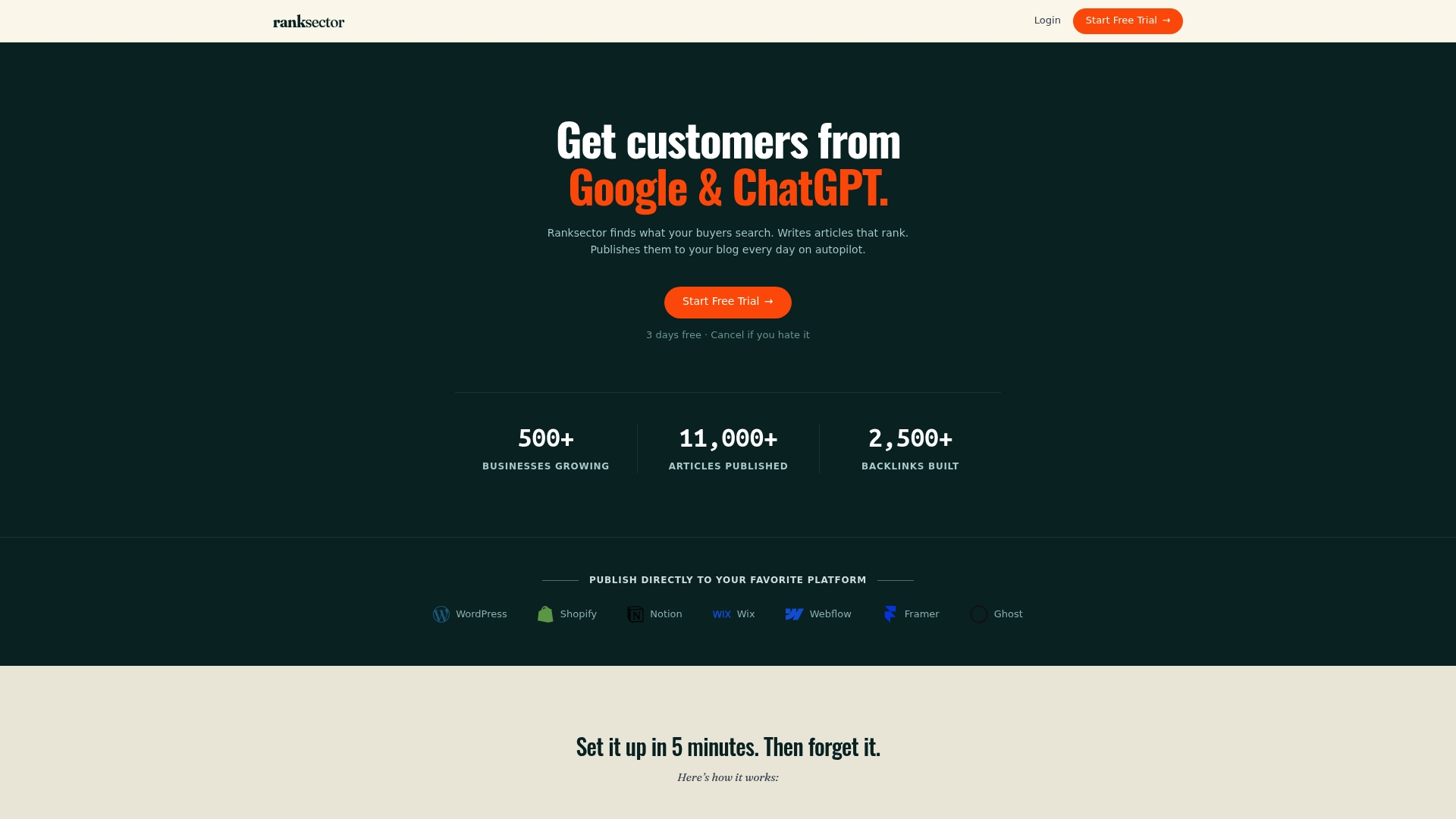
Ranksector is built specifically for B2B SaaS companies and small teams that cannot afford to repeat these keyword mistakes at scale. The platform combines competitor-driven keyword research with automated daily article publishing, so your site targets the right terms consistently without requiring a full-time SEO team. Every article Ranksector publishes is mapped to search intent and checked against real SERP data before publication.
If you want to see how the system works before committing, start with Ranksector’s free SEO tools to analyze your current keyword coverage and identify cannibalization issues. For agencies managing multiple client sites, the Ranksector agency platform handles keyword strategy and content publishing at volume. With over 11,000 articles already published, Ranksector delivers results that manual processes simply cannot match at the same pace.
FAQ
What is the biggest keyword research mistake businesses make?
Ignoring search intent is the single most damaging error. A keyword with strong volume will not rank if your page format does not match what Google has already determined users want from that query.
How accurate are Google Keyword Planner volume estimates?
Keyword tool volume estimates can deviate 30 to 50 percent from actual search counts, particularly for long-tail variants. Treat Planner data as directional guidance, not precise measurement.
What is keyword cannibalization and why does it matter?
Keyword cannibalization occurs when multiple pages on your site compete for the same keyword, splitting authority and suppressing both pages. Fixing it has produced traffic increases of 60% on affected sites.
How often should businesses update their keyword strategy?
Keyword lists should be reviewed every 3 to 6 months. Search behavior shifts with trends, competitor moves, and product changes, making static keyword lists a liability over time.
Does Google Keyword Planner’s competition score reflect organic difficulty?
No. The competition score in Google Keyword Planner measures advertiser bidding activity, not organic ranking difficulty. Use a dedicated SEO tool like Ahrefs or Semrush to assess organic competition separately.
Recommended
- How to Spot Keyword Cannibalization in Five Minutes · Ranksector Blog — Ranksector
- 6 Metrics That Predict Article Rankings in 2026 · Ranksector Blog — Ranksector
- AI SEO Platforms Compared: What SaaS Teams Should Actually Compare in 2026 · Ranksector Blog — Ranksector
- ChatGPT vs Google Search: How the Same Query Gets Interpreted Differently · Ranksector Blog — Ranksector