Publishing Cadence Trade-offs: Daily, Weekly, and Burst Strategies for SEO Teams

Publishing Cadence Trade-offs: Daily, Weekly, and Burst Strategies for SEO Teams
You mapped out a content plan in January. Twelve articles a month, one every 2-3 days, ambitious but doable. By week three, the draft queue had stalled, two posts went live without internal links, and the editorial calendar looked more like a wish list than a schedule. Sound familiar?
The problem is rarely motivation. It's the gap between what a publishing cadence looks like on a spreadsheet and what it costs in actual hours per week. Daily, weekly, and burst publishing cadences each carry a different tax on your team, and choosing the wrong one doesn't just slow you down. It actively works against the SEO momentum you're trying to build.
The publishing cadence trade-offs between daily, weekly, and burst strategies come down to three things: your team's real capacity, your content type, and whether your distribution system is ready. Get those three aligned and the right cadence becomes obvious. Miss any one of them and you'll spend 90 days optimizing for activity instead of compounding traffic.
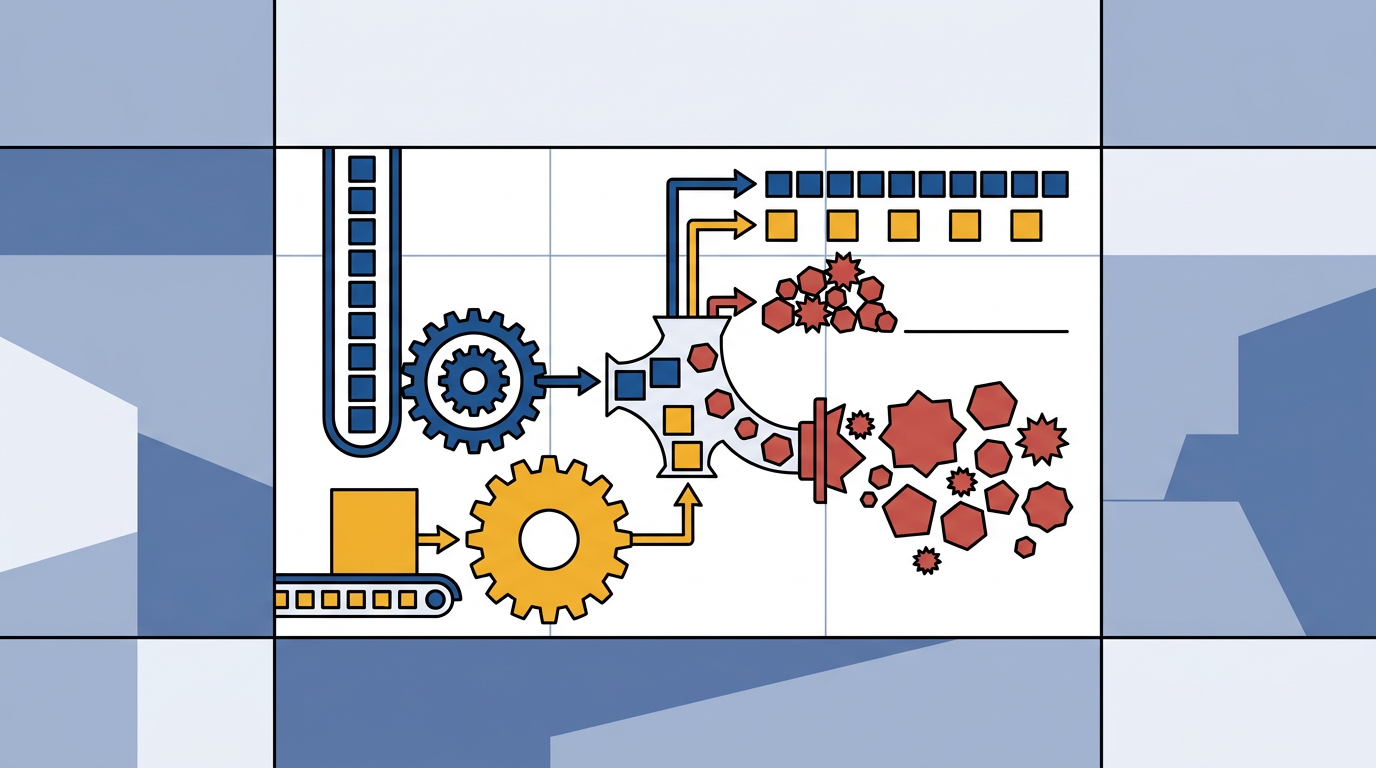
Which publishing cadence fits your SEO team?
You have three models to choose from, and each one behaves differently under pressure.
Daily publishing means one or more pieces of content going live every working day. That's roughly 20-23 posts per month. It creates wide topical surface area fast, but it demands an editorial system that can absorb that pace without quality slipping.
Weekly publishing is 4-5 posts per month. It's slower by volume, but it gives your team time to plan, edit, interlink, and distribute each piece properly. For lean SaaS teams, this is the default that holds.
Burst publishing is a concentrated sprint: 8-15 posts in 2-3 weeks around a specific launch, topic cluster, or seasonal demand spike. It's not a steady rhythm. It's a planned pressure event with a defined start and end.
| Cadence | Monthly volume | Best for | Main risk | Team size needed |
|---|---|---|---|---|
| Daily | 20-23 posts | High-demand topics, strong editorial ops | Thin content, QA failure | 3+ content roles |
| Weekly | 4-5 posts | Evergreen SEO, topic clusters, lean teams | Slow topical coverage | 1-2 content roles |
| Burst | 8-15 posts in 2-3 weeks | Launches, seasonal spikes, cluster builds | Traffic spike then flatline | Flexible, sprint-ready |
Treat weekly as your baseline and burst as your weapon. Daily is only worth it if your QA process can run at that speed without adding headcount or cutting corners.
Daily publishing: when it helps, and when it breaks down
Daily publishing is an operations problem before it's a content problem. You're not just asking your team to write more. You're asking them to brief, draft, edit, optimize, interlink, schedule, and promote a piece every single working day.
Where daily cadence genuinely wins
If you have a deep keyword list, a clear editorial system, and at least 2-3 people in the content workflow, daily publishing can expand your topical footprint fast. You're creating more entry points for search, more internal linking opportunities, and more chances to appear in related queries. That compounds over 6-12 months.
News publishers and high-volume media sites operate on daily or multiple-times-per-day rhythms because their audience expects fresh content and their ad revenue depends on pageviews. That logic doesn't automatically transfer to a SaaS blog optimizing for evergreen organic traffic.
Where it breaks down fast
If you can't QA every piece before it goes live, you're not ready to publish daily. Thin content, missing internal links, and weak optimization don't just underperform. They can dilute the topical authority you're trying to build. A post with 300 words, no outbound links, and no clear search intent is worse than no post at all.
The manual workload at daily cadence is roughly 3-5 hours per post across briefing, drafting, editing, and scheduling. At 20 posts per month, that's 60-100 hours of content work before distribution. For a team of one or two, that number isn't sustainable beyond 4-6 weeks before quality starts dropping.
Daily publishing is an operations problem before it's a content problem. If the handoffs aren't automated, the calendar will outlast the team.
The automation threshold for daily cadence
Daily publishing becomes viable when at least 40-60% of the workflow is automated or templated. That means AI-assisted drafting, pre-built brief templates, automated scheduling queues, and triggered distribution. Without that, you're adding headcount or burning out the team you have.
Teams that try daily publishing without automation infrastructure hit a wall around week 6. The posts keep going live, but internal link coverage drops below 50%, meta descriptions get skipped, and the editorial calendar starts filling with recycled angles.
Weekly publishing: the default for lean SaaS teams
Weekly cadence is boring. And boring is often what scales when your team is small and your traffic goals are long-term.
Why weekly holds up under real conditions
At 4-5 posts per month, you have time to do the work properly. Each brief gets reviewed. Each draft gets edited. Each post gets internal links before it goes live. That consistency matters more than volume when you're building topical authority in a competitive niche.
For SMB and SaaS teams with limited content resources, weekly cadence also makes planning realistic. You can map a full month of topics in 2 hours, assign ownership clearly, and build a repurposing workflow around each piece without scrambling.
Weekly pairs well with topic clustering
If you're building a topic cluster, weekly cadence gives you time to plan the internal linking architecture before you publish. You can write the pillar post first, then publish supporting posts over 4-6 weeks, each one linking back to the pillar and to each other. That's how you build compounding authority rather than isolated traffic spikes.
Weekly also fits repurposing. One well-edited post can become 3 social updates, 1 email section, and 2 LinkedIn posts without much extra work. At daily cadence, you rarely have time to repurpose because the next post is already due.
Consistency beats intensity when the team is small. Four strong posts a month will outperform twenty thin ones over a 12-month window.
The ceiling on weekly output
Weekly cadence does have a real ceiling. If you're targeting 200+ keywords in a competitive category, 4-5 posts per month means it takes 3-4 years to cover your full keyword map. That's a genuine trade-off. The answer isn't to abandon weekly cadence. It's to supplement it with burst campaigns when the opportunity is right.
Burst publishing: how to win with concentrated output
A burst isn't random posting. It's a planned pressure event with a defined window, a specific topic cluster, and distribution infrastructure ready before the first post goes live.
When burst publishing makes sense
Burst publishing works best in four scenarios: a product launch that needs supporting content fast, a seasonal demand spike you can anticipate 4-6 weeks out, a trending keyword window with a short shelf life, or a topic cluster where you want to establish authority quickly before competitors do.
In a burst, you might publish 10-12 posts over 2 weeks. That concentrated output signals topical depth to search engines faster than spreading the same 10 posts over 10 weeks. Cadence is partly a coordination mechanism, and a burst coordinates your content, your distribution, and your audience attention at the same moment.
The infrastructure burst publishing requires
A burst without pre-built templates is a chaotic sprint. You need brief templates ready, approval workflows shortened to 24 hours or less, and a scheduling queue that can absorb 2-3 posts per day without manual intervention. You also need your internal linking map drawn before post one goes live.
- Pre-built brief templates cut briefing time from 45 minutes to under 15 minutes per post, which matters when you're producing 10 posts in 14 days.
- A fast approval workflow means one round of edits, not three. Agree on quality standards before the burst starts.
- A scheduling queue lets you batch-upload posts and set go-live times in advance, so the burst doesn't require daily manual publishing.
- An internal linking map keeps every post in the cluster linked to the pillar and to at least 2 supporting posts before it goes live.
- Distribution readiness means your email and social promotion is templated and queued, not improvised after each post goes live.
The risk: traffic spike, then flatline
A burst without follow-through creates a traffic spike followed by a flatline. You get a 2-3 week bump, then the cluster sits idle because no new content is pointing to it and no one is updating the posts. The fix is simple: schedule a review pass 60 days after the burst. Update 2-3 posts, add new internal links from your regular weekly output, and the cluster stays active.
A burst without internal links is just temporary noise. The cluster only compounds if the linking architecture holds after the sprint ends.
Manual workflow vs automated workflow: the real bottleneck
The bottleneck in content operations isn't ideas. It's the handoffs between brief, draft, edit, optimize, schedule, and distribute. Each handoff adds 1-3 hours of coordination time per post.
What the manual workflow costs
A typical manual workflow for one post looks like this: 45 minutes for briefing, 2-3 hours for drafting, 60-90 minutes for editing and optimization, 20 minutes for CMS formatting and scheduling, and 30 minutes for distribution setup. That's 5-6 hours per post before you measure anything.
At weekly cadence (4 posts per month), that's 20-24 hours of content work per month. At daily cadence (20 posts per month), that's 100-120 hours. For a solo content marketer or a 2-person team, daily cadence on a manual workflow isn't viable without dropping quality or working unsustainable hours.
Where automation removes the friction
Automation doesn't replace editorial judgment. It removes the repetitive steps that slow publishing down. AI-assisted drafting can cut first-draft time from 2-3 hours to 30-45 minutes. Content templates reduce briefing from 45 minutes to 10 minutes. Scheduling queues eliminate the 20-minute CMS formatting step. Triggered distribution removes the 30-minute promotion setup.
That brings a single post from 5-6 hours to 1.5-2.5 hours. At weekly cadence, that frees up 10-15 hours per month. At burst cadence, it's the difference between a burst being feasible and it collapsing under its own weight.
Ranksector Blog is built around this exact workflow reduction. Instead of managing brief templates, draft queues, and scheduling manually across tools, you run the production cycle from one place. That matters during bursts, when the manual coordination cost compounds daily.
The handoff that breaks teams
The handoff that breaks teams is between editing and publishing. The post is done, but it sits in a Notion doc or Google Drive for 2-3 days waiting for someone to format it in the CMS, add internal links, write the meta description, and schedule it. That gap is where cadence dies. Automation closes it.
How to choose the right cadence by team size and growth goal
Choose cadence by capacity, not ambition. The right cadence is the one your team can repeat for 90 days without quality slipping on week 8.
A simple decision framework
- Solo content marketer with under 10 hours per week for content: start with weekly (1 post per week), add burst campaigns around 2-3 high-priority windows per year.
- 2-person SaaS team with 20-30 hours per week for content: weekly cadence (4-5 posts per month) plus 1-2 burst campaigns per quarter.
- Launch-driven team with a product release in 6-8 weeks: plan a burst of 8-12 posts for the launch window, then revert to weekly after.
- High-volume content engine with 3+ dedicated content roles and automation in place: daily cadence is viable if QA is systematized and internal linking is automated.
The decision isn't permanent. Cadence should be reviewed every 90 days against actual output quality and traffic response, not just volume. If your weekly posts are consistently well-linked, well-optimized, and ranking within 60-90 days of publication, you're ready to increase cadence. If they're not, adding more posts won't fix the underlying problem.
Map cadence to content type, not just team size
Evergreen SEO content benefits from weekly cadence and careful internal linking. Topical content around trends or launches benefits from burst publishing with fast turnaround. Product-led content (case studies, feature pages, comparison posts) benefits from a deliberate weekly or bi-weekly pace where accuracy matters more than speed.
If you're mixing content types, as SaaS teams do, a hybrid model works best: weekly for evergreen and product-led content, burst for topical and launch-driven content. That's where Ranksector Blog's scheduling queue pays off, because you can run both rhythms from the same workflow without managing two separate calendars.
A sustainable cadence playbook for the next 90 days
Pick one cadence. Run it for 90 days. Measure the right things. Then adjust.
Start with one cadence and measure it honestly
The goal isn't more posts. It's a repeatable publishing system that produces compounding traffic, not just activity. That means tracking leading indicators, not just pageviews. A predictable cadence is a coordination tool as much as a traffic strategy. It keeps your team aligned and your audience trained to expect content.
- Publish rate: did you hit your target volume every week for 12 weeks straight? Below 80% hit rate means the cadence is too aggressive for current capacity.
- Internal link coverage: are at least 80% of published posts linked from at least 2 other posts on the site within 7 days of going live?
- Indexation speed: are new posts appearing in Google Search Console within 5-7 days of publication? Slower than 14 days suggests a crawl budget or sitemap issue.
- Assisted conversions: are blog posts contributing to demo requests, trial signups, or email subscriptions within a 30-day attribution window?
Tracking whether your cadence is creating compounding traffic matters more than tracking raw post count.
Adjust at the 90-day mark, not before
Ninety days is the minimum window to see whether a cadence change is working. SEO doesn't respond in 2 weeks. If you switch cadences every month based on short-term traffic fluctuations, you'll never know what's driving results.
At the 90-day mark, ask three questions: Did we hit our publish rate target? Are posts ranking within 60 days? Is internal link coverage above 75%? If yes to all three, increase cadence by 20-25%. If no to any one of them, fix the underlying process before adding volume.
Using Ranksector Blog's content queue and scheduling tools, you can set a 90-day cadence plan in under an hour, assign post ownership, and track publish rate automatically without a separate project management tool. That removes the coordination overhead that causes cadence plans to drift by week 4.
The goal isn't more posts. It's a repeatable publishing system that produces compounding traffic, not just activity. Volume without process is just noise with a calendar.
Frequently Asked Questions
How often should a SaaS blog publish to see SEO results?
There's no universal number. A weekly cadence of 4-5 posts per month is enough to build momentum for lean SaaS teams, provided each post is well-optimized and properly interlinked. Volume matters less than consistency and quality. A team publishing 4 strong posts per month will outperform a team publishing 15 thin ones over a 6-12 month window.
What is burst publishing and when does it make sense?
Burst publishing is a concentrated sprint of 8-15 posts over 2-3 weeks, planned around a specific trigger: a product launch, a seasonal demand spike, or a topic cluster build. It works when you have pre-built templates, fast approval workflows, and internal linking mapped before the first post goes live. Without that infrastructure, a burst produces a traffic spike followed by a flatline.
Is daily publishing worth it for a small content team?
Rarely. At 20+ posts per month, the manual workflow costs 100-120 hours per month across briefing, drafting, editing, and scheduling. For a team of 1-2 people, that's not sustainable without automation handling 40-60% of the process. If QA can't run at daily pace, the posts that go live will dilute topical authority rather than build it.
How do I know when to increase my publishing cadence?
Run your current cadence for 90 days and check three things: did you hit your publish rate target above 80%, are posts ranking within 60 days, and is internal link coverage above 75%? If yes to all three, increase cadence by 20-25%. If any one fails, fix the underlying process first. Adding volume to a broken workflow makes the problem worse.
Does publishing cadence affect how quickly Google indexes new content?
Consistent publishing can improve crawl frequency over time. Sites that publish regularly tend to get crawled more often because search engines learn to expect fresh content. That said, indexation speed depends more on your sitemap setup, internal linking structure, and site authority than on cadence alone. Posts with strong internal links from existing pages tend to get indexed faster, often within 5-7 days.
Ranksector Blog
Try Ranksector Blog to plan your 90-day cadence, manage your content queue, and automate scheduling without juggling three separate tools. Start with your weekly baseline, map your next burst campaign, and let Ranksector Blog handle the coordination so your team can focus on the writing.